
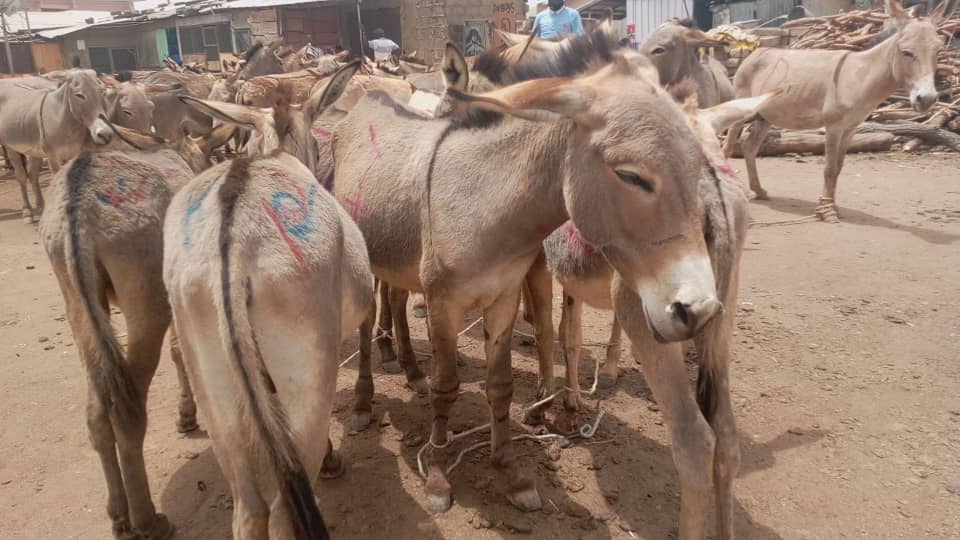
A growing shortage of donkeys in parts of the Upper East Region is raising concern among consumers and dealers, with early signs already affecting livelihoods and local economic activity.
A visit by Bolga FM revealed that areas once known for high numbers of donkeys slaughtered daily have recorded a significant decline. Many of these centres are now largely empty, leaving workers unemployed.
Recent information also points to a sharp drop in the number of donkeys transported from neighbouring Burkina Faso into the Upper East Region. This suggests a possible disruption in cross-border trade, which has traditionally been a major source of supply.
Donkeys play a crucial role in the livelihoods of many communities in the region. They are widely used as beasts of burden for farming, transportation and trade. The shortage is already affecting agricultural productivity and market activities, as farmers and traders rely heavily on them for ploughing, carrying goods and accessing markets.
The decline in imports is particularly concerning because the region has long depended on supply from Burkina Faso to sustain its donkey population. Several factors may be contributing to the disruption, including increased border security measures, trade restrictions, logistical challenges and possible political tensions. In addition, animal health concerns, shifts in demand and changing trade routes may also be affecting the movement of donkeys.
The shortage is having far-reaching effects on both dealers and consumers. Dealers, who serve as the link between suppliers and end-users, are facing increased competition for the few available animals. This has driven prices up, squeezing profit margins and making it difficult to meet demand.
In several communities within the Upper East Region and across West Africa, donkey meat is also consumed and forms part of local dietary and cultural practices. While not widely consumed everywhere, it remains an important source of protein for some households.
Overall, the decline in donkey numbers—largely driven by disruptions in cross-border supply—has created a complex challenge. Dealers are struggling to source animals, while consumers, particularly farmers and traders, face reduced access to an essential resource.
A1 Radio | 101.1 MHz | Joseph Napoleon Anaaya | Bolgatanga