
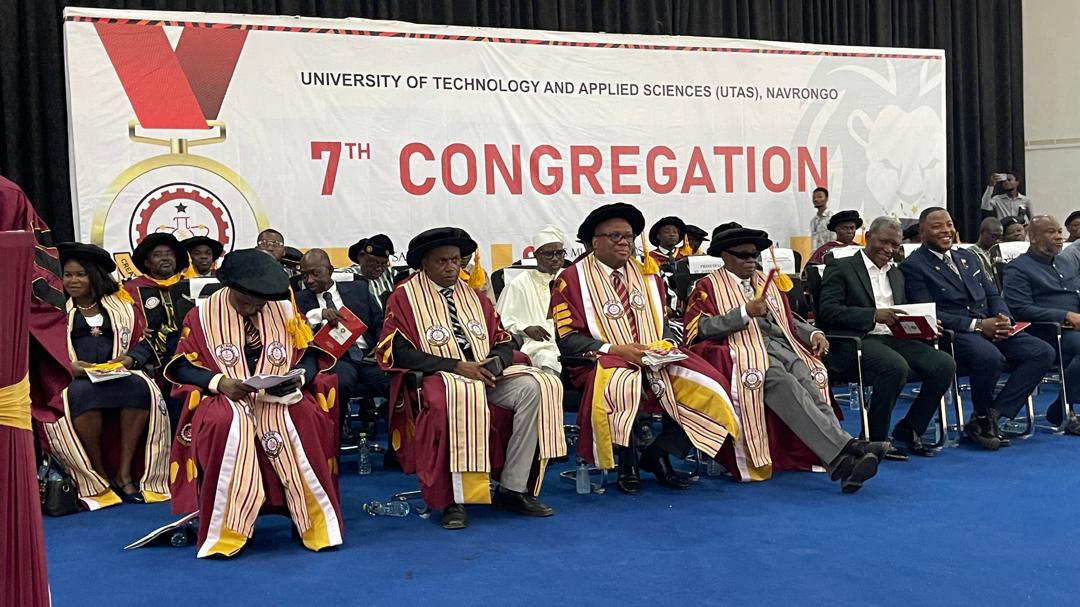
The University of Technology and Applied Sciences (UTAS), Navrongo, has graduated 158 scholars at its 7th Congregation ceremony, while appealing for additional government support to enable the institution launch its School of Medicine and address critical infrastructure and staffing challenges.
The Vice Chancellor of UTAS, Professor Albert Luguterah, said the university was steadily growing in stature, research visibility, and national relevance despite operating under significant resource constraints.
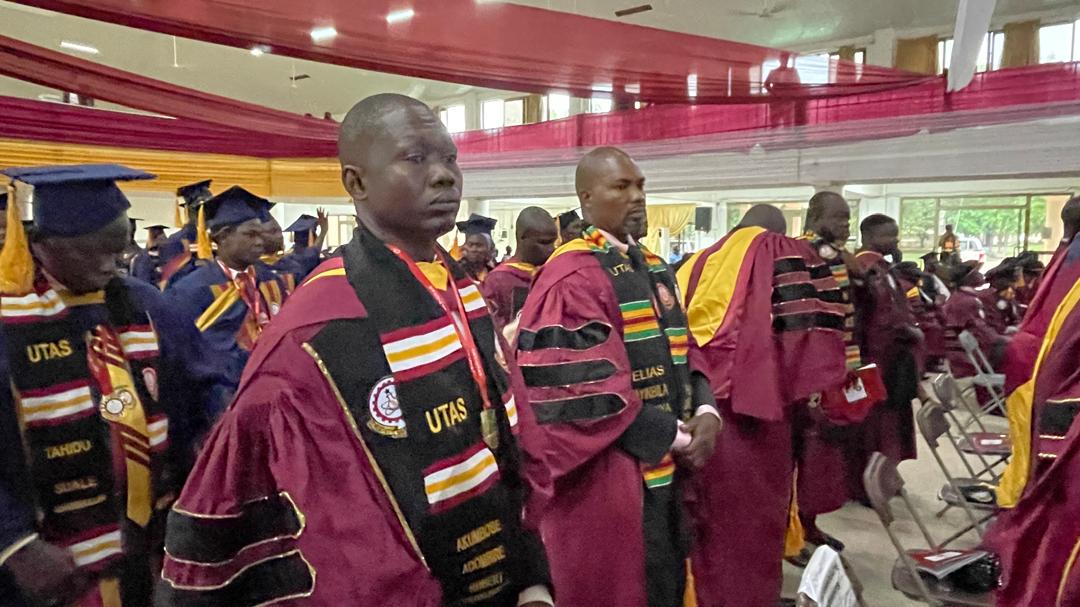
The graduating class comprised 119 postgraduate scholars and 39 immigration officers from Burkina Faso who completed a Certificate of Proficiency in English programme.
Prof. Luguterah announced that UTAS had been ranked the 10th best university in Ghana by the 2026 AD Scientific Index, attributing the achievement to the dedication of faculty members, researchers, and the growing confidence in the institution’s academic output.
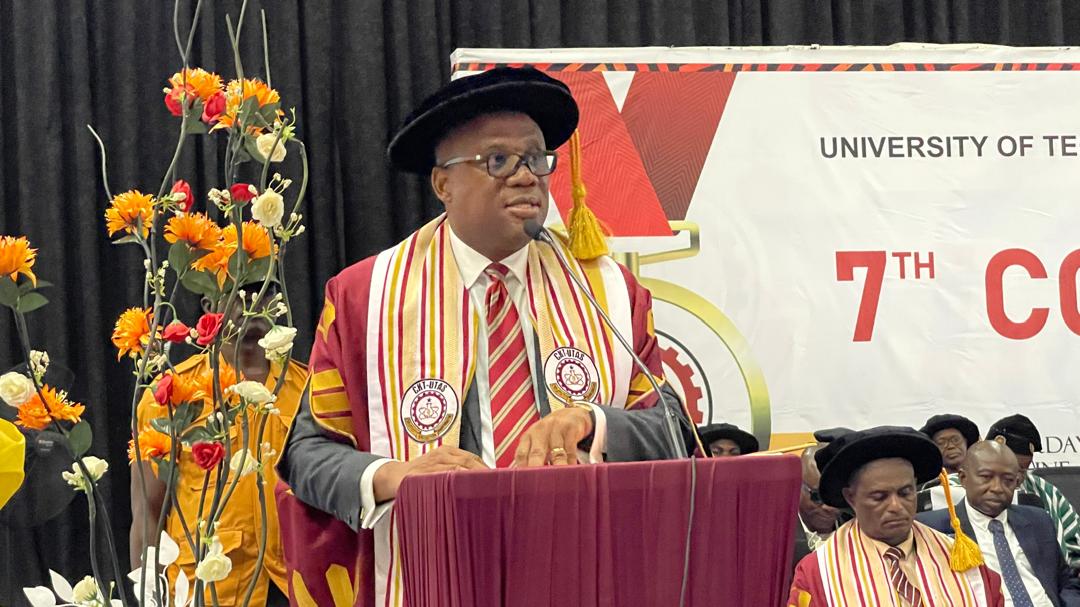
He noted that the university had also distinguished itself in sports, recording a fourth-place finish in national university football competitions and winning medals in several sporting disciplines.
The Vice Chancellor emphasized the role of universities as engines of national development, stressing that UTAS was contributing significantly to Ghana’s transformation agenda through teaching, research, innovation, and community engagement.
Prof. Luguterah acknowledged government support, including the release of seed capital and financial clearance to recruit some staff. However, he indicated that the university still faced acute human resource challenges, with a student population exceeding 4,300 and lecturer-to-student ratios above recommended standards.
As UTAS prepares to establish its School of Medicine, he appealed for additional financial clearance to recruit faculty and technical staff needed to meet accreditation requirements.
“We respectfully request further financial clearance to recruit additional faculty and technical staff to meet accreditation benchmarks and ensure quality delivery,” he appealed.
The Vice Chancellor disclosed that significant progress had been made toward the medical school, expressing optimism that the institution would admit its first cohort of medical students during the 2026/2027 academic year.
He also highlighted ongoing infrastructure projects, including the construction of a two-storey lecture hall complex with a capacity of 480 students, rehabilitation of stalled lecture and laboratory projects, and the renovation of the university’s multipurpose auditorium.
In the area of digital transformation, Prof. Luguterah announced that UTAS had been selected as a regional hub for the Government’s One Million Coders Initiative, with 200 laptops allocated for the first phase of training.
Additionally, the Ghana Education Service has accredited the university’s School of Science, Mathematics, and Technology Education as a Teacher Licensure Examination Centre, a move expected to reduce travel costs for teacher trainees in the Upper East and North East regions.
Despite these gains, he identified inadequate laboratory facilities, limited lecture infrastructure, poor road networks, and an ageing vehicle fleet as major obstacles to the university’s growth.
Chairman of the UTAS Governing Council, Professor Stephen Kendie, also praised the institution’s achievements and reaffirmed its mandate to produce highly skilled graduates in technology and applied sciences.
He noted that UTAS had become increasingly recognized for research excellence and as a preferred destination for training in health, technology, and applied sciences.
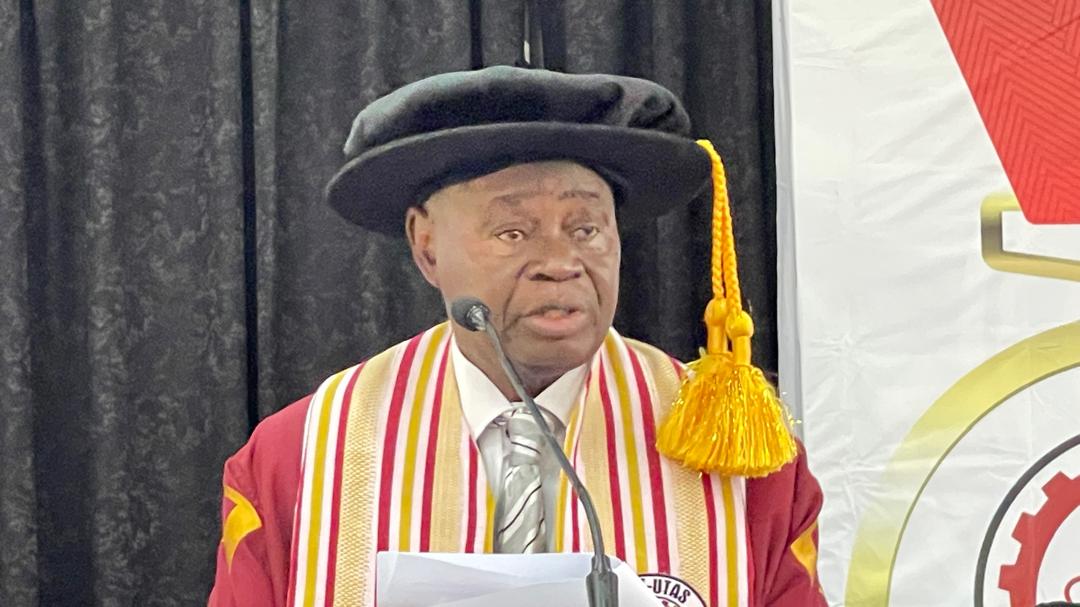
However, Prof. Kendie described UTAS as a “resource-starved” institution struggling to secure adequate funding for infrastructure development and laboratory facilities.
“UTAS is a distressed university – resource-starved and struggling to raise the funds to expand infrastructure and provide the laboratory facilities required for teaching and learning,” he stated.
He urged the university to strengthen its focus on postgraduate education to attract more research funding and increase its resilience.
The Upper East Regional Minister, Donatus Akamugre Atanga, in his speech, commended UTAS for its growing impact on the region and described the institution as an emerging intellectual and developmental engine for northern Ghana. He urged the graduates to focus on solving societal challenges rather than merely seeking promotions and salary increments.
“Do not just seek promotions; seek transformation. Let your presence in your workplace be felt through the quality of your output and the solutions you provide,” he advised.
The minister further encouraged the graduates to bridge the gap between theory and practice, mentor younger colleagues, and apply their research to address challenges in agriculture, healthcare, environmental management, and economic development.
A1Radioonline.com|101.1Mhz|Joshua Asaah|Navrongo