
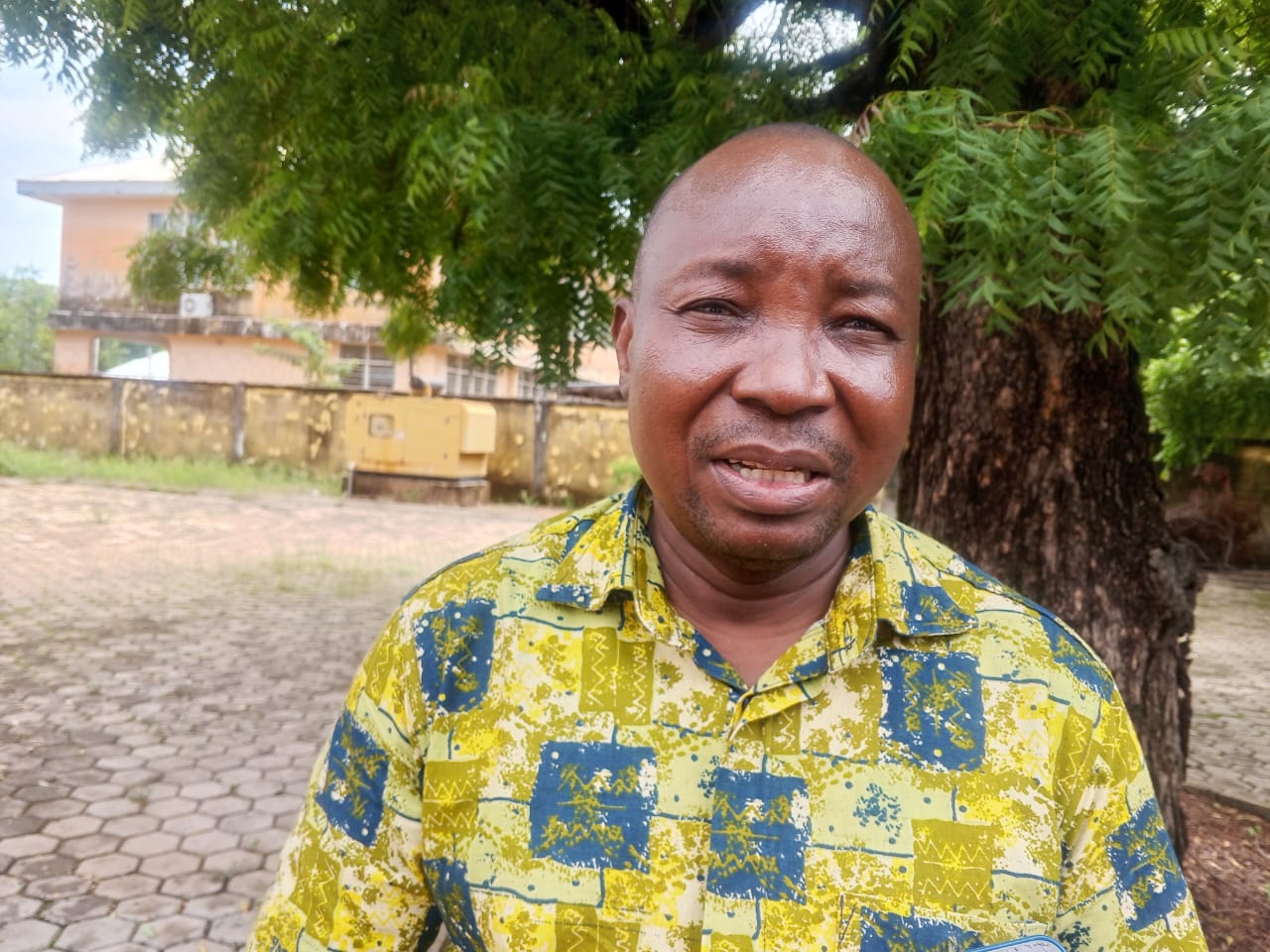
The Commission on Human Rights and Administrative Justice (CHRAJ) has called for stronger collaboration among institutions to improve the response to sexual and gender-based violence (SGBV) and ensure survivors receive timely support and justice.
Speaking to the media at a sensitisation programme organised by Youth Harvest Foundation Ghana at the Kofi Annan ICT Centre in Bolgatanga, CHRAJ Public Education Officer, Edmond Alagpulinsa, said addressing SGBV requires coordinated action from multiple institutions because no single organisation has the mandate to handle every aspect of such cases.
“Sexual and gender-based violence is multi-sectoral in nature. You cannot have one single office that is capable of addressing all the issues,” he said.
Mr. Alagpulinsa explained that while CHRAJ handles complaints relating to human rights violations and administrative justice, criminal offences such as rape and incest fall under the Ghana Police Service through the Domestic Violence and Victim Support Unit (DOVVSU).
He said effective referral systems are therefore essential to ensure survivors are directed to the appropriate institutions and receive the support they need.
The CHRAJ official noted that the commission continues to receive complaints involving various forms of abuse, including physical, sexual, social, and economic violence.
“Day in, day out, we receive cases in respect of sexual and gender-based violence, particularly where it has to do with economic violence,” he stated.
According to him, many of the complaints stem from inheritance disputes and the denial of property rights, particularly in situations where deceased persons leave behind assets without clear arrangements for their distribution.
He said such disputes often leave widows and other vulnerable family members at risk of losing their rightful share of family property.
Mr. Alagpulinsa also cited cases involving women’s access to land, noting that cultural beliefs in some communities continue to limit women’s ability to enjoy ownership rights even when they have legally acquired land.
He said these practices contribute to gender inequality and undermine the rights of women.
The CHRAJ Public Education Officer urged participants to put the knowledge gained from the programme into practice and become advocates against sexual and gender-based violence in their communities, workplaces, and homes.
“We as participants in this programme must lead by example because we have had the privilege of listening to all the principles, issues, and dynamics of sexual and gender-based violence,” he said.
He further encouraged participants to share information from the programme with others to expand public awareness and strengthen prevention efforts.
On efforts to combat SGBV, Mr. Alagpulinsa said progress should not be measured solely by the number of cases reported, as increased reporting may reflect growing public awareness and confidence in available support systems.
He maintained that the true measure of success lies in how effectively institutions respond to complaints and secure justice for survivors.
“It is not just about receiving the cases but whether we are able to address the issues. I think that, to me, is more important than anything else,” he said.
A1Radioonline|101.1Mhz|Simon Ayamdoo|Bolgatanga