
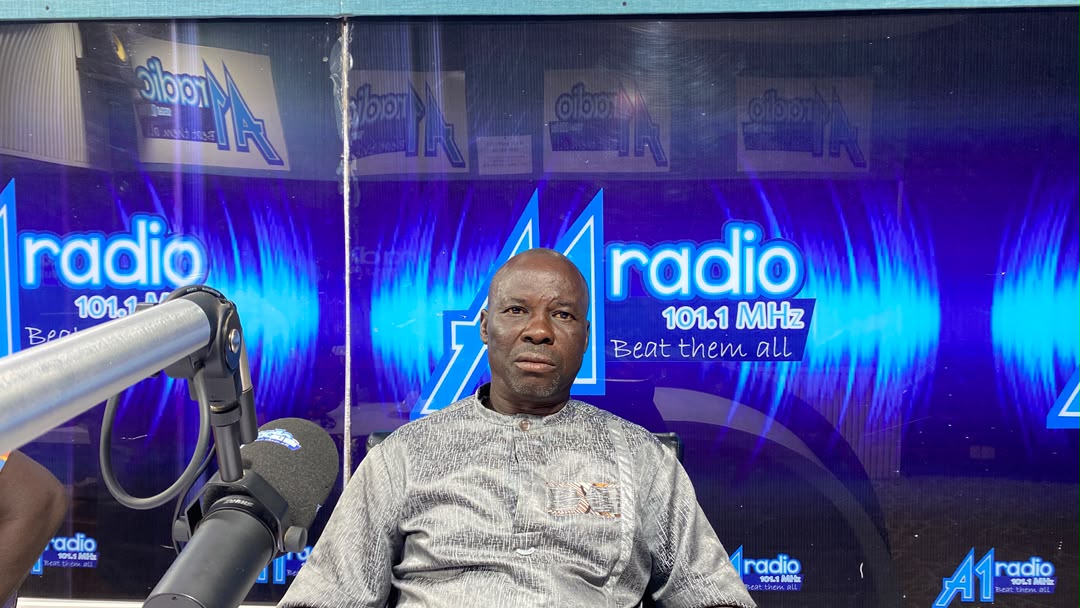
The District Mental Health Coordinator for Nabdam, Maclean A. Abuntoo, says societal expectations of masculinity are forcing many men to suppress emotional distress, leading to worsening mental health conditions that often go unnoticed until they become severe.
Speaking on A1 Radio’s Equal Voices programme, Mr. Abuntoo said cultural norms that portray men as always strong and self-reliant discourage them from seeking help when they are struggling emotionally.
“The society itself thinks that as a man, you should be able to do everything. A man should not be lacking. And because of that, when a man comes out to say ‘this is my problem,’ he is seen as weak,” he said.
He noted that this perception pushes many men to suffer in silence, even when dealing with serious psychological distress, because they fear losing respect or authority within their families.
“There are instances where a man is suffering internally, but he cannot even share it with a brother, sister or wife because he feels it will reduce his status as the head of the family. So he keeps everything to himself, and that is very dangerous,” he stressed.
Mr. Abuntoo warned that the common response “I am fine” often masks deeper conditions, including depression and suicidal thoughts.
“A man may be sitting alone and when you ask him what the problem is, he says ‘I am fine.’ But for all you know, he may even be contemplating suicide,” he said.
He added that behavioural changes such as withdrawal, detachment or sudden weight loss are often warning signs, but are frequently ignored when individuals insist they are fine.
According to him, suicidal thoughts should always be treated as a serious red flag requiring urgent intervention.
“If someone starts talking about ending their life, it is a serious warning sign. It should not be taken lightly. Such a person needs urgent support and professional help,” he cautioned.
Mr. Abuntoo identified financial pressure as another major driver of mental health challenges among men, noting that many feel compelled to provide for their families despite limited means.
“Financial challenges place a heavy burden on men. When a man wakes up and has nothing to provide for his family, it creates a lot of pressure and mental stress,” he said.
He added that stigma prevents many men from seeking emotional or financial support, worsening their condition over time.
“Even when men need help, they fear being judged or misunderstood. So they keep everything inside, and it builds up over time,” he said.
Mr. Abuntoo warned that untreated mental health conditions can escalate into crises that may have been preventable with early support.
“When mental health issues are not identified early, they can escalate to the point where a person loses control of their behaviour. That is why early detection is very important,” he noted.
He called on families and communities to be more attentive to behavioural changes and to encourage open conversations around emotional wellbeing, stressing that early intervention can save lives.
A1 Radio | 101.1 MHz | Keizah Porepeya Nsoh | Bolgatanga