
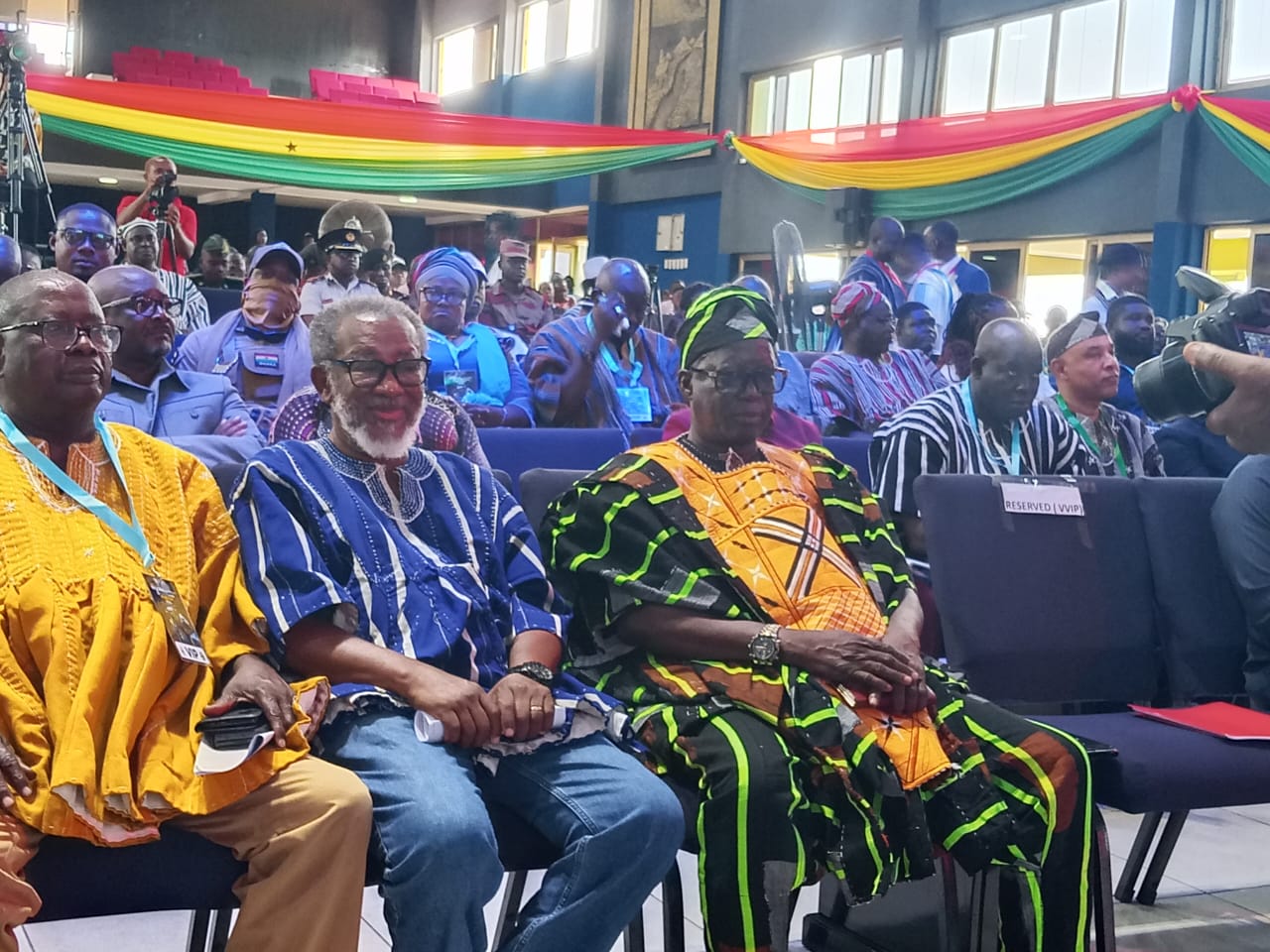
Professor David Millar has urged the Upper East Region to align its newly launched Prosperity through Enterprise, Agriculture, Resilience and Livelihoods (PEARL) Framework with Ghana’s long-term national development agenda, saying the region can accelerate growth by building on existing national strategies and unlocking its cultural and historical assets.
Speaking at the launch of the PEARL Framework in Bolgatanga, the President of Millar Open University said the blueprint should not operate in isolation but complement Ghana’s 40-year National Development Plan.
“Some time back, I had the opportunity to serve on a committee at the National Development Planning Commission established by President John Mahama to develop Ghana’s 40-year National Development Plan. I must say the plan is very rich and deserves to be endorsed. Many aspects of it are directly relevant to the Upper East Region,” he said.
Prof. Millar also called on investors and development partners to take advantage of changes made to some of the region’s flagship industrial projects.
He noted that projects previously known as the Meat Marketing Board and the Pwalugu tomato processing factory have been redesigned into integrated livestock, multi-fruit and multi-vegetable processing complexes.
“Ten years ago, there was a redesign of the former Meat Marketing Board and the Pwalugu Multi-Motor Factory project. Today, these are no longer referred to as the meat factory or tomato processing plant. They have evolved into integrated livestock, multi-fruit and multi-vegetable processing complexes. We encourage investors and stakeholders to study these developments and build upon them,” he said.
Beyond economic development, Prof. Millar highlighted a heritage tourism initiative being undertaken by Millar Open University to document the northern origins of people captured during the trans-Atlantic slave trade.
He said the university is working to remap historical slave routes to show that many enslaved people originated from communities in northern Ghana before being transported to the coastal slave castles.
“If you study the archives, the slave routes are often presented as beginning somewhere in the north and ending at the coast. We believe that is an incomplete history. The coast was only the exit point. The enslaved people came from communities much farther north,” he said.
According to him, researchers will trace the historical routes on foot while documenting languages, settlements and oral traditions to produce a more complete historical record.
“We want to redesign the slave route map using historical evidence. If the people taken to the coast were speaking Gurune, Sisala or Dagaare, then those histories and migration routes must be properly documented. We are undertaking this work with support from partners in the Kingdom of the Netherlands,” he added.
Prof. Millar appealed to traditional authorities and communities across northern Ghana to preserve oral histories and support the documentation exercise, saying the project could strengthen heritage tourism by expanding public understanding of the trans-Atlantic slave trade beyond the coastal slave castles.
His remarks came during the launch of the Prosperity through Enterprise, Agriculture, Resilience and Livelihoods (PEARL) Framework 2026–2035, a 10-year development blueprint designed to attract investment, create jobs and drive economic transformation across the Upper East Region.
The three-day forum, being held from June 29 to July 1 at the Desert Pastures Auditorium in Bolgatanga, is organised by the Upper East Regional Coordinating Council in collaboration with Members of Parliament from the region and the Importers and Exporters Association of Ghana.
The PEARL Framework is expected to guide investment and development priorities across the Upper East Region’s 15 districts over the next decade, with a focus on industrialisation, agriculture, infrastructure, entrepreneurship and sustainable livelihoods.
A1 Radio | 101.1 MHz | Mary Atiamah Aperika | Bolgatanga