
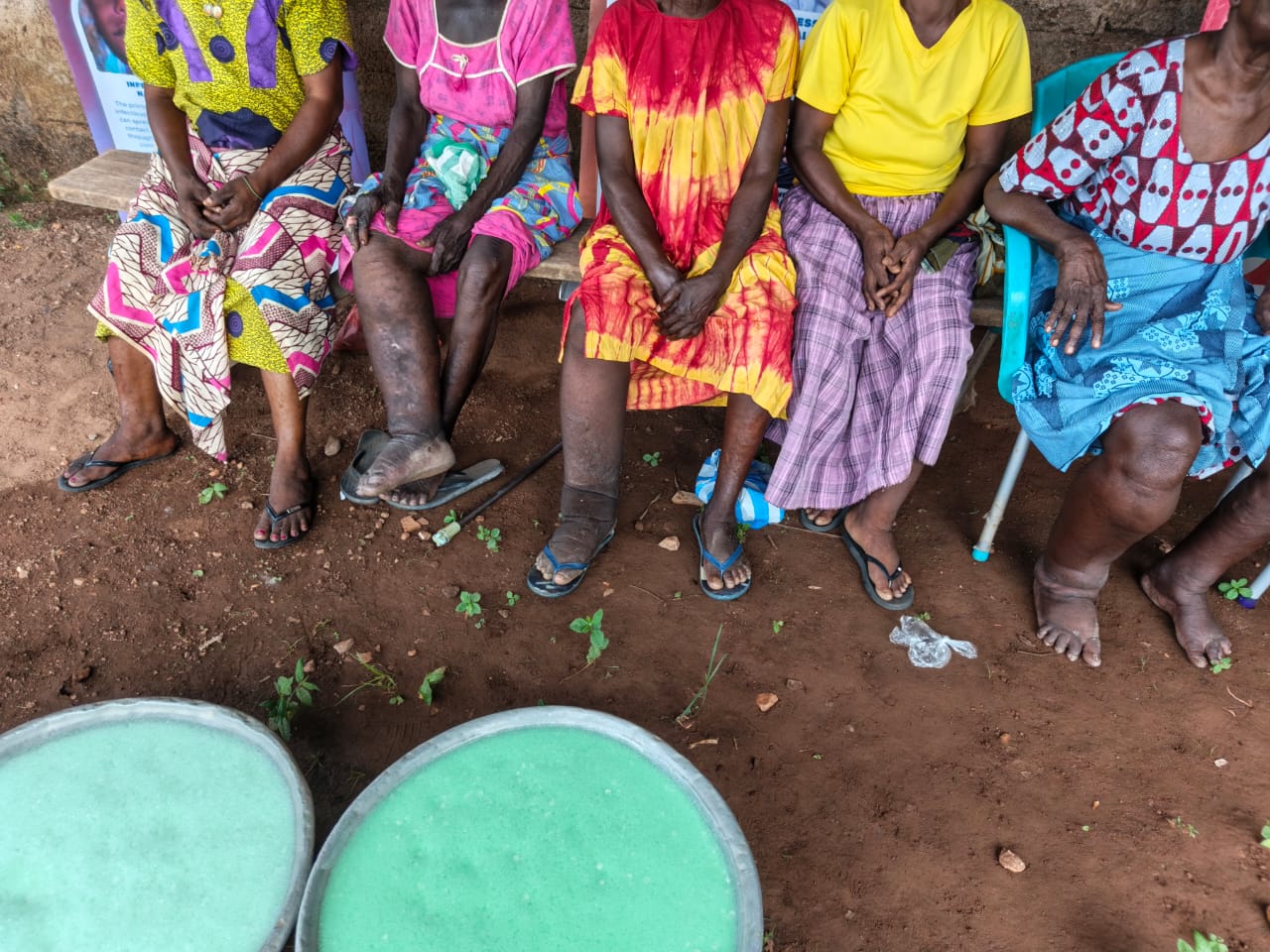
Tongo District, Upper EastThe Development Research and Advocacy Centre (DRAC) in the Upper East Region has trained people living with leprosy and elephantiasis, their caregivers and people who have been neglected by their families and communities in liquid soap production in the Tongo District.
The training, held on Friday, Aug. 7, 2026, forms part of DRAC’s efforts to equip vulnerable people affected by the diseases with skills to generate sustainable income and improve their livelihoods.
Martina Ajene Nsomah, Accounts Officer at DRAC, said the initiative was introduced to help people living with the conditions establish sustainable sources of income and enable them to raise money to support their healthcare needs, including the purchase of medicines.
“The initiative was brought to establish a sustainable income for the people living with these diseases and to also help them get money to buy their drugs,” she said.
Nsomah said DRAC had been working with the beneficiaries for the past two years, adding that the organisation had undertaken several interventions to improve their wellbeing.
She said DRAC had also supported the community with a borehole to improve access to water and educated residents on personal hygiene and measures to keep themselves healthy.
She explained that the liquid soap-making training would provide beneficiaries with a practical skill that could be turned into a source of income.
Hetty Atongo, a Senior Nurse Officer and Public Health Nurse at the Tongo Sub-District in charge of the Baare CHPS area, expressed concern about the stigma faced by people living with leprosy.
She explained that leprosy is not contagious through ordinary social contact and urged community members to stop distancing themselves from people affected by the disease.
“The disease is not contagious, but people are afraid to get closer to them. It is not supposed to be so. People should bring them closer and take good care of them,” she said.
Atongo said proper care and support from families and community members were important in preventing people affected by the disease from developing additional health complications.
She urged families to pay attention to the affected parts of their bodies, particularly their legs, to prevent wounds and infections.
“We have to take good care of them so that they don’t get additional sickness and so that their legs do not get sores and become infected,” she added.
She commended DRAC for its support to people affected by the diseases, particularly its livelihood interventions and the liquid soap-making initiative.
As part of the training, Ms. Atongo also educated participants on HIV prevention and ways to prevent the spread of the virus.
She distributed HIV self-test kits to the participants and encouraged them to test themselves and seek further medical attention at the nearest health facility if they received a positive result.
The initiative is expected to help beneficiaries acquire skills that can provide them with an independent source of income while also reducing the stigma and neglect associated with leprosy and elephantiasis in the community.
A1 Radio | 101.1 MHz | Mary Atiamah Aperika | Bolgatanga