

Security agencies, traditional authorities, civil society organisations and other stakeholders in the Upper East Region have been urged to strengthen collaboration, information sharing and community engagement to improve the region’s response to emerging security threats.
The call was made at a three-day Community-Law Enforcement Dialogue Forum held in Bolgatanga, under the European Union Security and Defence Initiative in support of West African Countries of the Gulf of Guinea (EUSDI-GoG).
The forum brought together members of the Regional and District Security Councils, law enforcement and intelligence agencies, traditional authorities, political actors, civil society organisations, youth leaders and other community stakeholders. The initiative seeks to strengthen inter-agency law enforcement and build trust between security institutions and the communities they serve.
Jonas Claes, Chargé d’Affaires of the European Union Delegation to Ghana, said effective security depended not only on the capacity of individual institutions but also on strong collaboration, coordination and trust among security agencies and communities.
He said the Upper East Region remained strategically important because of its proximity to the volatile Sahel region and warned that Ghana must continue strengthening its preventive security measures to avoid extremist attacks and other serious security incidents.
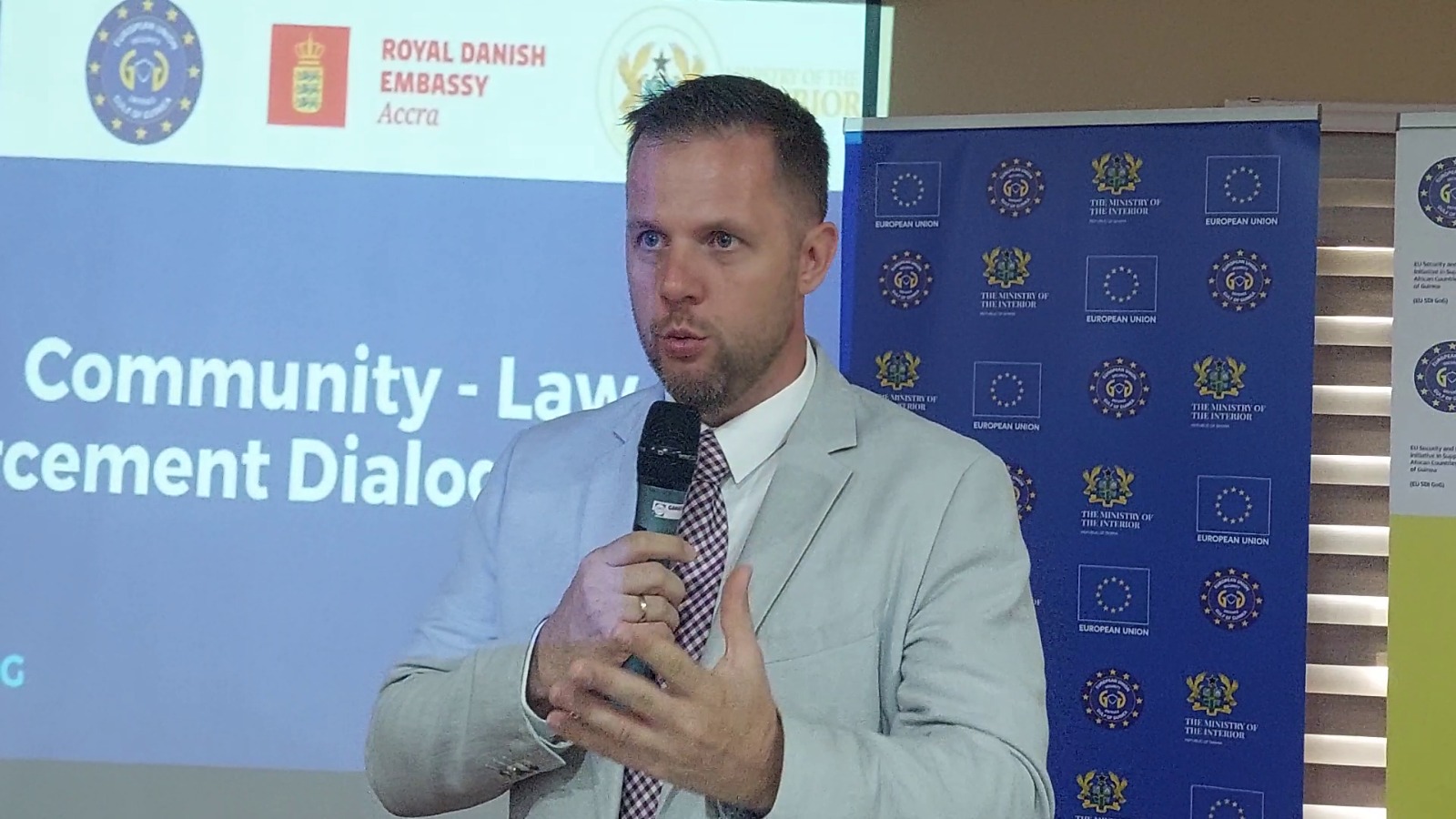
Mr. Claes said the European Union had increasingly become a security and political partner to Ghana, supporting the country through training, equipment and other security interventions, particularly in the northern regions. He said previous engagements under the EU Security and Defence Initiative had identified stronger collaboration between security agencies and communities as a common need across northern Ghana.
Technical Adviser to the Minister for the Interior, COP Maame Yaa Tiwaa Addo-Danquah, described the programme as a pilot initiative that could be replicated in other regions and at the district level. She said the changing security environment required security institutions to communicate effectively, share information and build stronger relationships with communities.

According to her, the coming into force of the National Security and Intelligence Agencies Act, 2026, provides a formal basis for strengthening coordination at the regional and district levels. She identified violent extremism, cross-border insecurity, communal conflicts and other emerging threats as areas requiring close cooperation between security institutions and communities.
COP Addo-Danquah urged participants to maintain the networks established during the training and continue sharing information after the programme.
The Upper East Regional Minister, Donatus Akamugri Atanga, said the region’s location along Ghana’s border with Burkina Faso made it particularly important to strengthen its security architecture.
He identified chieftaincy and land disputes, transnational organised crime, irregular migration, cross-border criminality, violent extremism, trafficking, misinformation and disinformation among the major security challenges confronting the region. The Minister stressed that the relative peace in the region should not be taken for granted.
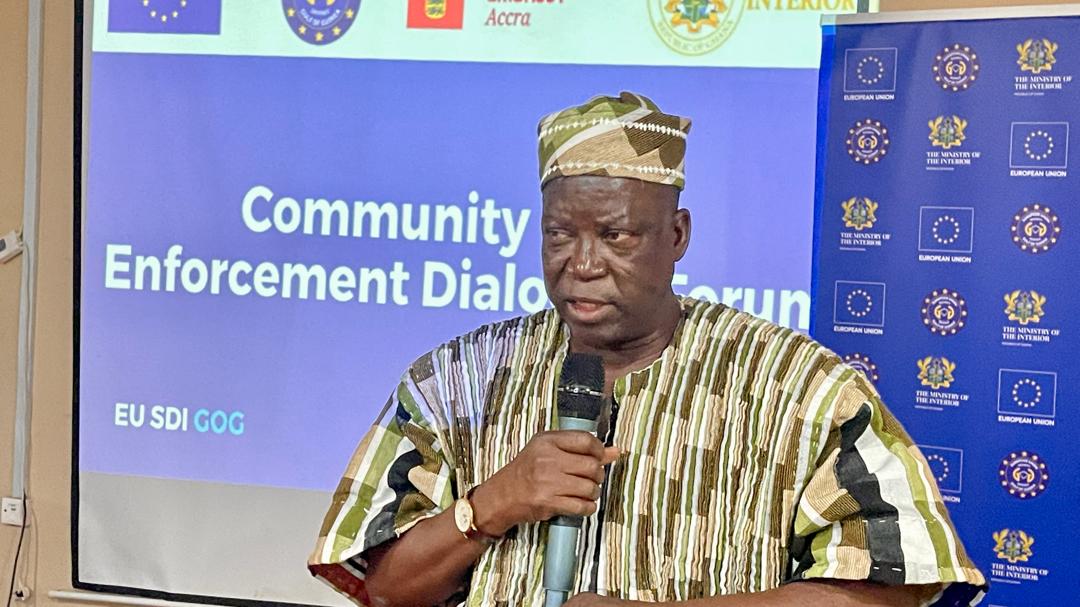
He said peace was a continuous process that required sustained dialogue, responsive institutions, social cohesion and inclusive governance. Mr. Atanga also called for stronger cooperation among security agencies, local government institutions, traditional authorities, political actors, civil society, religious organisations, the media and communities.
Meanwhile, the Upper East Regional Police Commander, DCOP John Ferguson Dzineku, disclosed that police intelligence-led operations had dismantled about seven armed robbery syndicates operating across parts of the region.
He said the groups operated in areas including Yagaba, Fumbisi, Navrongo, Bolgatanga, Pelungu, Tongo and Gbane. According to him, the operations led to the retrieval of several weapons, including AK-47s, G3s, M16s, CZs and pistols, as well as ammunition.
DCOP Dzineku said the operations had contributed to an improvement in security after years of armed robbery attacks that affected civilians and security personnel. He said the police had increased visibility and deployed additional undercover and uniformed personnel to consolidate the gains.
The Police Commander also linked some criminal activities to illicit drug use and said efforts to combat the illegal drug trade were ongoing.
He emphasised that public cooperation was critical to effective policing, stressing that without trust, information does not flow, and without information, crime cannot be effectively tackled.
He commended the military and immigration services for their cooperation and expressed hope that the forum would further strengthen collaboration among security agencies, traditional authorities and communities across the Upper East Region.
A1Radioonline.com|101.1Mhz|Joshua Asaah