
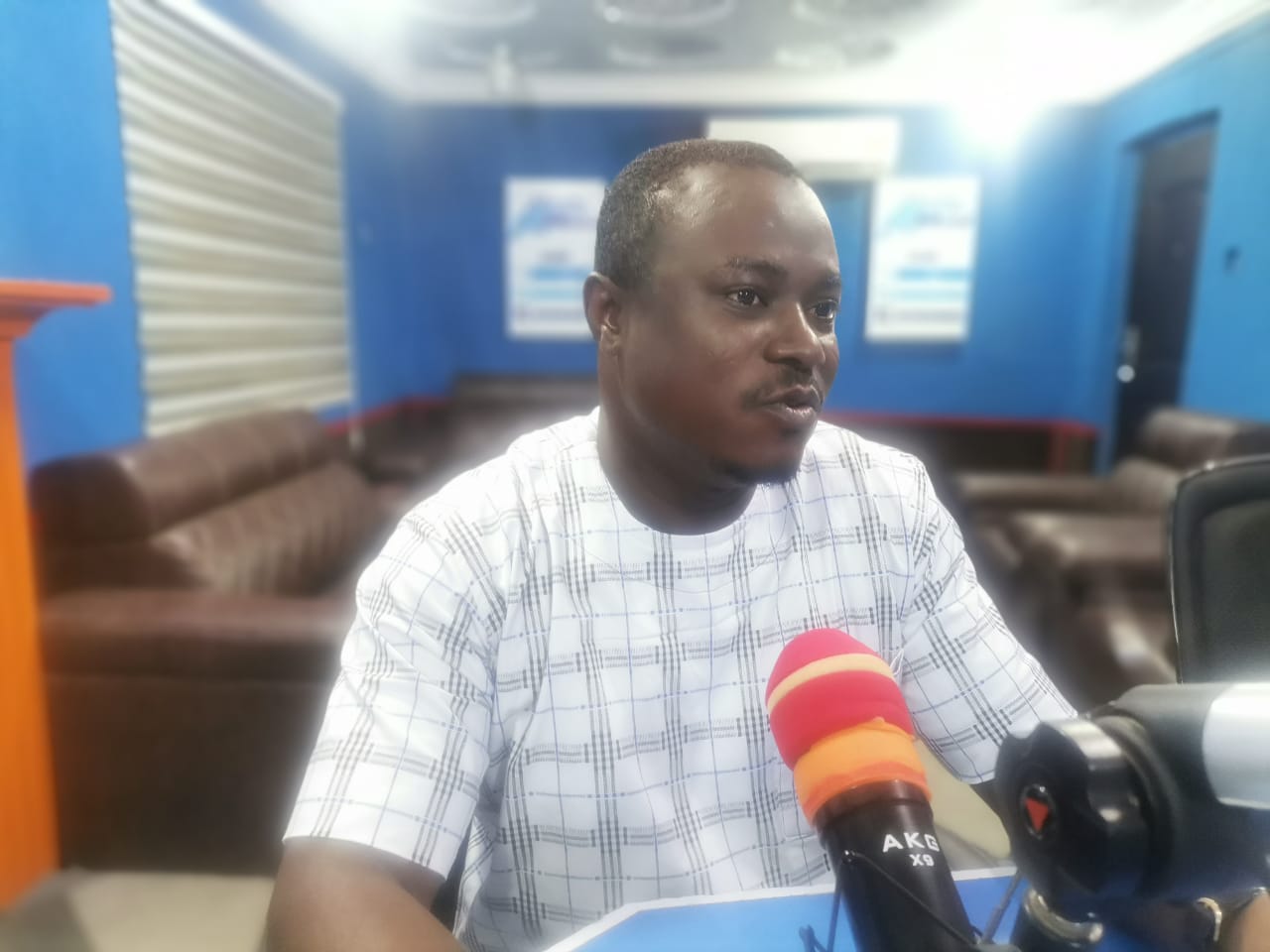
Moses Amoah, the Navrongo Central Constituency Secretary for the New Patriotic Party (NPP) and a member of the party’s Upper East Regional Communications Team, has attributed the absence of factories under the One District One Factory (1D1F) initiative in the Upper East Region to limited investor interest rather than a failure of the policy itself.
Speaking on A1 Radio, Mr. Amoah defended the 1D1F policy as a “fantastic idea” that was always intended to be private-sector driven, with government providing support such as tax incentives and facilitation. He argued that despite the initial announcement that every district would get a factory, the policy hinged on whether private investors found enough raw materials, market potential, and profitability in each district.
“The Upper East Region, unfortunately, was one of the regions where investors did not show strong interest,” Mr. Amoah said. “Investors look at the topography, the availability of raw materials, and the market before putting money in. If they see they won’t get the returns, they won’t come.”
According to Mr. Amoah, local assemblies, including the Kassena-Nankana municipal, submitted comprehensive proposals to the central government, but attracting private investors proved challenging due to economic realities. “No investor would want to throw money into the drain,” he noted, emphasizing that the private sector makes decisions based on profitability.
Mr. Amoah dismissed claims by critics, especially from the opposition National Democratic Congress (NDC), that the government only engaged the private sector at the “tail end” of the project. He insisted that from the outset, the policy framework made it clear government’s role was to facilitate rather than directly build and run factories.
“Government provided support through tax incentives and worked with banks like Exim Bank, GCB, and ADB to help finance factories,” he explained.
Despite the challenge the policy faced, he maintained that it had a positive impact nationally. “Over 200 factories were completed or are at various stages, creating jobs and providing markets for farmers,” he said, citing examples like the Ekumfi fruit juice factory, which provided employment even to people from outside the Ekumfi area.
Source: A1Radioonline.com|101.1Mhz|Joshua Asaah|Bolgatanga