
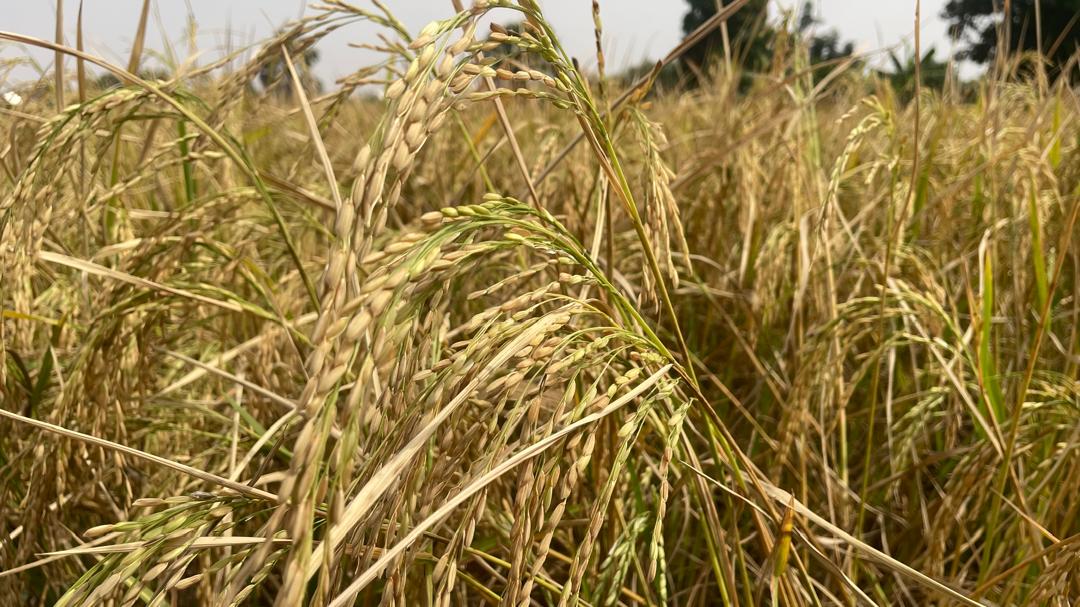
Farmers in Gowrie, a community in the Bongo District of the Upper East Region, have been introduced to improved rice production technologies designed to boost yields and build resilience against the growing impacts of climate change.
The initiative forms part of the RICOWAS project—Scaling Up Climate-Resilient Rice Production Practices in West Africa—implemented by the Council for Scientific and Industrial Research of Savannah Agricultural Research Institute (CSIR-SARI).
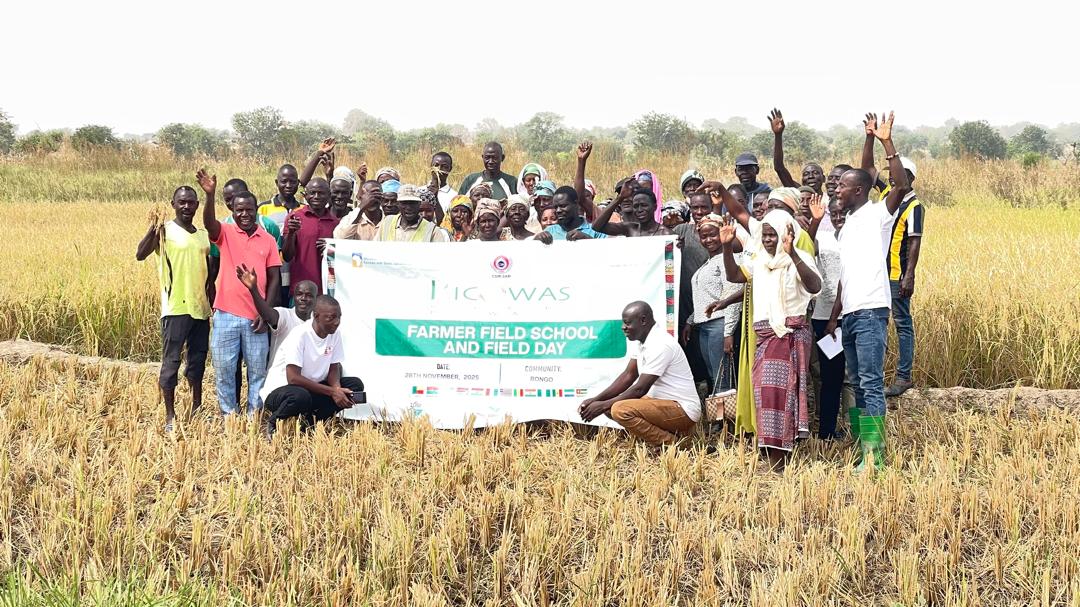
Alex Yeboah, a rice breeder and Acting Head of the Rice Improvement Programme at CSIR-SARI, explained that the project is promoting the System of Rice Intensification (SRI), a method proven to improve productivity while reducing water use.
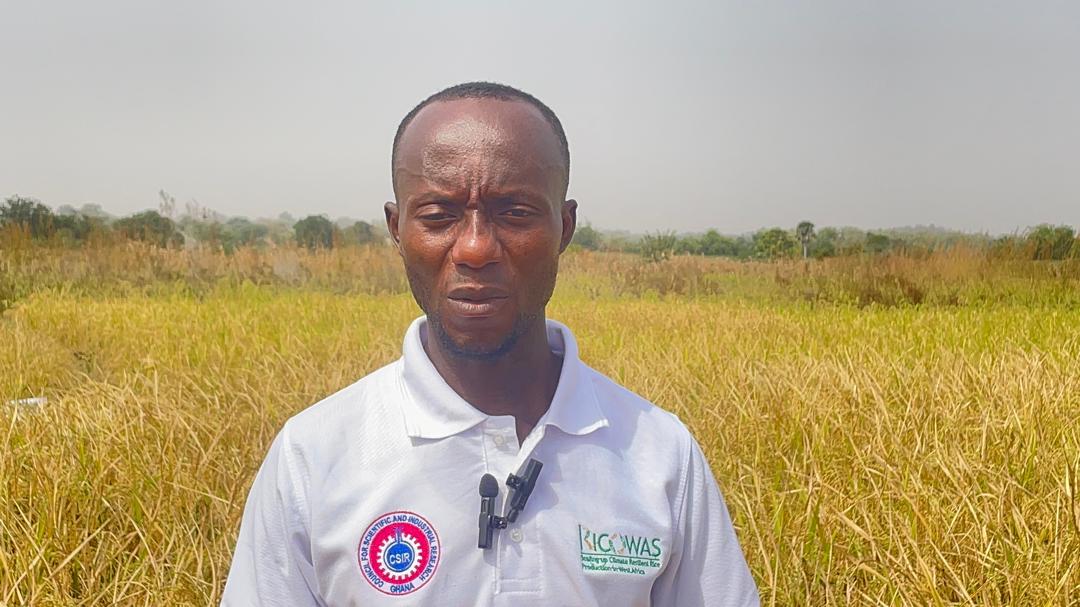
“Although SRI has been introduced in Ghana previously, adoption has remained low. With worsening climate conditions and dwindling irrigation water levels, the project is revisiting the technology to help farmers adapt,” he stated.
SRI is built on four pillars: the use of younger seedlings during transplanting, incorporation of compost to improve soil health and reduce fertilizer cost, proper spacing and line planting to enhance tillering, and efficient water management through Alternate Wetting and Drying (AWD). A simple perforated PVC pipe is inserted into the field to guide irrigation, helping farmers determine exactly when water is needed.
Mr. Yeboah noted that the technology has been tested on demonstration fields in Gowrie, where farmers observed its performance compared to their traditional practices.
“Studies have shown that SRI can increase rice yields by up to 25 percent while reducing water use by as much as 35 percent—an important benefit as irrigation schemes continue to suffer from reduced water availability,” Mr. Yeboah indicated.
Beyond the production method, CSIR-SARI also introduced four improved rice varieties: CSIR Savannah Rice, CSIR Malimali Rice, CSIR Gbewaa Red, and CSIR Bansi Rice. Bansi Rice, in particular, is gaining attention due to its short maturity period of just three months, making it suitable for unpredictable rainfall patterns and limited irrigation water.
Theophilus Anafo, a farmer from Gowrie-Tingre, praised the technology, saying it allows him to use less fertilizer while achieving better yields.
“What I am getting from this new variety is far more than what I used to harvest. With manure and little fertilizer, I’m getting better yields. This kind of farming is better than the old way,” he stated.
Another farmer, Justice Ayine, said the new varieties outperform the older ones inherited from their fathers. He added that farmers are increasingly turning to improved seeds such as Agra and Bansi, noting that market demand, especially from buyers, remains high.
The Bongo District Director of Agriculture, Henry Ayamba, commended the initiative and urged farmers to adopt the improved seeds and production methods. He said the introduction of new, well-researched varieties will address challenges associated with older seeds and boost yields and incomes. According to him, wider adoption of the technologies will contribute significantly to local and national food security.
The RICOWAS project is funded through the global Adaptation Fund and implemented across 13 West African countries. In Ghana, CSIR-SARI leads its execution, providing training, demonstrations, and improved seeds to farmers seeking to strengthen their resilience in the face of climate change.
Source: A1 Radio | 101.1Mhz | Joshua Asaah | Gowrie