The Development Research and Advocacy Centre (DRAC) has called on the Government of Ghana to introduce clearly identifiable development projects funded through resources recovered under the anti-corruption initiative, Operation Recover All Loot (ORAL), to strengthen transparency, accountability, and public trust in the fight against corruption.
The call follows a renewed commitment by the President of the Republic of Ghana, John Dramani Mahama, who pledged a zero-tolerance policy against corruption after assuming office in 2025. As part of the administration’s anti-corruption agenda, the government established ORAL to identify, retrieve, and safeguard public funds allegedly lost through corrupt practices.
Since the introduction of the initiative, government authorities have announced the recovery of millions of Ghana cedis believed to have been misappropriated from public coffers.
While acknowledging the progress made so far, DRAC says the initiative would have a stronger impact if citizens could clearly see how the recovered funds are being reinvested into national development.
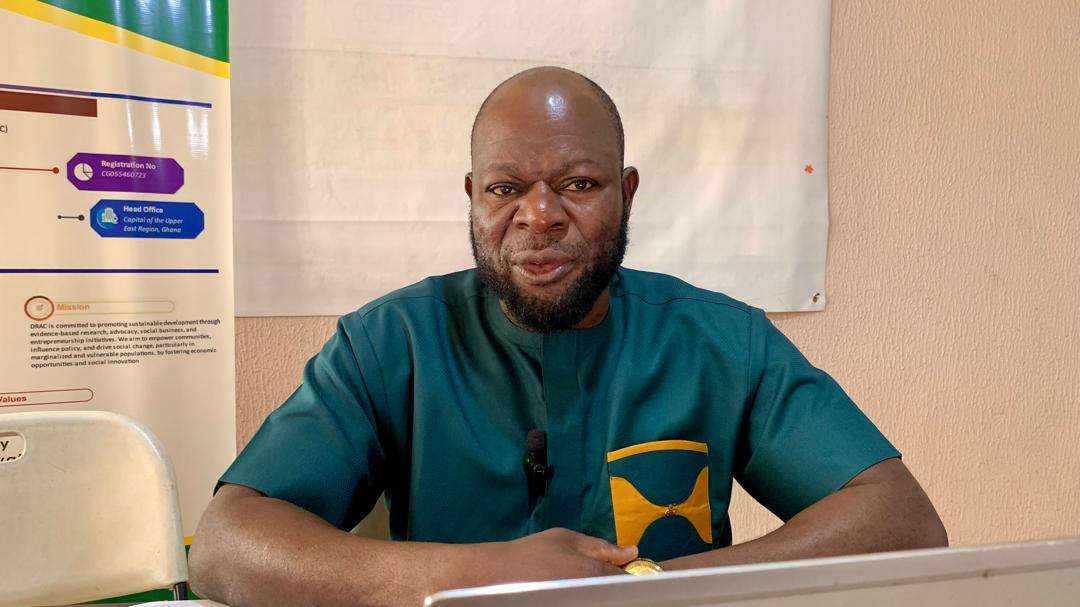
In a statement signed by its Executive Director, Jonathan Adabre, the Bolgatanga-based policy and research organization commended the government for taking practical steps to retrieve stolen public resources but stressed the need for greater visibility in how such funds are utilized.
DRAC therefore recommended the establishment of dedicated development projects across the country, financed directly from recovered ORAL funds. According to the Centre, such projects should be clearly branded as “ORAL Projects” to enable citizens and civil society organizations to easily identify and monitor them.
The organization noted that establishing ORAL-funded projects would significantly enhance transparency and accountability in the management of recovered public resources. By linking development projects directly to recovered funds, civil society groups and the general public would be better positioned to track how the resources are allocated and spent.
DRAC further explained that visible ORAL projects would help raise public awareness about the true cost of corruption. According to the Centre, when citizens see schools, health facilities, water systems, or roads constructed with funds recovered from corrupt activities, it will serve as a powerful reminder of how corruption deprives communities of critical development.
The organization also believes that such initiatives could strengthen public support for anti-corruption efforts. It said citizens are more likely to support current and future governments in sustaining anti-corruption measures when they witness the tangible developmental benefits of recovered public resources.
Beyond transparency and public engagement, DRAC emphasized that clearly identifiable ORAL projects could promote national unity in the fight against corruption. The Centre argued that visible development outcomes funded through recovered resources would encourage citizens to rise above partisan interests and collectively support efforts to safeguard public funds.
The Centre further suggested that, if effectively implemented, the ORAL initiative could position Ghana as a regional model for innovative anti-corruption practices within the West African sub-region.
DRAC therefore urged the government to institutionalize the use of recovered funds through dedicated ORAL-branded projects in key sectors such as education, healthcare, water and sanitation, and infrastructure development.
The organization reaffirmed its commitment to promoting transparency, accountability, and evidence-based policy dialogue as part of efforts to advance sustainable development in Ghana.
A1 Radio | 101.1 Mhz | Moses Apiah | Bolgatanga