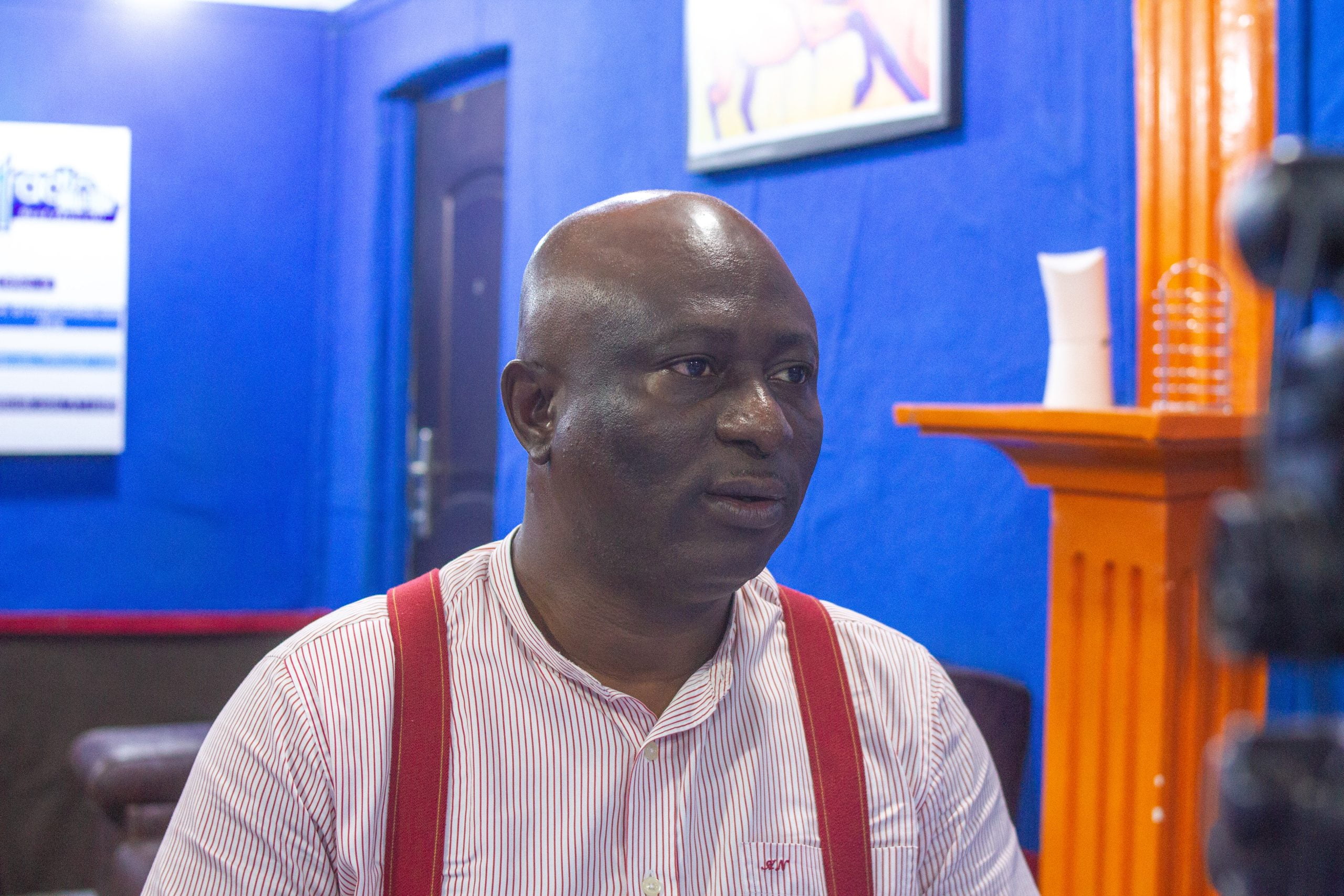
The Upper East Regional Chairman of the New Patriotic Party (NPP), Anthony Namoo, says the Supreme Court’s decision allowing qualified party members to participate in the election of presidential and parliamentary candidates is constitutional but could impose significant financial and administrative burdens on political parties.
Speaking on A1 Radio in an interview monitored by Bolga FM, Mr. Namoo said the ruling broadens participation in internal party elections but could present logistical challenges for political parties that have traditionally relied on delegate systems.
The Supreme Court, in a 5-2 decision, ruled that qualified party members should not be excluded from participating in the election of presidential and parliamentary candidates of political parties.
Mr. Namoo, a lawyer, said unless the decision is successfully challenged through a review, political parties would have to comply with the court’s interpretation.
“The laws are spoken. After the decision, if there is no application for review within a month, then it stands as the law as regards election of flag bearers or parliamentary candidates to represent political parties,” he said.
He, however, questioned whether Ghana’s political parties are financially and logistically prepared to organise internal elections involving potentially thousands of members in each constituency.
Mr. Namoo said political parties have over the years gradually expanded participation in their internal elections, citing changes to the NPP’s electoral college.
“For instance, in the NPP, it used to be that every polling station would present only the polling station chairman. If your constituency had 100 polling stations, only 100 people took part in the election of parliamentary candidates. From there, it came to five, and now it is seven,” he said.
He added that participation in the NPP’s presidential primaries has also expanded significantly, noting that constituencies such as Bolgatanga Central have moved from about 10 delegates to more than 1,200.
Mr. Namoo argued that the delegate system is not necessarily undemocratic because delegates represent the broader membership of the party.
“If seven people are selected from a polling station, they are going on behalf of all the members. The members have entrusted their votes to them to exercise on their behalf,” he explained.
He said while broader participation gives more party members a direct role in choosing candidates, political parties would have to consider the financial and administrative implications of organising elections involving a much larger electorate.
Mr. Namoo also argued that party members seeking to exercise expanded voting rights must accept responsibilities associated with membership, including the payment of party dues.
“Every right comes with responsibility. If you want to vote, you must also take financial responsibility as a member,” he added.
A1 Radio | 101.1 MHz | Moses Apiah | Bolgatanga