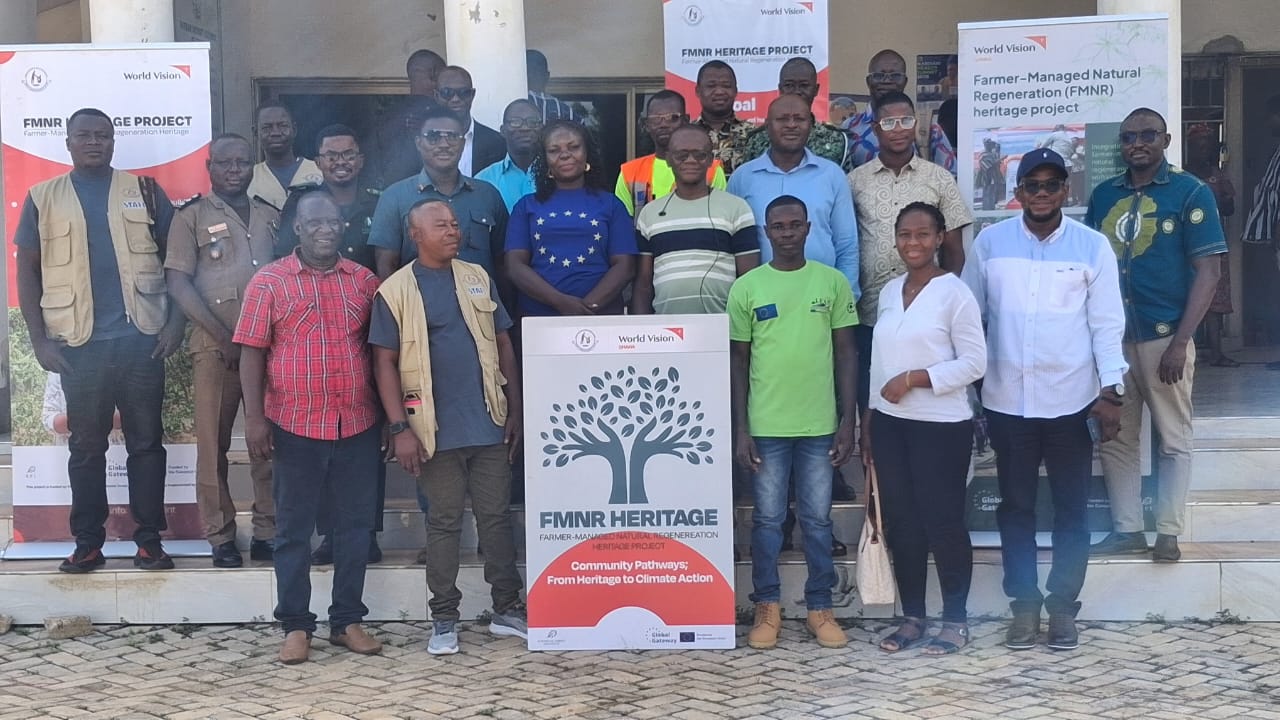
World Vision Ghana (WVG) has engaged stakeholders in the Nabdam District of the Upper East Region on the implementation of the Farmer Managed Natural Regeneration (FMNR) Heritage Project, which seeks to restore 1,500 hectares of degraded land and improve the livelihoods of about 10,000 people.
The engagement brought together representatives from the Nabdam District Assembly, Ghana National Fire Service, NADMO, Forestry Commission and CODI to deliberate on the project and measures needed to support environmental restoration and sustainable livelihoods. Patience Padikie Olesu Adjei, Program Manager, Natural Resources, represented the European Union at the engagement.
The FMNR Heritage Project is funded by the European Union through the European Forest Institute (EFI) and is being implemented by World Vision Ghana. The two-year project began in October 2025 and is expected to end in September 2027.
Speaking at the engagement held at the Nabdam District Assembly on Thursday, September 3, 2026, FMNR Heritage Project Manager Jonas Bugre explained that the project uses existing indigenous vegetation to restore degraded land.
“FMNR involves nurturing existing shrubs from indigenous tree species in the environment so that they can grow into trees,” he said.
Mr. Bugre said the project also incorporates livelihood activities including beekeeping, Savings for Transformation and dry season farming. He identified bushfires and indiscriminate tree cutting as major threats to the restoration efforts.
“Because if you want to restore the environment and people still burn the bush and continue to cut trees anyhow, we cannot restore the environment. So, there is a need to have some regulations that will guide how people treat the environment.”
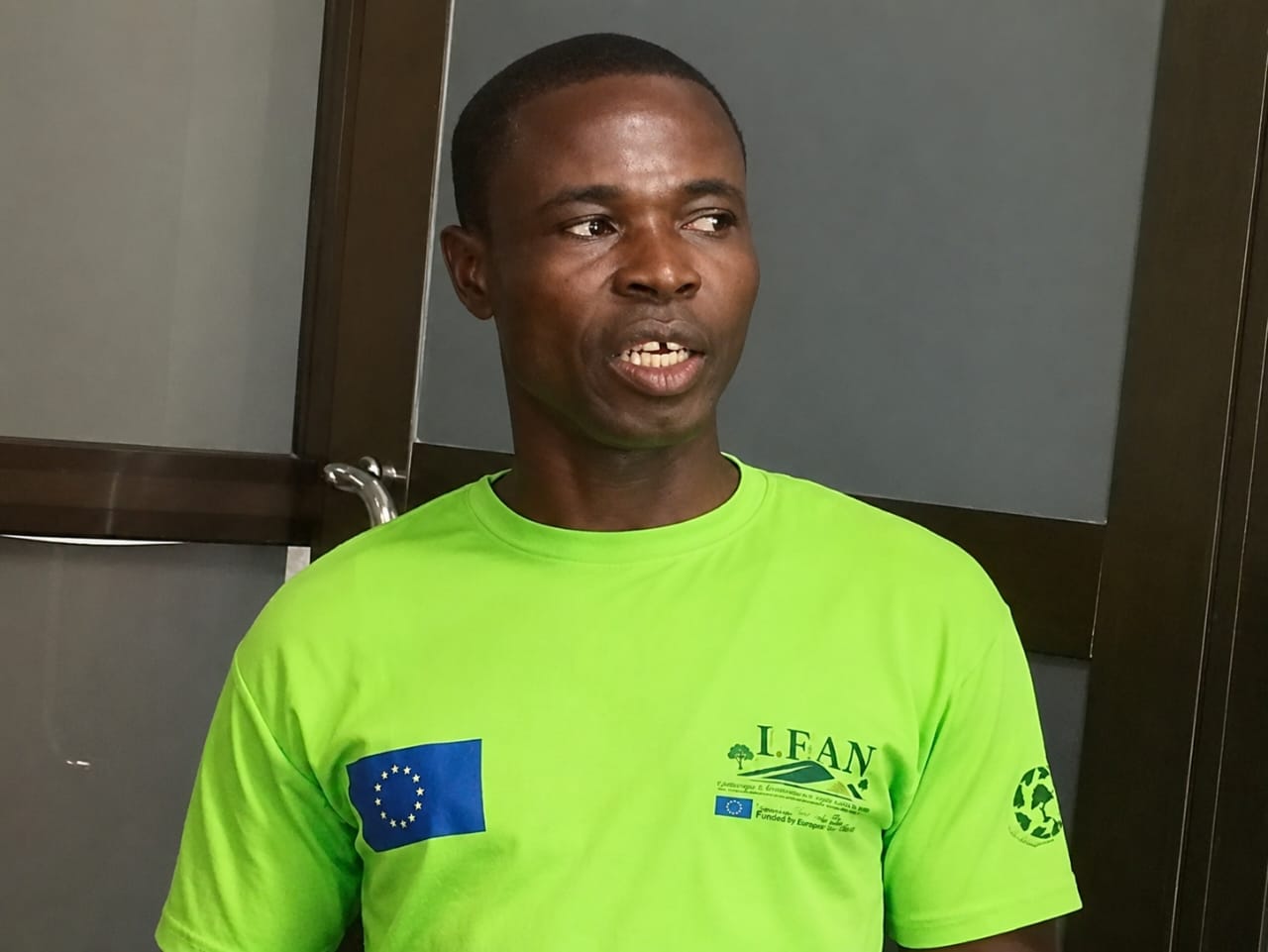
The Nabdam District Director of Agriculture, Rasheed Imoro, said agriculture remains the mainstay of the district and stressed the need to revive farming practices that support soil health and environmental restoration.
He said the project had revisited composting, which many farmers had stopped doing, while encouraging farmers to combine compost with inorganic fertilizer.
“We are not eliminating inorganic fertilizer, but we need to blend it with compost, as this produces better results in terms of yield and food security,” he said.
Mr. Imoro said the project had also identified gaps in agricultural services, particularly inadequate personnel, and was working to improve farmers’ access to services such as mechanization and veterinary support.
He further said changing environmental conditions were contributing to the emergence of new diseases and pests affecting crops and animals, making farmer training necessary to address the challenges.
Mr. Imoro said the intervention currently covers only a limited number of communities and called for more to be done, while highlighting inadequate staff, mobility and other logistical challenges affecting agricultural service delivery.
The Nabdam District Chief Executive, Francis Yenwona Tobig, said efforts to limit people’s activities within forest areas must be accompanied by sustainable alternative livelihoods to ensure that people do not lose their means of survival.
He said activities such as charcoal burning were often driven by the need to survive and called for alternatives that could enable people to move away from environmentally harmful practices.
“If we want to do something, we have to look at whatever thing that we can substitute. And they can move out quickly from that. Because it is not just easy to fail in one thing, let alone to go into burning and to do all other things. But if we have something sustainable for them, trust me, they will move there.”
Mr. Tobig said investment in water facilities, including solar and mechanized boreholes, could support dry season farming and provide alternative livelihood opportunities for young people, particularly as some dams dry up around March.
He also called for fencing around plantations to prevent livestock from damaging seedlings and trees.
“If we want to do plantation, then we should be thinking of actually doing some form of fencing. And that has always been a challenge. It has proven that those that are able to do some form of fencing have better results than when we just plant them in the open.”
The DCE further identified fish farming as another livelihood option, citing the benefits recorded from fish farming in a dam in the Dasabilgo area. He said similar dams could be developed for fish farming through training and support.
“And that is possibly going to take them away from trying to disturb our plants and trees.”
Mr. Tobig stressed the need for the project to be sustained beyond its implementation period, saying the District Assembly would continue working with World Vision Ghana and other stakeholders to maintain the gains from the intervention.
A1Radioonline.com|101.1Mhz|Joshua Asaah|Nabdam