
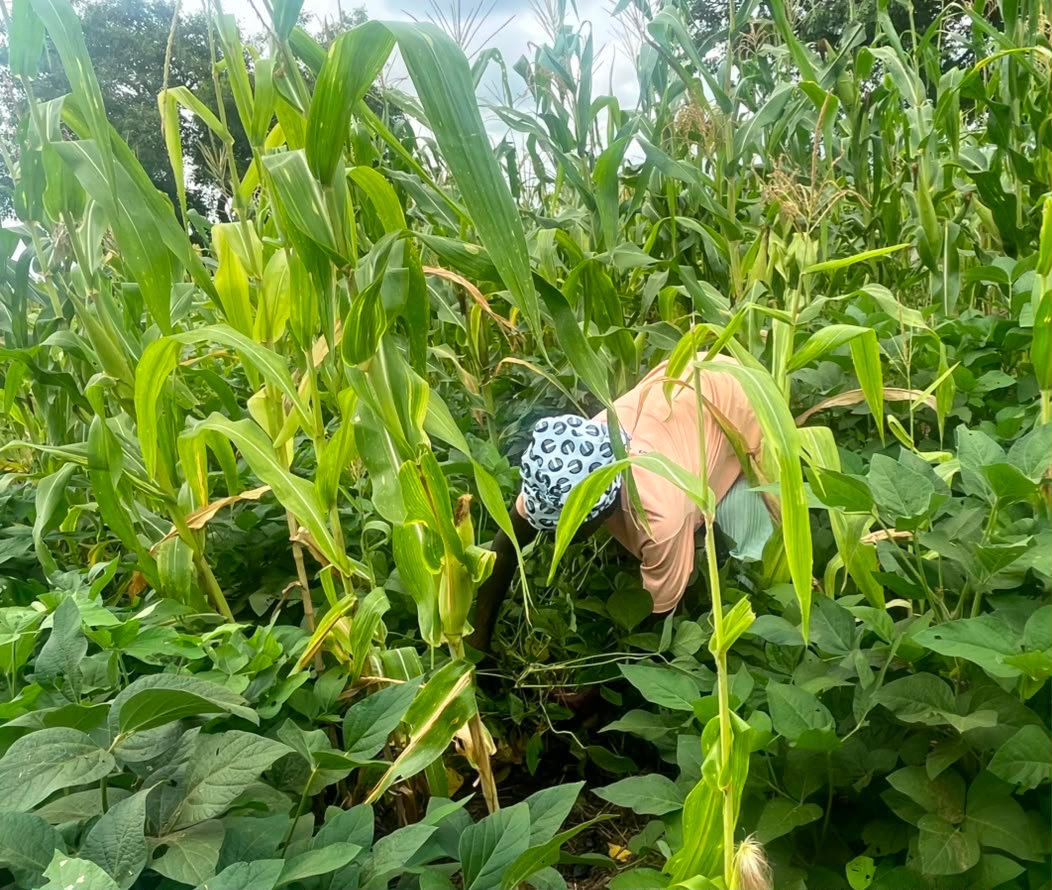
On Yin Bugmah’s farm in Nabdam District of the Upper East Region, some of the most important things being added to the soil are not coming from a shop.
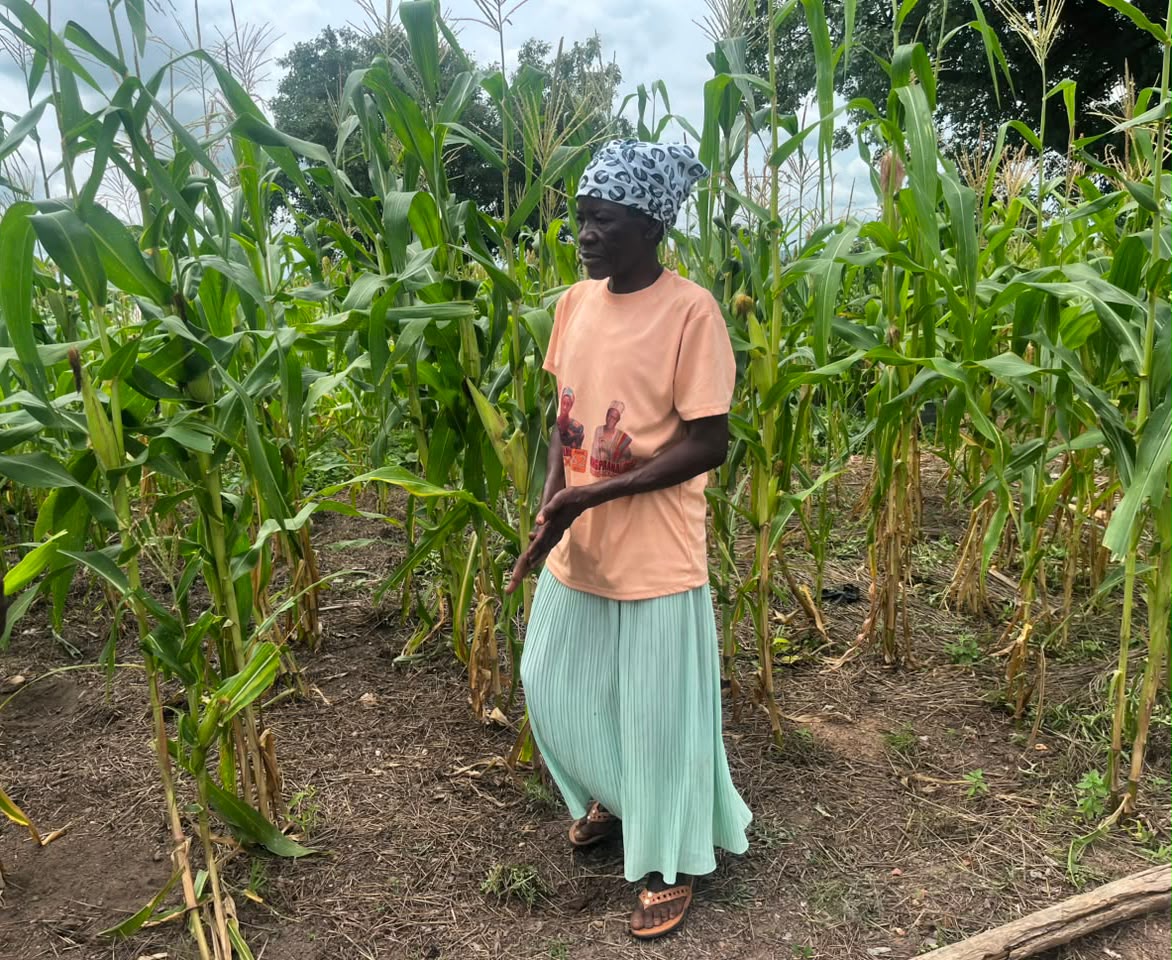
Dry grass covers parts of the field, protecting the soil from heat, while compost made from materials available around the farm is worked into the earth.
Maize and soybeans grow within the same farming system as practices that once seemed unfamiliar gradually become part of how Bugmah produces food.
For the farmer in her early 50s, the change has not happened overnight.
Four years ago, she was introduced to composting and later learned how to use mulch. What began as training has become a practical response to rising production costs, difficulty securing labour and weather conditions that farmers increasingly struggle to predict.
“It has been four years since I was first taught this farming method,” she said.
Bugmah says the practices have reduced her dependence on chemical fertiliser while allowing her to produce different crops on the same piece of land.
She now plans to expand the farm to produce more food for her household. “I plan to expand my farm next year,” she said.
Her experience reflects a wider effort by the Navrongo-Bolgatanga Catholic Diocesan Development Organisation (NABOCADO) to help smallholder farmers adapt to a changing climate without continually increasing their dependence on costly external inputs.
Through its SCRAS project, NABOCADO is promoting composting, mulching, zero tillage, crop rotation and intercropping among 5,217 farmers in 16 communities across Builsa South, Nabdam, West Mamprusi and Kassena-Nankana West.
But on the farms, climate resilience has a much more immediate meaning: whether a farmer can keep producing when fertiliser, chemicals and labour become harder to afford.
In Kata in the West Mamprusi Municipality, Abdul-Rauf Mahamadu has experienced that pressure first-hand. Before his training, he relied on ploughing, chemical fertiliser, herbicides and other conventional inputs.

He says cultivating an acre required two bags of NPK costing about GH¢1,000, one bag of ammonia at around GH¢300, plus expenditure on chemicals and ploughing.
By his calculation, those costs reached about GH¢1,525 before seed and some other expenses were added. Yet, he says, an acre could produce only five or six bags.
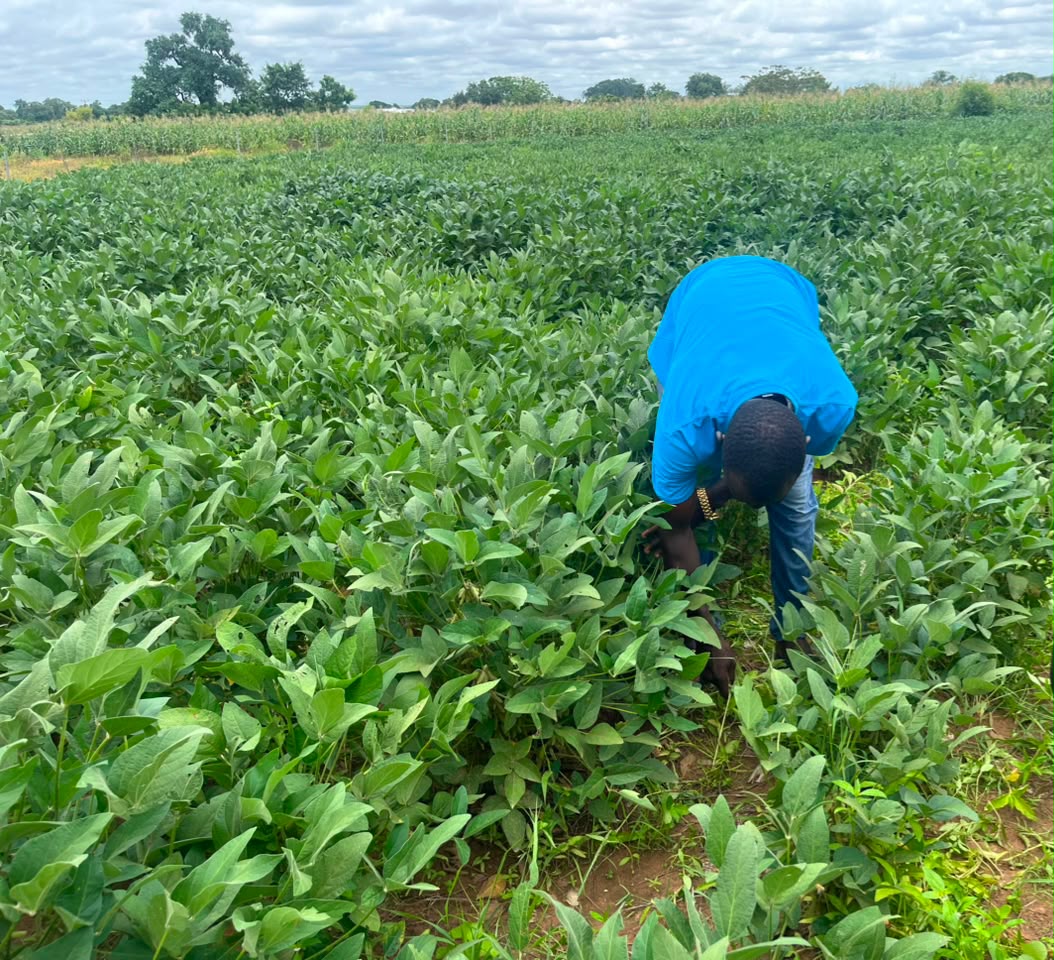
The problem, therefore, was not simply how much the farm produced, but how much of the harvest remained after production costs had been paid.
Mahamadu now uses compost prepared from locally available materials, practises zero tillage and rotates maize with soybean.
On his demonstration farm, he says the approach has reduced his dependence on purchased inputs while improving production.
“With the compost, we haven’t spent anything except the compost. We haven’t bought anything. Just compost, and we get more than those who do inorganic fertiliser,” he said.
He also says Striga, a parasitic weed that previously troubled his maize, has reduced since he changed his practices.
Research in northern Ghana has similarly found that soybean rotation can reduce Striga infestation compared with continuous maize cultivation.
For Mahamadu, however, the calculation remains simple. “After deductions of the cost made, ploughing, labour, fertilisers and others, you might not even break even,” he said.
In Nabdam, Assibi Tii is approaching the same problem from another direction. Before planting, he covers his field with grass and creates small pits where compost is placed and covered with soil.
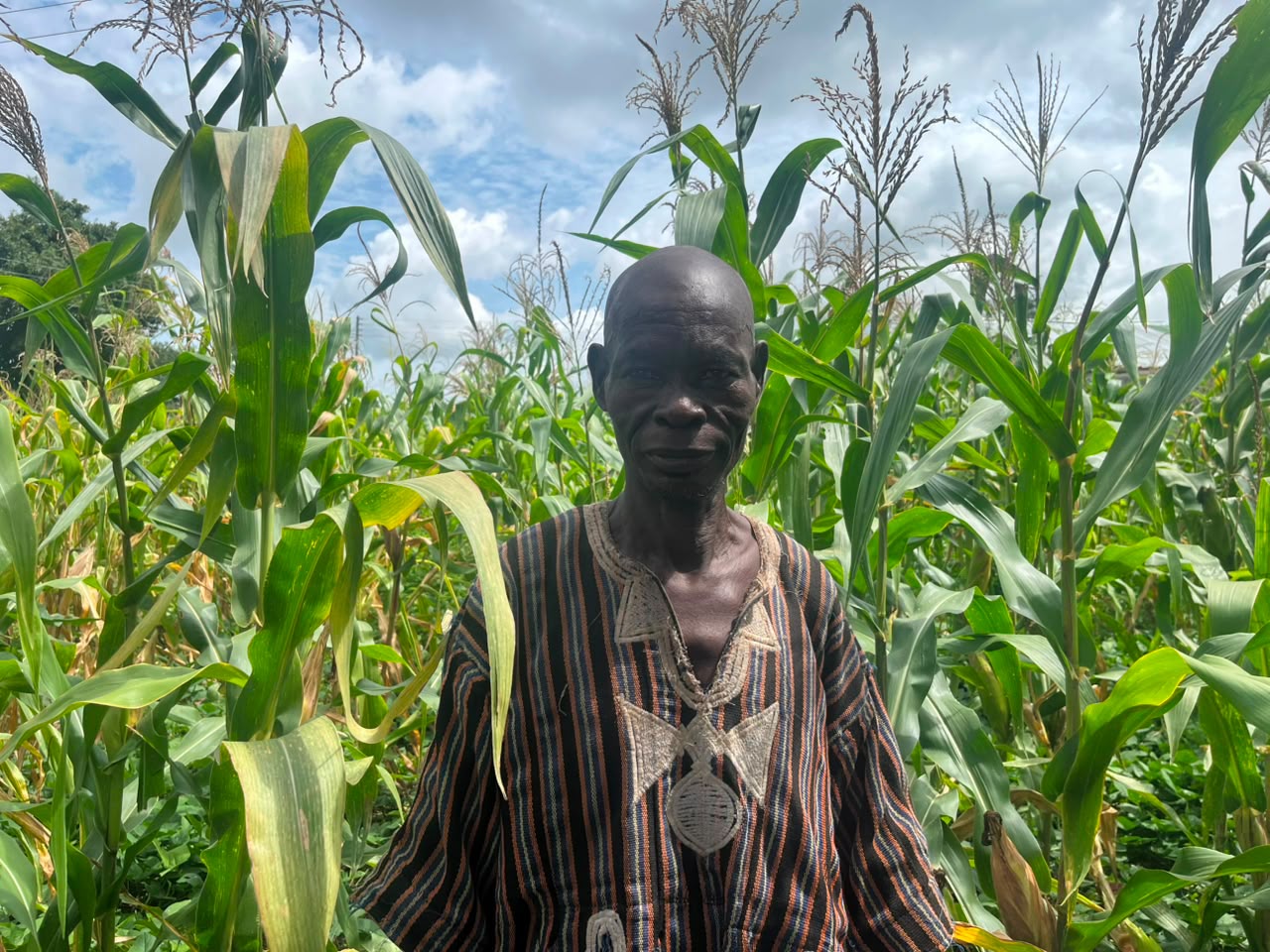
After the rains, he plants maize and later introduces cowpeas between the maize plants, while diluted poultry manure is applied around the crops.
The mulch helps protect the soil and retain moisture, but Tii says one of its most immediate benefits is the labour it saves.
“I don’t need hired labour to help me on the field because I don’t have a lot of weeds on the farm,” he explained.
Naya Talata, another farmer in the community, says the cost of fertiliser has become so high that some farmers struggle to recover their expenditure after harvest.

“People who are able to buy the fertilizers even end up with end product that can’t even cover the cost they made during the farming process,” she said.
Research by the University of Ghana has documented farmers’ experiences of erratic rainfall and rising temperatures in northern Ghana, with many linking these changes to declining agricultural output. That evidence reinforces what farmers such as Bugmah are experiencing: adapting to climate change is increasingly tied to the economics of staying on the land.
Mahamadu’s demonstration farm offers another challenge to conventional thinking.
He says farmers often assume larger farms automatically produce larger harvests, but his experience has made him question that.
“Before, you could farm up to two acres and not get up to 10 bags. But with the new practice, on this small land which is not up to half an acre, we got up to five bags,” he said.
The claim is based on his own experience on a demonstration plot, rather than evidence that every farmer will achieve the same result.
But it raises a larger question about whether improving existing land can sometimes be more useful than simply expanding the area under cultivation.
For NABOCADO, the answer lies in rebuilding the farming system from within.
Dominic Avea Aniah, Director of the organisation’s Livelihood and Agriculture Programme, says farmers are being encouraged to turn crop residues and livestock droppings into compost, combine cereals with legumes and rotate crops to improve soil health and reduce dependence on purchased inputs.
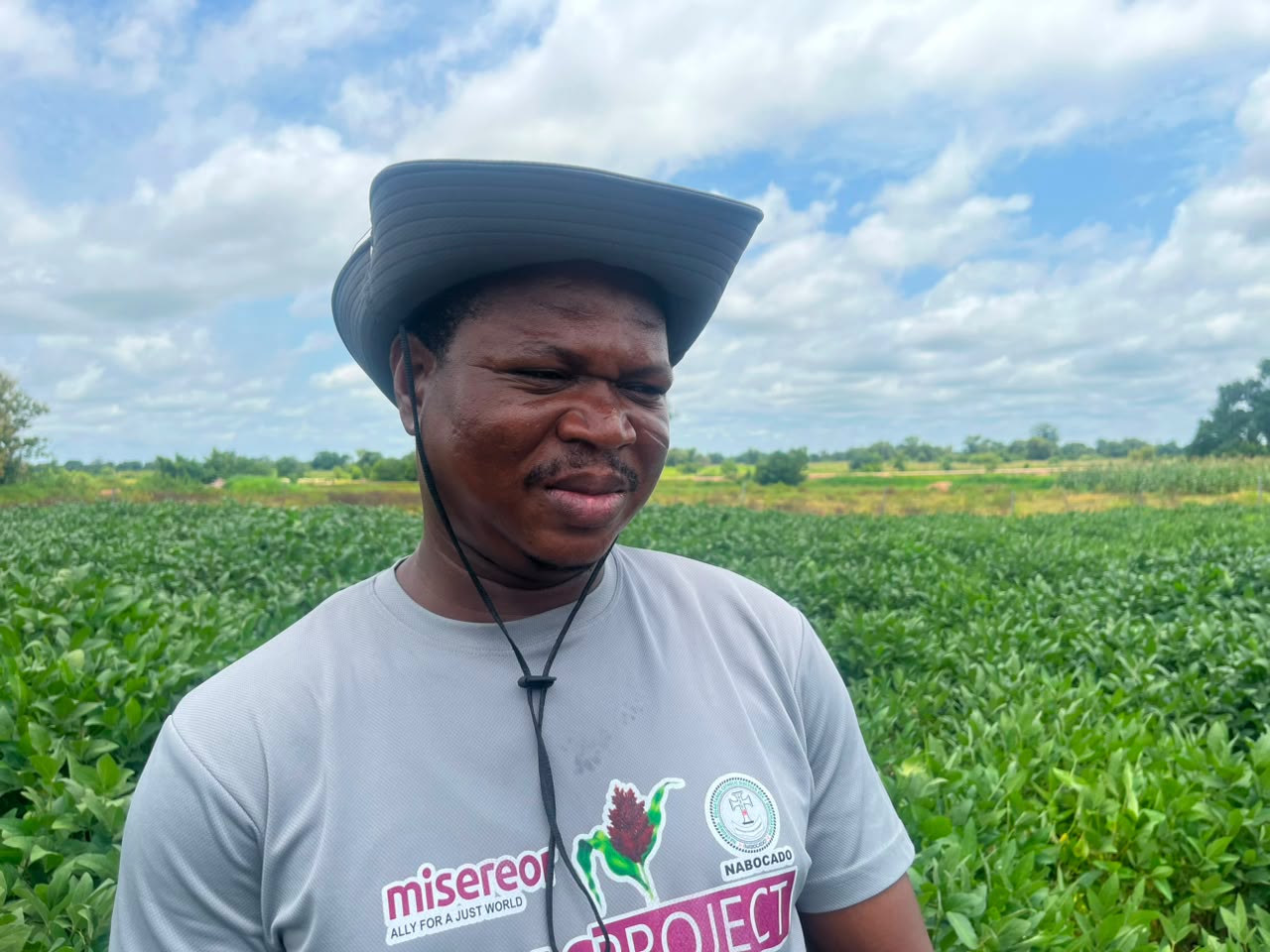
The organisation says its wider intervention has reached about 7,200 farmers and that 51.1 percent have comprehensively adopted the promoted practices.
It also reports a 13 percent increase in yields of targeted crops. These are NABOCADO’s monitoring figures, rather than an independent evaluation.
The harder test is whether farmers can sustain the practices beyond demonstration plots. Compost still requires labour and organic material; mulching requires suitable materials; and crop rotation demands planning, land access and a willingness to change familiar practices.
For Bugmah, Tii and Mahamadu, however, the experiment is already underway. Dry grass becomes mulch, crop residues become compost, poultry manure becomes nutrients and soybean becomes part of a rotation that can help manage Striga.
The change is about more than using fewer chemical inputs. It is about changing the relationship between the farmer and the land.
For years, a difficult farming season could mean buying more fertiliser, hiring more labour or cultivating more land. These farmers are testing another possibility: that a farm can remain productive when some of what it needs is generated within the farming system itself.
For Bugmah, the next step is expansion. She wants to cultivate more land and produce more food for her family.
The climate has not become easier, and farming has certainly not become cheaper. But after four years of learning to work differently with the soil, she believes the land may have more to give.