
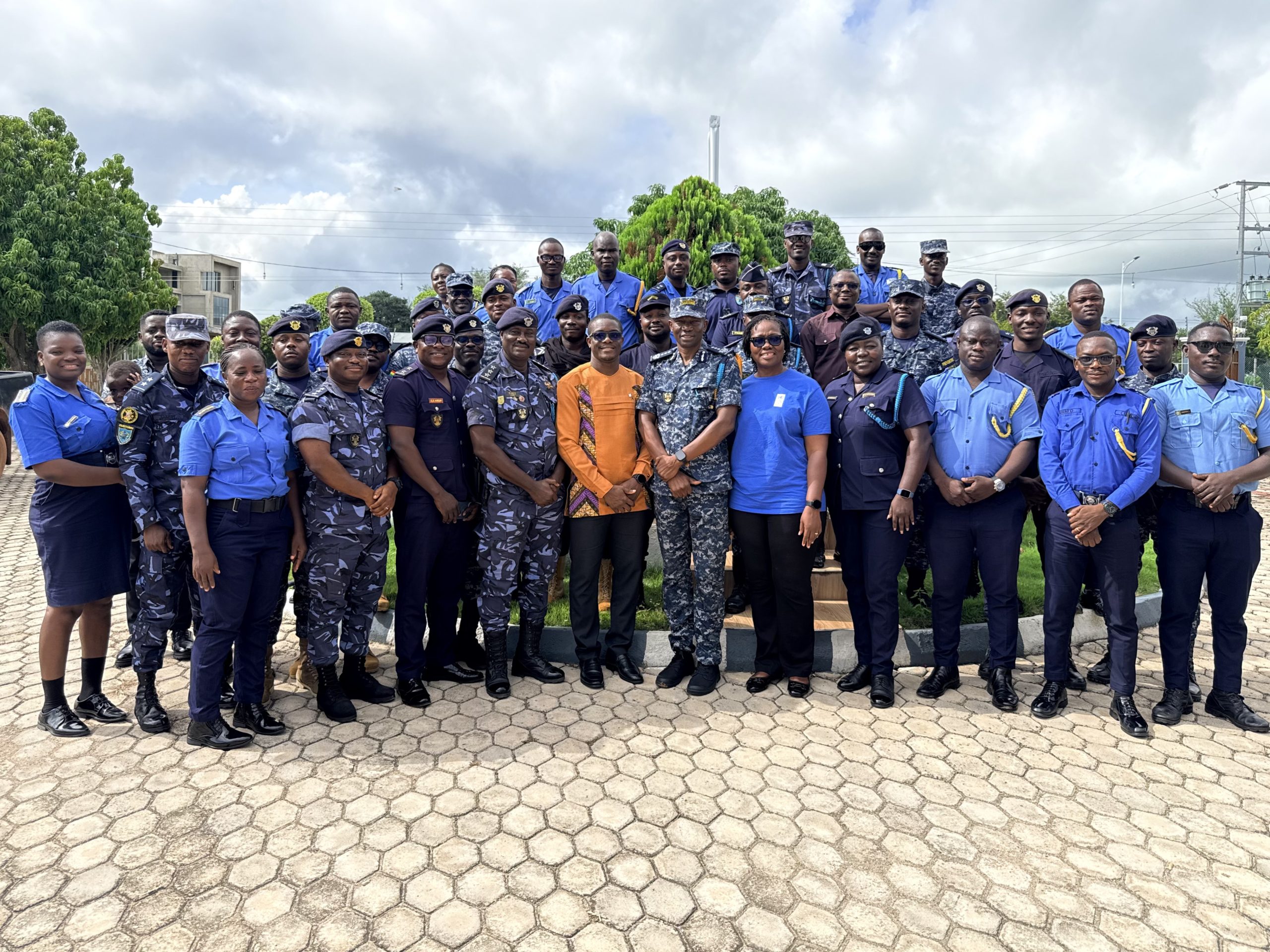
The Ghana Energy Commission has trained Customs officers in the Upper East Region on energy efficiency regulations as part of efforts to prevent inefficient electrical appliances from entering the Ghanaian market.
The training programme, held in Bolgatanga, forms part of a nationwide engagement sponsored by the United Nations Development Programme (UNDP) and the Clean Climate and Air Coalition (CCAC).
It is aimed at equipping Customs officers, identified as key enforcement agencies, with the knowledge and skills to identify appliances that meet Ghana’s minimum energy performance standards (MEPS) before they enter the country.
Manager of Energy Efficiency Regulations at the Energy Commission, Hubert Nsoh Zan, said the Commission considered Customs critical to the enforcement process because officers operate at seaports, land ports and border entry points.
He said regulations would have limited impact if enforcement agencies were not adequately equipped to implement them.
“Laws can be passed, but without a clear strategy to enforce them, they’ll become documents on the shelf,” he said.

According to him, the engagement was intended to help Customs officers understand the regulatory requirements, identify compliant and non-compliant appliances, and carry out effective enforcement.
Mr. Zan said the Commission had expanded the scope of appliances covered under the energy efficiency regulations from three initially—refrigerators, air conditioners and lighting devices—to 19 appliances.
He explained that the expansion was necessary because reducing electricity demand was an important part of addressing energy consumption and improving the reliability of electricity supply.
He said the standards applied to appliances entering the country, including new and store-rejected products, stressing that products must meet the required performance standards before being allowed onto the Ghanaian market.
Mr. Zan also linked energy efficiency to consumer safety and environmental protection, noting that poor-quality electrical appliances could contribute to electrical faults and fires, while refrigerants used in some cooling appliances could have health and environmental implications.
He described energy efficiency as the “first fuel,” arguing that using efficient appliances could reduce the amount of electricity wasted and lessen pressure on the country’s power supply.
The training also incorporated gender considerations in the enforcement and operations of Customs officers.
Joyce Caitlyn Ocansey, Programme Coordinator for the Drive Electric Programme at the Energy Commission and Gender Specialist for the CCAC training, said Customs operations should take into account the different needs and roles of men and women involved in the importation and distribution of appliances.
She said officers were encouraged to collect sex-disaggregated data and ensure that women and men were adequately represented in training, inspection, deployment and enforcement activities.

Ms. Ocansey noted that gender-sensitive teams could improve stakeholder engagement and enforcement, particularly at border points where importers and traders comprise both men and women.
She also stressed the importance of having both male and female officers available for certain enforcement duties, including inspections where gender considerations were required.
Assistant Revenue Officer Adugbire Daniel Akolgo of the Missiga-Bolgatanga Collection Station said the training had improved his understanding of energy-efficient appliances and the role of Customs officers in preventing inefficient products from entering the country.
He said the knowledge acquired would also be shared with other officers who did not participate in the programme.
Another Customs officer, Dramani Vug of the Kulungugu Station, said the training had clarified how officers could identify appliances requiring detention or seizure and verify claims about their energy efficiency.
He said officers were also cautioned that energy-efficiency labels, including star ratings, could be misrepresented, making it necessary for Customs officers to examine other features to establish whether an appliance meets the required standards.
The Energy Commission said the nationwide training was necessary because Customs officers are frequently transferred, making continuous capacity building important to ensure that officers understand the energy efficiency requirements regardless of their duty stations.
A1Radioonline.com | 101.1Mhz | Joshua Asaah