
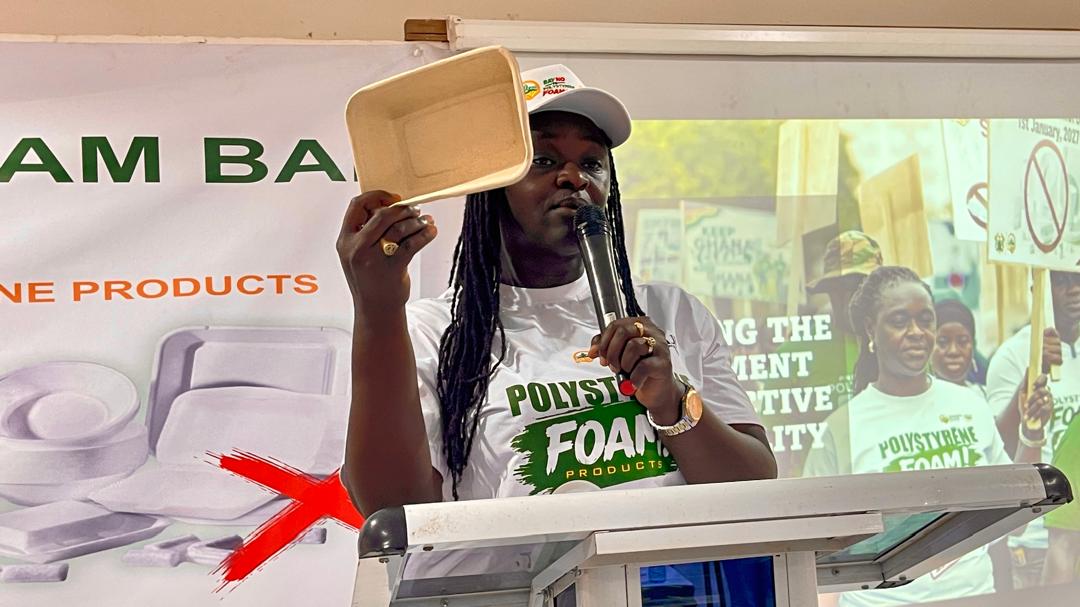
The Environmental Protection Agency (EPA) has engaged stakeholders in the Upper East Region on the nationwide ban on Styrofoam food containers and other polystyrene packaging materials, ahead of the implementation of the policy on January 1, 2027.
The engagement, held on Wednesday, October 28, 2026, at the Conference Hall of the Regional House of Chiefs in Bolgatanga, brought together food vendors, market associations, hospitality operators, distributors, retailers, traditional authorities, security agencies, educational institutions and other stakeholders.
Chief Executive Officer of the EPA, Professor Nana Ama Browne Klutse, said the engagement formed part of a nationwide public education campaign to ensure that Ghanaians understood the reasons for the ban, the products affected and the need to adopt environmentally friendly alternatives.
She said the decision followed President John Dramani Mahama’s announcement of the ban in 2025, adding that the EPA had since worked on a roadmap towards its implementation.
Professor Klutse explained that the ban was intended to address the environmental and public health risks associated with the production, use and disposal of Styrofoam and other polystyrene products.
She said the products could contaminate food, particularly when hot meals were packed in takeaway containers, while the burning of discarded materials could expose people to harmful smoke and respiratory diseases.
The EPA CEO also warned that indiscriminate disposal of the materials contributed to blocked drains and flooding, as the products persisted in the environment.
She said the policy covered the use, manufacture, production and importation of the prohibited products, and urged all stakeholders to cooperate with the EPA and other state institutions to ensure compliance.
Professor Klutse indicated that enforcement would begin when the ban takes effect on January 1, 2027, warning that persons found selling or using the prohibited products would face the application of the law.
She added that prohibited products found during enforcement would be confiscated and safely disposed of by the EPA. The CEO, however, acknowledged that the transition would require changes in consumer behaviour because of the convenience associated with disposable food containers.
She urged consumers to reject Styrofoam packaging when purchasing takeaway meals and encouraged food vendors to adopt reusable, recyclable and biodegradable alternatives.
Among the alternatives she recommended were paper bags, bamboo containers, aluminium foil, traditional leaves such as plantain and banana leaves, and biodegradable packaging made from sugarcane fibre, rice husks and coconut husks.
Professor Klutse said the use of locally sourced materials could also create employment opportunities, encourage innovation and promote cleaner production technologies.
She further disclosed that the EPA would begin a broader conversation early in 2027 on the management of other plastic waste, including polythene bags, sachet water plastics and plastic bottles.
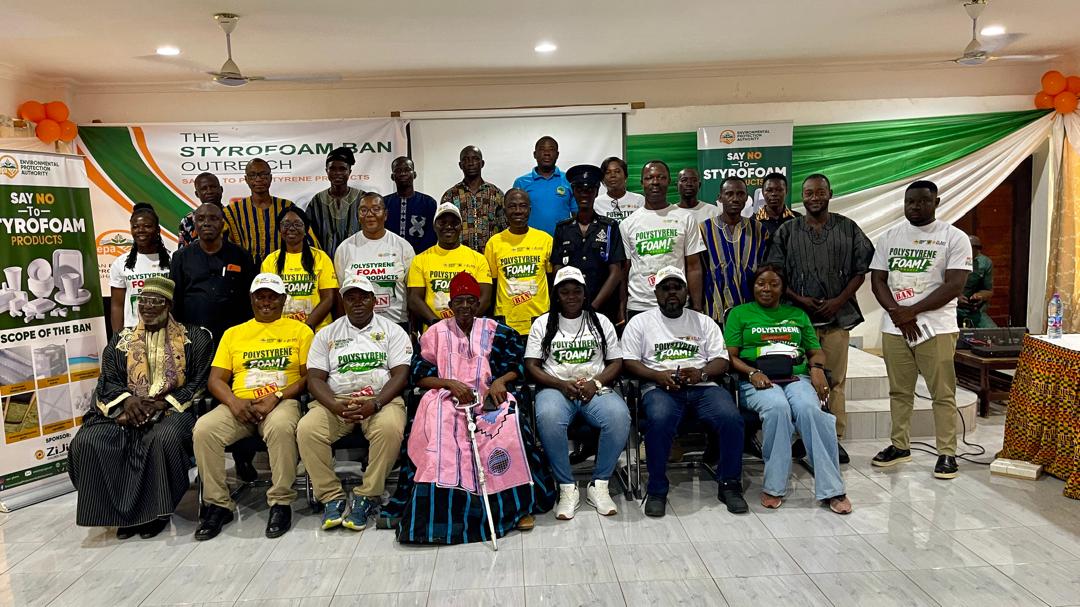
The EPA Upper East Regional Manager, Wandaat Yennumi, said the widespread use and indiscriminate disposal of Styrofoam products had become a major environmental concern because of their persistence in the environment.
He said the stakeholder engagement was intended to deepen public understanding of the ban, explain its environmental justification and implementation requirements, and promote sustainable packaging alternatives.
Mr Yennumi stressed that the success of the policy would depend on the active participation of food vendors, traders, distributors, hospitality operators, local authorities, security agencies and consumers.
He said environmental protection could not be achieved through regulations and enforcement alone without public understanding, behavioural change and sustained commitment.
In a solidarity message delivered on his behalf by John Muniru, Assistant Director at the Upper East Regional Coordinating Council, the Regional Minister, Donatus Akamugri Atanga, commended the EPA for leading the national initiative.
The Minister said the ban, which takes effect on January 1, 2027, covers the production, importation, distribution, sale and use of Styrofoam food containers, cups and other packaging materials for commercial and domestic purposes.
He called for sustained public education, effective coordination among institutions and the adoption of affordable and practical alternatives to support businesses and consumers during the transition.
The Regional Minister also urged Municipal and District Assemblies, traditional authorities, security agencies, educational institutions, civil society organisations and the media to support the implementation through public awareness and responsible waste management.
He reaffirmed the Regional Coordinating Council’s commitment to supporting environmental sustainability, improved sanitation and public health across the region.
The engagement forms part of the EPA’s nationwide sensitisation campaign, which has also covered the Greater Accra, Ashanti, Upper West and Savannah regions.
A1 Radio | 101.1Mhz | Joshua Asaah