
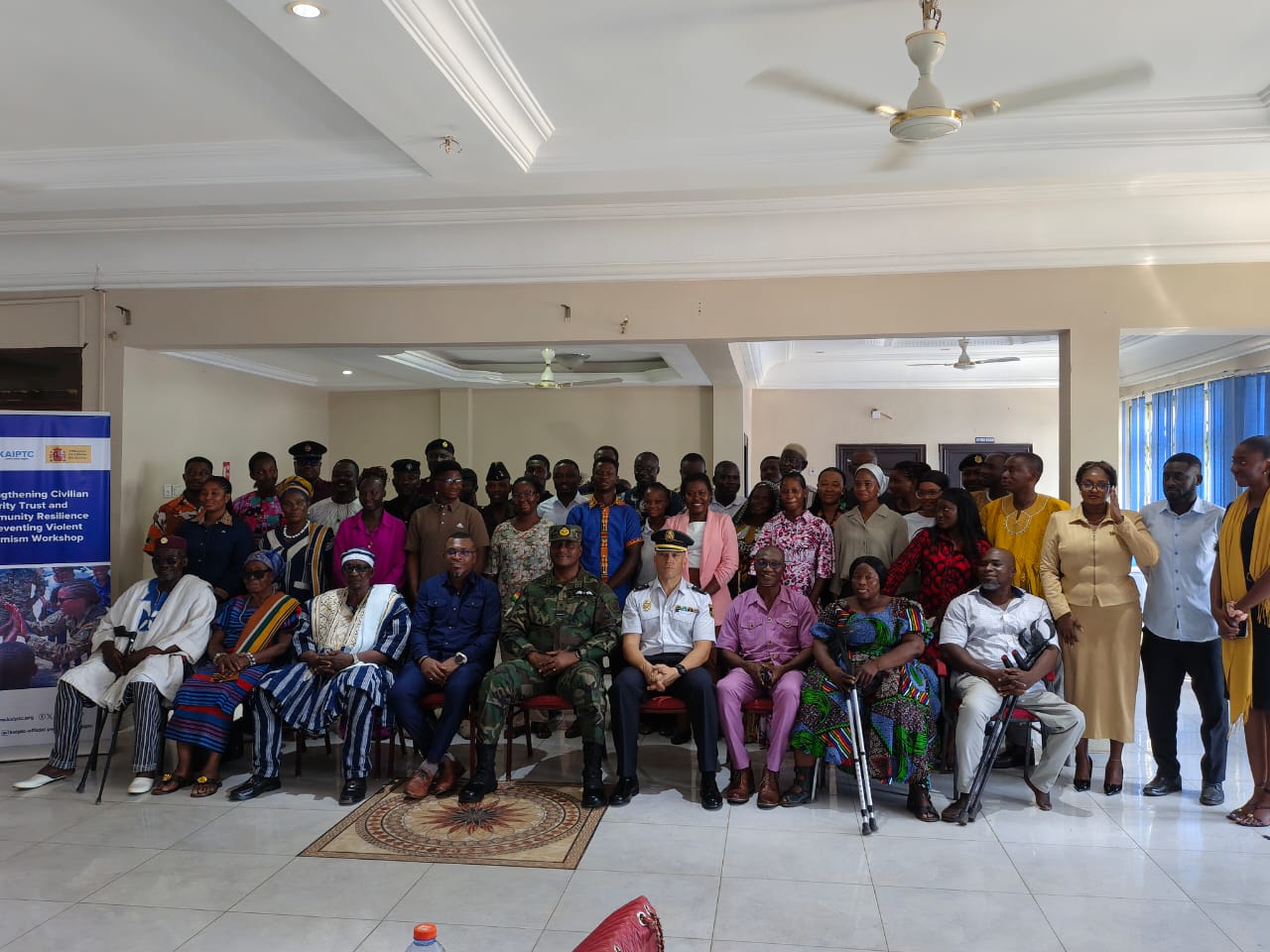
Stakeholders at a peacebuilding workshop in Bolgatanga have emphasised the need for stronger collaboration between security agencies and local communities to address emerging security challenges in the Upper East Region, including drug abuse, cross-border security concerns and the threat of violent extremism.
The stakeholders stressed that improving civilian security, rebuilding public trust and creating opportunities for young people were essential to preventing violence and strengthening community resilience.
The discussions took place at a workshop organised by the Kofi Annan International Peacekeeping Training Centre (KAIPTC) and the National Peace Council (NPC), with support from the Embassy of Spain in Ghana.
Held at the TAP Hotel in Bolgatanga, the workshop focused on strengthening civilian security, trust and community resilience for the prevention of violent extremism. It brought together traditional authorities, opinion leaders, security personnel and other stakeholders to explore practical approaches to addressing emerging security threats.
Among the concerns highlighted were drug and substance abuse, particularly among young people, and the need for effective management of cross-border movements and activities.
Participants discussed the potential consequences of drug abuse for young people’s health, education and livelihoods, as well as the risks of their involvement in criminal activities.
The discussions highlighted the importance of combining law enforcement with community education, parental involvement, rehabilitation support and youth empowerment initiatives.
Stakeholders also emphasised the need for effective border management, proper documentation and cooperation between residents and security agencies in addressing potential security threats.
They acknowledged the contributions of foreign nationals to trade, investment and community development, while stressing that security measures must be implemented without discrimination or unfair targeting based on nationality.
The workshop further highlighted the importance of rebuilding trust between civilians and security agencies to encourage information sharing and cooperation in preventing crime and violence.
Participants noted that residents who felt safe and protected would be better positioned to engage in farming, trading, education and other economic activities.
Traditional authorities and opinion leaders were also encouraged to use their influence within communities to promote dialogue, mediate disputes and prevent disagreements from escalating into violence.
The discussions underscored the importance of creating meaningful opportunities for young people to reduce their vulnerability to drug abuse, criminal activities and recruitment into violent extremist groups.
Stakeholders further called for responsible information sharing and urged residents to report suspicious activities through appropriate channels rather than spreading misinformation that could create fear or hostility towards particular groups.
Security agencies were equally encouraged to strengthen public confidence through professionalism, accountability and respectful engagement with civilians.
The workshop reinforced the need for a collective approach to peacebuilding involving security institutions, traditional authorities, civil society organisations, government agencies, women, youth and local communities.
It also highlighted the importance of addressing socioeconomic conditions that contribute to insecurity, alongside strengthening border management and community-based conflict prevention.
The engagement formed part of efforts by KAIPTC and the National Peace Council, with support from the Embassy of Spain, to strengthen civilian security and build resilient communities capable of preventing violence and sustaining peace in the Upper East Region.
A1 Radio | 101.1 MHz | Mary Atiamah Aperika | Bolgatanga