
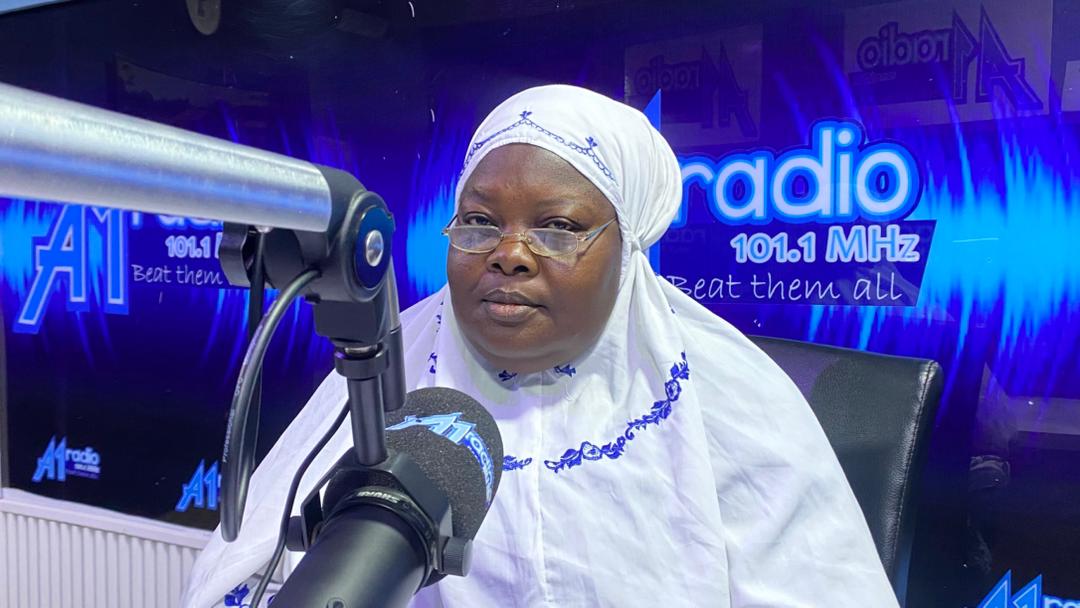
The Bolgatanga Municipal Director of Agriculture, Hajia Lantana Osman, says two major government interventions—the Feed Ghana Programme and the Nkuko Kiti Kiti poultry initiative—are expected to significantly improve productivity, incomes, and livelihoods of women farmers in the municipality and beyond.
Speaking on Equal Voices on A1 Radio, Hajia Lantana Osman explained that the Feed Ghana Programme is structured as an input-credit system aimed at reducing the financial burden on farmers, particularly women, who often struggle to afford farm inputs at the start of the production season.
She cautioned farmers who have not registered their farms to do so urgently, warning that failure to register could lead to missed opportunities under the new agricultural support programmes targeting registered farmers.
Under Feed Ghana, she explained, farmers will access support through Farmer Service Centres, which will provide mechanization services alongside essential inputs such as fertilizers and agrochemicals. Beneficiaries will receive these inputs at the beginning of the farming cycle and repay after harvest, either in cash or in kind. The programme is expected to support both wet-season and dry-season farming, boosting year-round agricultural production.
Hajia Lantana Osman further revealed that Departments of Agriculture across various Metropolitan, Municipal and District Assemblies (MMDAs) are actively registering farmers into cooperative groups in preparation for the rollout of the Nkuko Kiti Kiti initiative. In the Bolgatanga Municipality alone, she said hundreds of farmer groups, representing tens of thousands of farmers, have already been registered.
She explained that registration is commodity-based and community-driven. Women interested in crops such as maize, millet, tomatoes, peppers, and other produce are encouraged to form groups within their communities. These groups are trained in leadership, record-keeping, proposal writing, and basic business management before being registered on a national digital platform.
Once Farmer Service Centres become operational, registered groups will be directly linked to them. Input needs will be assessed collectively, delivered to communities, and closely monitored by agricultural extension officers to ensure efficiency and accountability.
Complementing Feed Ghana is the Nkuko Kiti Kiti poultry programme, which focuses on boosting local poultry production. Hajia Lantana Osman said the first phase will involve the distribution of birds, feed, medication, and extension services, with women, youth, and persons with disabilities given priority.
She stressed that housing inspection is a key requirement under the poultry programme to ensure sustainability and prevent losses.
“These interventions are revolving funds. If beneficiaries do not pay back, the programme cannot continue. That is why strict monitoring is necessary,” she noted.
Hajia Lantana Osman emphasized that agricultural extension services remain central to the success of both programmes. She said farmers need continuous technical guidance on land preparation, pest scouting, fertilizer application, and disease management—support that is most effective when farmers are properly registered and working in organized groups.
The programmes, she said, represent a major step toward strengthening women’s participation in agriculture, improving food security, and advancing inclusive agricultural development in the Upper East Region and Ghana as a whole.
Source: A1 Radio | 101.1Mhz | Keziah Nsoh Porepeya | Bolgatanga