
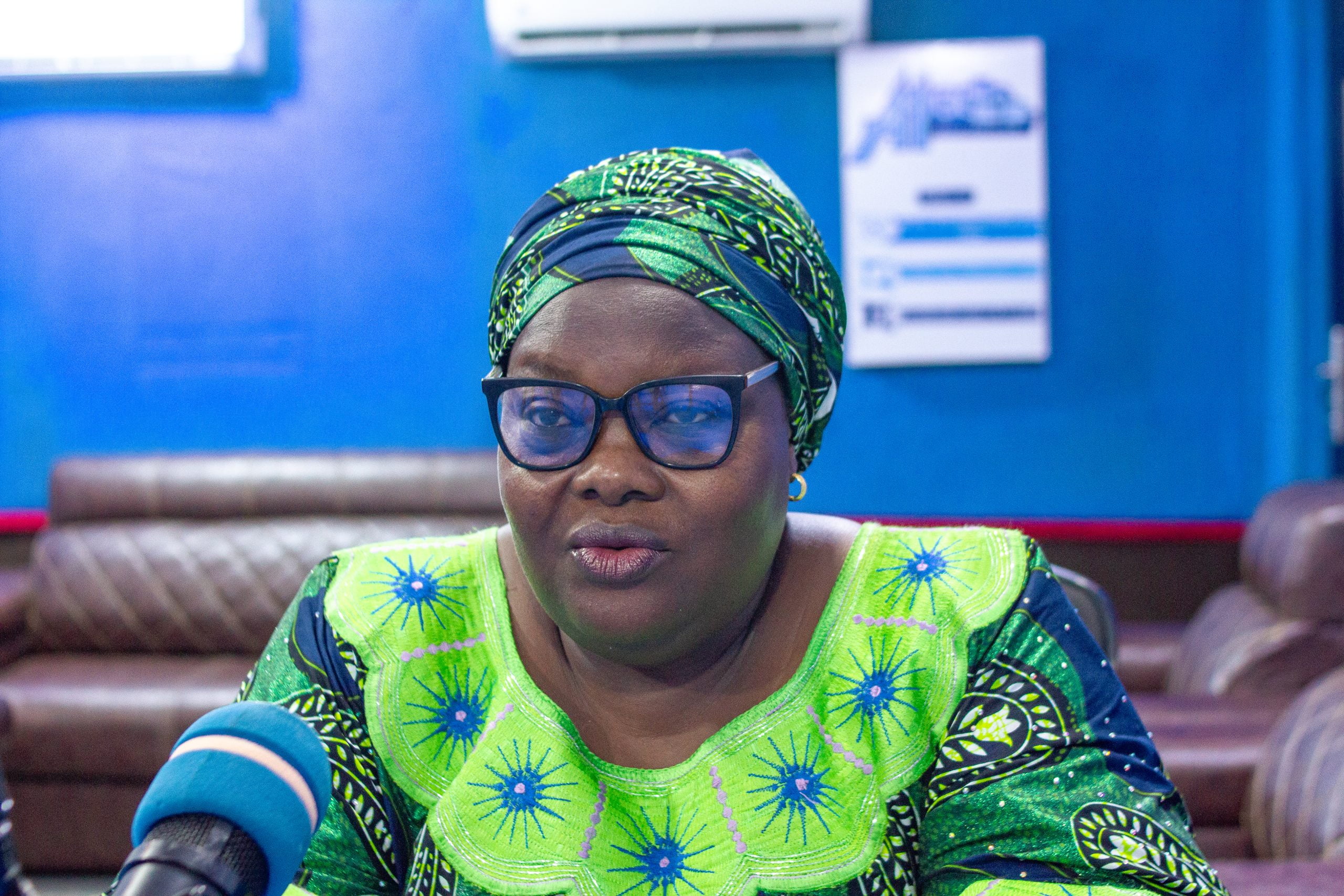
Despite increasing participation by women in agriculture, weak market access remains the biggest threat to their long-term success, according to the Bolgatanga Municipal Director of Agriculture, Hajia Lantana Osman.
Speaking on Equal Voices on A1 Radio, Hajia Osman said many women farmers are able to produce successfully but struggle to sell their produce at profitable prices, undermining sustainability and discouraging continued investment in farming.
She stressed that agriculture must be approached as a business, with market planning done before production begins. However, price volatility, limited bargaining power, and delayed purchasing mechanisms—particularly government interventions—often leave women at a disadvantage.
“Women produce, but when they cannot sell at the right price, they lose interest in farming,” she said. “Nobody wants to invest time, labour, and resources into an activity that results in losses.”
Hajia Osman recounted engagements with women farmer groups that harvested significant volumes of crops but were unable to access reliable markets or fair pricing. She said these challenges are most severe for smallholder women farmers who lack storage facilities and direct links to bulk buyers.
She noted that women dominate small-scale agro-processing activities in the Upper East Region, including shea butter production, groundnut paste, sunflower oil, and other value-added agricultural products. However, she said large-scale processing such as juice production and food canning remains largely male-dominated due to higher capital requirements and market access barriers.
Despite these challenges, Hajia Osman acknowledged that many women farmers in the region have recorded remarkable successes. Some have received national awards for excellence in agriculture, while others quietly sustain household and community food systems without public recognition.
She cautioned against what she described as “executive farming,” where individuals invest in farming without active involvement or proper systems.
“You cannot succeed in farming if you are not present,” she said. “You must understand your interest, your capacity, and your availability.”
Beyond production and marketing, Hajia Osman highlighted the importance of exposure and continuous learning. She said women farmers have benefited from learning tours, agroecology demonstrations, and climate-smart agriculture practices that promote sustainability and reduce dependence on chemicals.
Despite persistent constraints—including land tenure insecurity, limited access to capital, irrigation challenges, and unstable markets—she expressed optimism that targeted government interventions, strengthened agricultural extension services, and well-organized farmer groups can unlock the full potential of women in agriculture.
“At the end of the day, women are feeding their households and feeding Mother Ghana,” she said.
Source: A1 Radio | 101.1 Mhz | Keziah Porepaya Nsoh | Bolgatanga