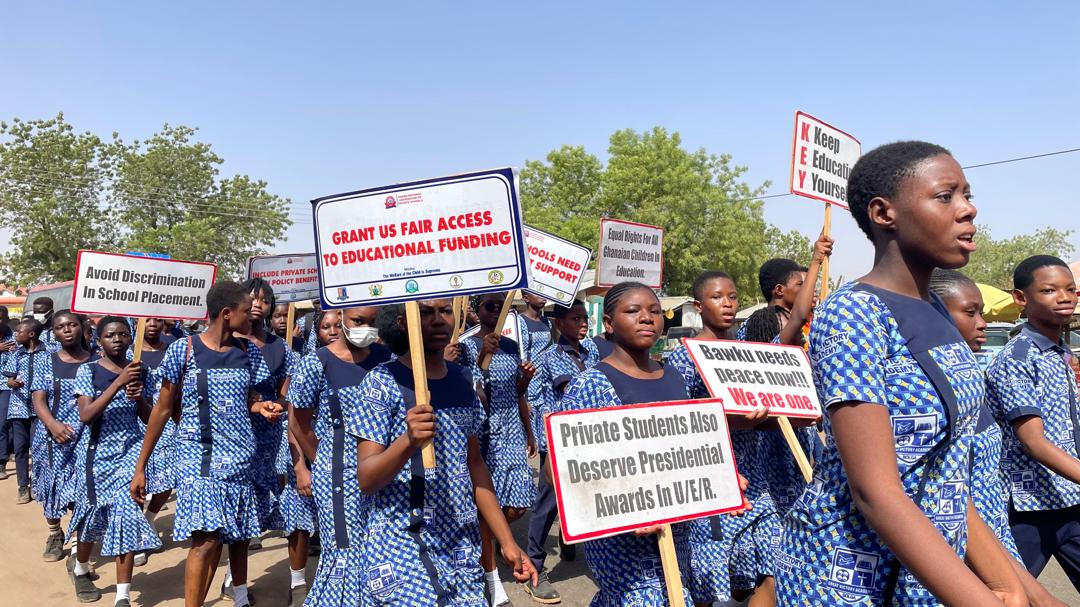
Private school proprietors in Bolgatanga have expressed frustration over what they describe as injustice and unfair treatment by the government, calling for a fair share of national educational development resources to support their operations.
The concerns were raised by Reverend Pius Prah, Municipal Secretary of the Ghana National Association of Private Schools (GNAPS), after a float through the principal streets of Bolgatanga as part of activities marking this year’s GNAPS Week celebration.
The float brought together pupils, students and staff of various private schools in the municipality, drawing attention to the contributions private institutions continue to make to education in the country.
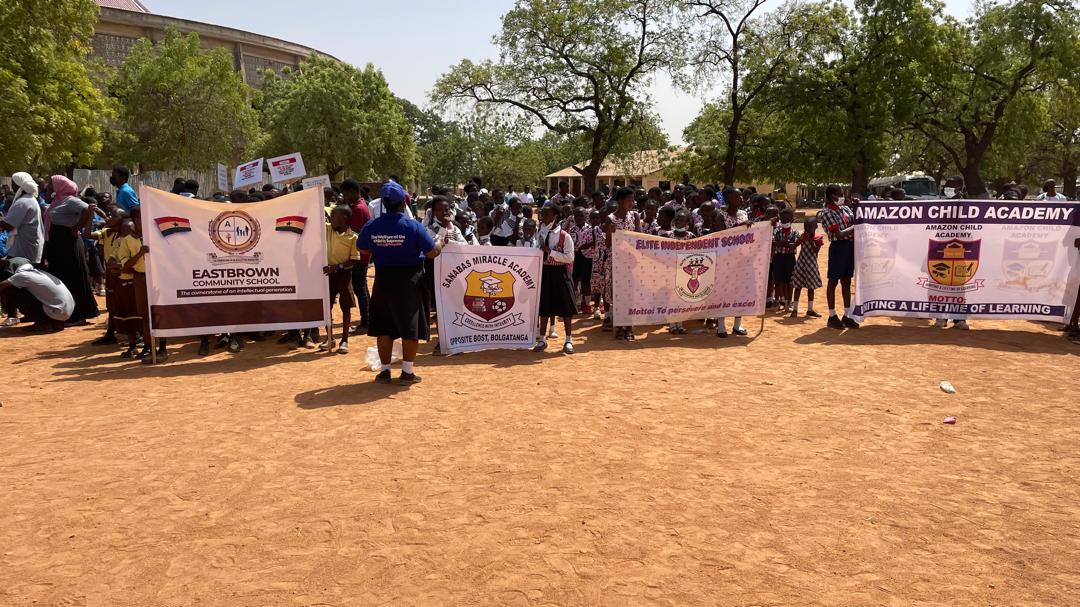
Speaking to the media after the event, Rev. Prah explained that the week-long celebration is organized annually by the association to highlight the role of private schools in Ghana’s education system and to promote collaboration among stakeholders.
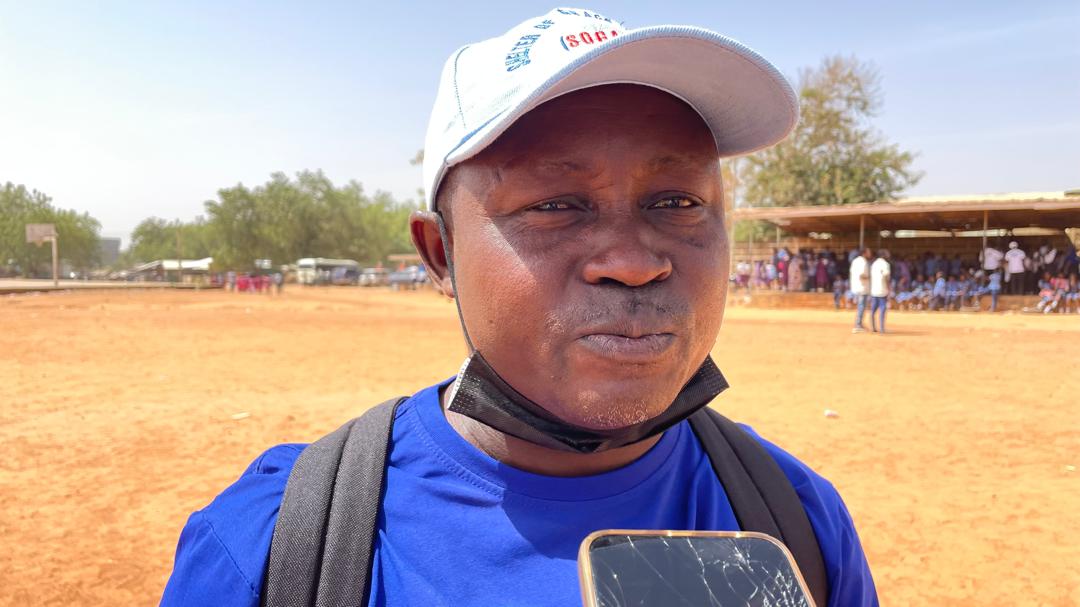
“Every year, the national chapter assigns a week for us to celebrate private schools across the country. The celebration started today with a float in the municipality, and it has been very successful,” he said.
He outlined a series of activities lined up for the week, including a clean-up exercise in schools and key public places such as hospitals, palaces, police stations and CHPS compounds. Sporting activities will also be organized, while the latter part of the week will feature inter-school quizzes, cultural displays and other educational competitions.
Rev. Prah emphasized that private schools remain major stakeholders in Ghana’s education sector, noting that many of them consistently record strong academic performance.
“If you talk about quality education in Ghana, statistics after the Basic Education Certificate Examination often show private schools performing very well. However, when it comes to placement after the BECE, that is where we feel shortchanged because the perception is that public schools must be given priority before private school students,” he stated.
He argued that although private schools contribute significantly to the country’s educational development, they are often left out when government resources and interventions are distributed.
According to him, government institutions such as the Ghana Education Service and the National Schools Inspectorate Authority collect data from private schools to support national planning and donor-funded educational projects, yet private institutions rarely benefit from such resources.
“They take our data for educational development and projections for donors to support education in Ghana, but we don’t get anything from the national kitty in terms of education support. Meanwhile, we build our own schools and provide the facilities ourselves,” he said.
Rev. Prah also cited the cost of registering candidates for the BECE as one of the major concerns affecting private schools. He explained that while public school students are registered for free, private school students pay over GH¢300 for registration.
“This shows the level of inequality we face. We are part of the educational system, yet we are treated differently,” he said.
Responding to claims that private school proprietors benefit financially from the fees they charge parents, Rev. Prah said such perceptions fail to reflect the realities of running private educational institutions.
He explained that private schools pay various taxes and statutory obligations, including contributions to the Social Security and National Insurance Trust, environmental charges and other regulatory fees. In addition, they provide employment opportunities for both teaching and non-teaching staff.
Rev. Prah stressed that in many communities where public schools are limited or unavailable, private schools fill the gap by providing access to education for thousands of children.
“In Bolgatanga alone, we have over 80 registered private schools, and some of them have more than 2,000 students. If we were not here, can the public schools absorb all these children? We also matter,” he emphasized.
The GNAPS Municipal Secretary, therefore, called on government to recognize the role of private schools in national development and include them in educational support initiatives.
Among the proposals put forward by the association is the possibility of government support in the form of textbooks, infrastructure assistance or a collaborative arrangement to employ trained but unemployed teachers in private schools.
Rev. Prah suggested that government could introduce a subsidy system where both the state and private schools share the cost of paying teachers.
“If government cannot employ all trained teachers, they can partner with private schools. We can agree on a salary structure where the government pays part and the private schools pay part. That will also help reduce unemployment,” he proposed.
He noted that such an arrangement would not only support private schools but also address the growing number of trained teachers who remain unemployed.
A1 Radio | 101.1Mhz | Joshua Asaah | Bolgatanga