Ghana’s Attorney General and Minister for Justice, Dr. Dominic Ayine, has defended the government’s anti-corruption campaign, insisting that the much-debated “ORAL” initiative remains active and effective despite growing public skepticism.
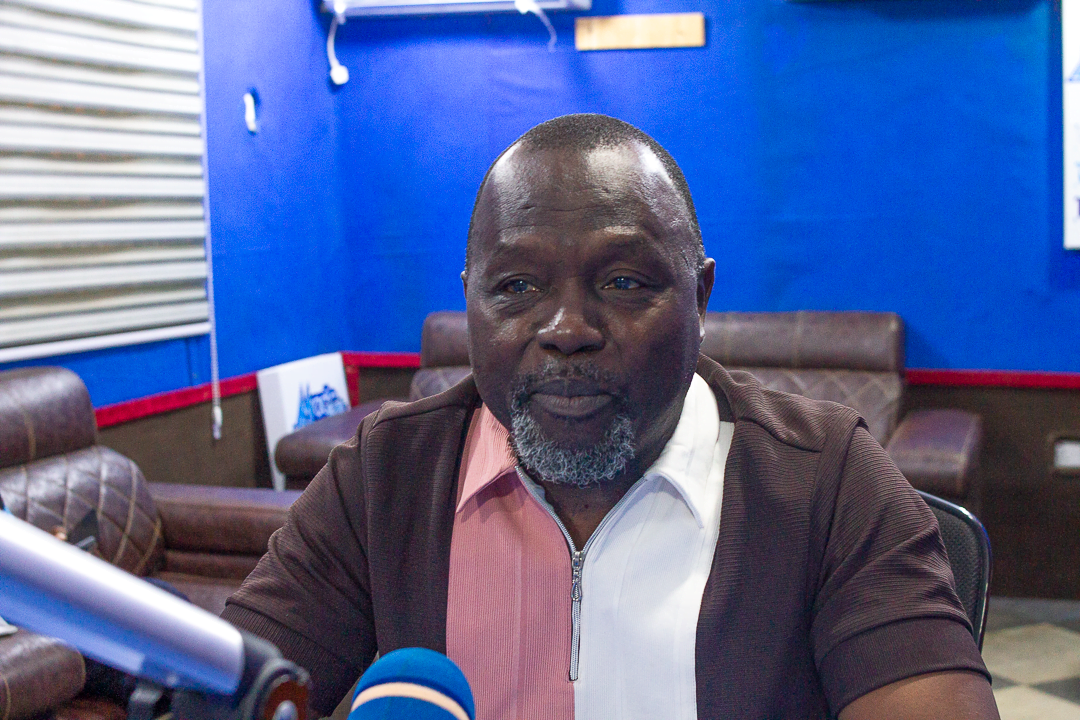
Speaking in an exclusive interview with A1 Radio, Dr. Ayine pushed back against claims that the anti-corruption drive has stalled, describing such assertions as politically motivated and disconnected from ongoing legal work.
“ORAL is on course, and strongly so,” he stated. “The problem is that some people are being paid to go on social media every day to say it is dead.”
Contrary to public perception, the Attorney General revealed that multiple high-profile cases are currently progressing through the courts. According to him, at least seven major prosecutions are ongoing, involving alleged financial improprieties across different sectors.
These include cases tied to the controversial SkyTrain project, the National Service Scheme, and other corruption-related investigations. Dr. Ayine emphasized that his office is actively engaged in courtroom proceedings almost daily.
“We are going to court every day. My deputy barely has time for anything else because he is leading these prosecutorial teams,” he explained.
He further argued that his tenure has already set a record in Ghana’s Fourth Republic, claiming no previous Attorney General has filed as many corruption-related cases within a single year.
Addressing concerns about the pace of prosecutions, Dr. Ayine outlined the legal and bureaucratic hurdles that often slow down high-profile cases.
He cited a specific example involving a tax evasion investigation linked to a government road project, where his office had to wait six months for confirmation from the Ghana Revenue Authority before proceeding.
“How do I go to court without that confirmation?” he asked. “The Attorney General cannot just wake up and declare someone a criminal.”
Dr. Ayine also addressed criticism surrounding the visibility of accused individuals, some of whom have been seen in public spaces or social gatherings despite facing charges. He cautioned against equating prosecution with guilt, reminding Ghanaians of the constitutional principle of presumption of innocence. “Because someone is being investigated or prosecuted does not mean they should go into hiding,” he said. “We are governed by the rule of law.”
He added that public expectations may have been inflated by political rhetoric, creating the impression that arrests would automatically lead to immediate imprisonment.
Dr. Ayine said that instead of bundling multiple accused persons into a single, complex case, a practice that often leads to prolonged proceedings, his office now isolates cases and limits the number of witnesses.
This approach, he said, has significantly reduced trial timelines. “Some cases that used to take years, we are now completing in months,” he noted, citing a recent case concluded in just four months.
While critics continue to question the effectiveness of the ORAL initiative, Dr. Ayine remains adamant that progress is being made, albeit away from the public spotlight. He suggested that political opposition and misinformation campaigns are shaping negative perceptions, even as substantive legal work continues. “Whether people see it or not, the work is being done,” he said. “And some of the cases we are preparing will shock the conscience of the nation.”
A1 Radio | 101.1 Mhz | Samuel Adagom | Bolgatanga