
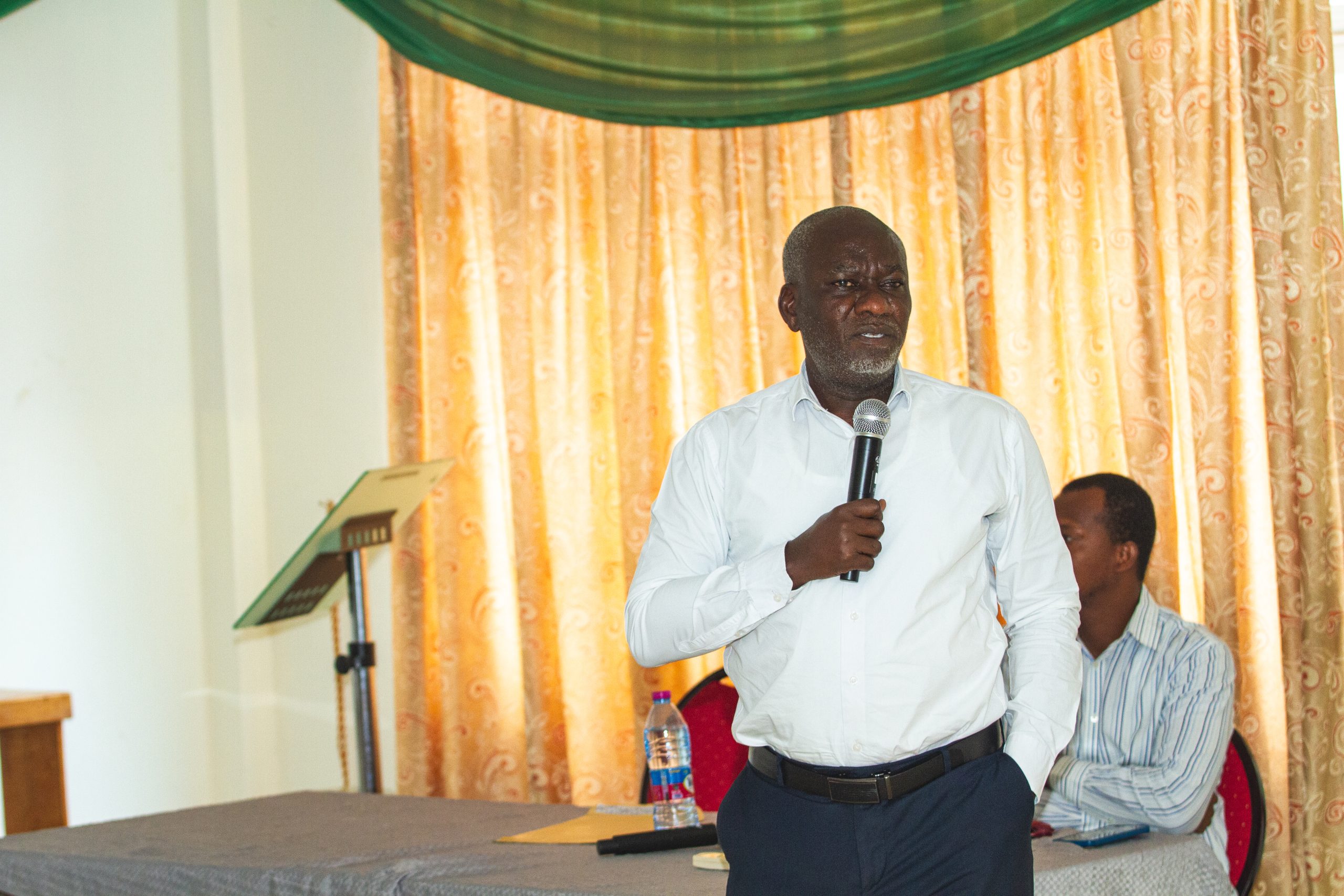
The Upper East Regional Director of the Commission on Human Rights and Administrative Justice (CHRAJ), lawyer Abdulai Jalaldeen, has issued a strong caution to traditional authorities and community leaders against resolving serious criminal cases outside the formal judicial system, describing the practice as unlawful and dangerous to justice delivery.
Speaking to Journalists after a sensitization workshop organized by the Upper East Regional Executive of the Ghana Journalists Association (GJA) on court reporting, lawyer Abdulai Jalaldeen emphasized that while alternative dispute resolution remains an important mechanism for maintaining family and community cohesion, it must not be extended to grave criminal offences.
According to him, Ghana’s legal framework allows for certain disputes, particularly minor ones rooted in misunderstandings or family disagreements to be settled amicably outside court. “The essence of out-of-court settlement is to preserve relationships and promote harmony, especially among family members,” he noted. “In cases of petty offences such as minor assaults, insults, or small-scale theft, parties can resolve their differences through mediation and later inform the court.”
However, he stressed that this flexibility does not apply to serious offences classified as felonies. Crimes such as murder, armed robbery, rape, and defilement, he said, must be handled strictly within the judicial system.
“The court does not consider personal relationships when adjudicating cases. Whether the accused is your father, son, or relative, the court is guided by evidence and the law,” he explained. “Attempting to settle such serious crimes at home undermines justice and emboldens perpetrators.”
lawyer Jalaldeen, expressed concern over reports from some communities where criminal acts like rape and defilement are allegedly resolved through the payment of fines or compensation to victims’ families. He described such practices as a gross violation of the law and a threat to human rights.
“In one instance, a community imposed a monetary fine for rape or defilement. This is unacceptable and must be condemned outright,” he said. “We must not create systems that trivialize serious crimes or deny victims their right to justice.”
He urged traditional rulers and opinion leaders to collaborate with law enforcement agencies and the courts in addressing criminal matters, rather than substituting legal processes with informal settlements.
A1 Radio | 101.1 MHz | Samuel Adagom | Bolgatanga