
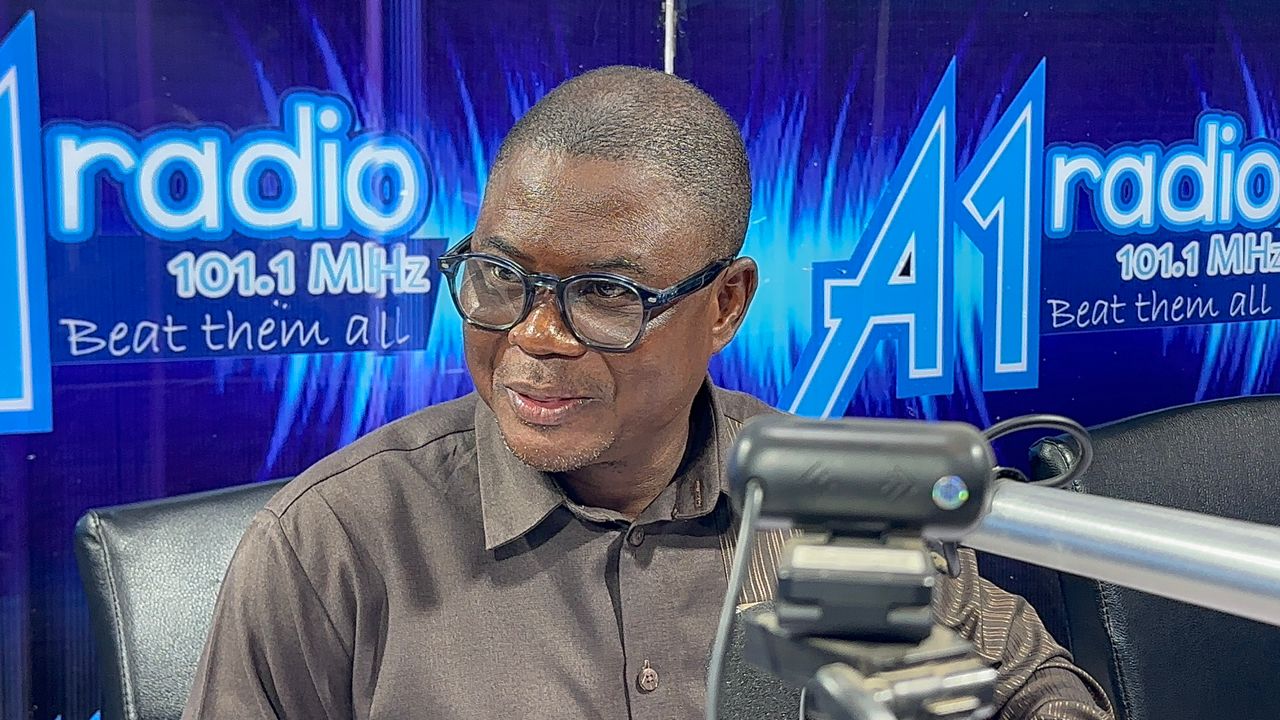
Dr. John Kingsley Krugu, spokesperson for the Environment and Natural Resources Sector Committee of the New Patriotic Party (NPP), has expressed deep concern over the growing unemployment crisis in the Upper East Region, describing it as one of the greatest threats to the area’s development and future stability.
Speaking in an interview on A1 Radio, Dr. Krugu lamented the increasing migration of educated young people, particularly women, from northern Ghana to southern cities in search of jobs and better living conditions.
According to him, the lack of economic opportunities in the region has left many young graduates vulnerable and struggling to survive after completing tertiary education.
“I live in Accra and I’m very sad about young women who have finished tertiary training from this region and because of lack of jobs they run to the south,” he said. “Many of these young women are struggling and when a young woman is hustling, she becomes vulnerable.”
Dr. Krugu revealed that he often receives distress calls from young women from the region who are battling accommodation challenges and financial hardship in urban centres.
“My heart bleeds when I get calls from them saying they don’t have accommodation, they are being evicted, and they need support. It is painful,” he stressed.
The former parliamentary candidate questioned what major transformational projects are being pursued to create sustainable employment opportunities for the youth in northern Ghana. He argued that many young people are not demanding luxury but simply decent opportunities to work, care for their families, and live dignified lives.
“What are young people asking for?” he queried. “Every young person wants to be proud and walk out there knowing they can provide for their family. When a child asks for something small, a parent should be able to provide without frustration. That is all they are asking for.”
Dr. Krugu also took a swipe at the governing National Democratic Congress (NDC), questioning the feasibility of campaign promises relating to job creation under the much-publicised 24-hour economy policy championed by President John Dramani Mahama.
He argued that expectations raised among the youth may be difficult to meet within a short political cycle.
“We made young people dance when they heard about three shifts and more jobs under the 24-hour economy. But can two years be enough to create jobs for every unemployed youth?” he asked.
According to him, the realities of governance and internal political dynamics could limit the government’s ability to fully deliver on such ambitious promises.
“By the end of this year, governance will gradually give way to politics. Internal power struggles will begin, and attention will shift towards succession and future leadership contests,” he claimed.
Beyond partisan politics, however, Dr. Krugu urged residents of the Upper East Region to become more vocal and united in demanding development and accountability from political leaders, regardless of party affiliation.
He criticised what he described as a tendency for citizens to become politically complacent after elections, rather than continuously engaging leaders on developmental concerns.
“In a democracy, it is one thing to cast your vote and another thing to demand results based on that vote,” he noted. “We vote overwhelmingly for political parties, celebrate victories, and then wait another four years without demanding development.”
The NPP communicator further observed that public unrest and agitation in the region are often driven by chieftaincy disputes, tribal disagreements, or land conflicts rather than demands for economic transformation and improved livelihoods.
“When you see people angry and ready to fight, it is often over chieftaincy, land, or political disagreements. It is rarely because people are demanding jobs, industries, or transformation,” he stated.
He called for a new form of civic activism centred on development, youth employment, infrastructure, and economic opportunities.
Dr. Krugu cited a recent public protest over a damaged bridge in the region as an example of the type of citizen engagement needed to compel authorities to respond to pressing developmental challenges.
“I was excited when people blocked the bridge and raised their voices. We need more of that—not over tribal conflicts, but over unemployment and underdevelopment,” he said.
Describing youth unemployment as a “disaster” confronting the Upper East Region, Dr. Krugu warned that failure to create opportunities for young people could deepen poverty, social vulnerability, and migration pressures in the years ahead.
He therefore called on government, political leaders, development partners, and citizens to prioritise long-term investments capable of transforming the local economy and restoring hope among the youth.
A1 Radio | 101.1 MHz | Moses Apiah | Bolgatanga