
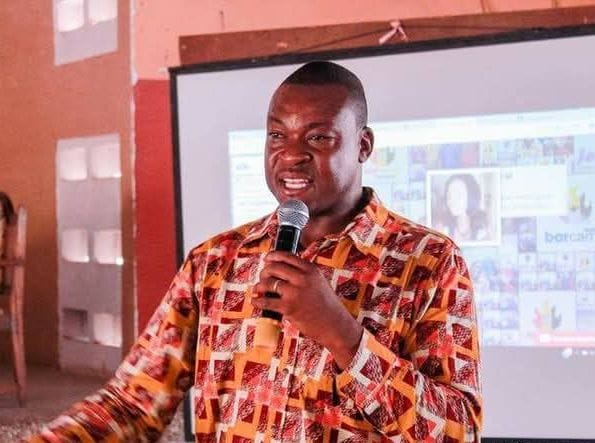
The Campaign and Advocacy Manager of Afrikids Ghana, Raymond Akolbire Ayinne, has called for increased investment in education infrastructure, arguing that the quality of a nation’s human resource development depends largely on how well children are prepared to compete and succeed in a rapidly changing global environment.
Speaking on Day Break Upper East on A1 Radio following a press statement by the Northern Network for Education Development (NNED), Mr. Ayinne highlighted concerns about the state of educational infrastructure in parts of northern Ghana, particularly the Upper East Region, where several schools continue to face significant challenges.
He described the situation as worrying and emphasized the need for collective action among government, private organizations and communities to address existing infrastructure gaps.
The Afrikids Ghana official stressed that education should be treated as a strategic tool for national development by equipping young people with the knowledge, skills and competencies required to contribute meaningfully to Ghana’s progress.
According to Mr. Ayinne, preparing children through quality education requires the same level of commitment countries demonstrate when investing in their national football teams.
He explained that just as resources are committed to developing athletes to achieve international success, similar attention must be given to education to enable Ghanaian children to compete favourably with their peers globally.
“It is the same analogy you can take to education, where the government should invest in its children, make them well prepared so that they can competitively stand toe to toe with any child from any part of this world and be able to outperform that child. That is how that child, prepared in Ghana effectively, can then develop Ghana.”
“You prepare your citizens in the best way so that they can compete in the global space and be able to make you ahead of all your peers or competitors,” he added.
Mr. Ayinne expressed concern that inadequate investment in education infrastructure and poor learning conditions could undermine students’ ability to acquire meaningful knowledge, critical thinking skills and practical competencies.
He noted that such challenges contribute to situations where individuals obtain academic certificates but struggle to demonstrate the skills and abilities expected from their qualifications.
While acknowledging that improving school infrastructure nationwide requires significant financial resources, Mr. Ayinne said government alone cannot shoulder the responsibility without affecting investments in other important sectors, including health, transportation and energy.
He therefore called for a collaborative approach involving government, the private sector and local communities to address infrastructure challenges in schools.
Mr. Ayinne proposed that government develop a comprehensive framework identifying schools requiring infrastructure support and introduce incentives to encourage companies and other organizations to invest in educational facilities.
He suggested that businesses that support school construction and rehabilitation could receive incentives, such as tax relief, to encourage greater participation.
“The government should create a framework that documents all these schools that need investment to improve their infrastructure, and then the government can call on corporations and provide incentives to those organizations. For example, if you build a school, we will give you a tax holiday for this year.”
Mr. Ayinne also urged Metropolitan, Municipal and District Chief Executives (MMDCEs) to prioritize education development within their jurisdictions and consider improvements in schools as part of their legacy.
He further called on assembly members, traditional leaders and community stakeholders to take greater ownership of schools by supporting initiatives aimed at improving learning environments.
According to him, some challenges facing schools are also linked to activities within communities, including land encroachment and environmental degradation around school compounds.
“Sometimes, you go to the schools and the problems the schools face are actually caused by community members,” he said.
Mr. Ayinne emphasized that improving education infrastructure and learning outcomes requires shared responsibility among government institutions, private organizations and communities.
He maintained that lasting progress in Ghana’s education sector will depend on the commitment of all stakeholders to develop, protect and invest in schools for future generations.
A1 Radio | 101.1 MHz | Seidu Mutawakil | Bolgatanga