
ActionAid Ghana has challenged journalists to rethink how they portray Africa, warning that excessive focus on poverty, violence and other negative issues can reinforce stereotypes and shape how the continent and its people are perceived.
The organisation says changing the narrative does not mean ignoring Africa’s problems, but telling more complete stories that also highlight the continent’s culture, resilience, achievements and development.
ActionAid Ghana’s Upper East Regional Programme Manager, Yakubu Akuka, made the call during a training on anti-racist storytelling and ethical reporting for journalists in Bolgatanga.
“The way we portray ourselves paints a picture of Africa to the world. If we portray Africa as a dark continent filled with violence and barbaric practices, that is how the world will see us,” he said.
The training, held at the Ghana Health Service In-Service Training Centre, brought together journalists from various media houses across the Upper East Region.
It focused on responsible journalism, including accuracy, fairness, balance, fact-checking and avoiding bias when reporting on development and social justice issues.

Mr. Akuka said journalists have an important role in advancing social justice and ensuring that the voices of vulnerable and marginalised people are heard.
“As a region and as Ghana, we have come together with various media houses so that we can push forward the work we do around social justice. ActionAid is a social justice organization, and we believe we cannot do our work without the media because it is through the media that we tell our development stories and share the progress we want to achieve,” he said.
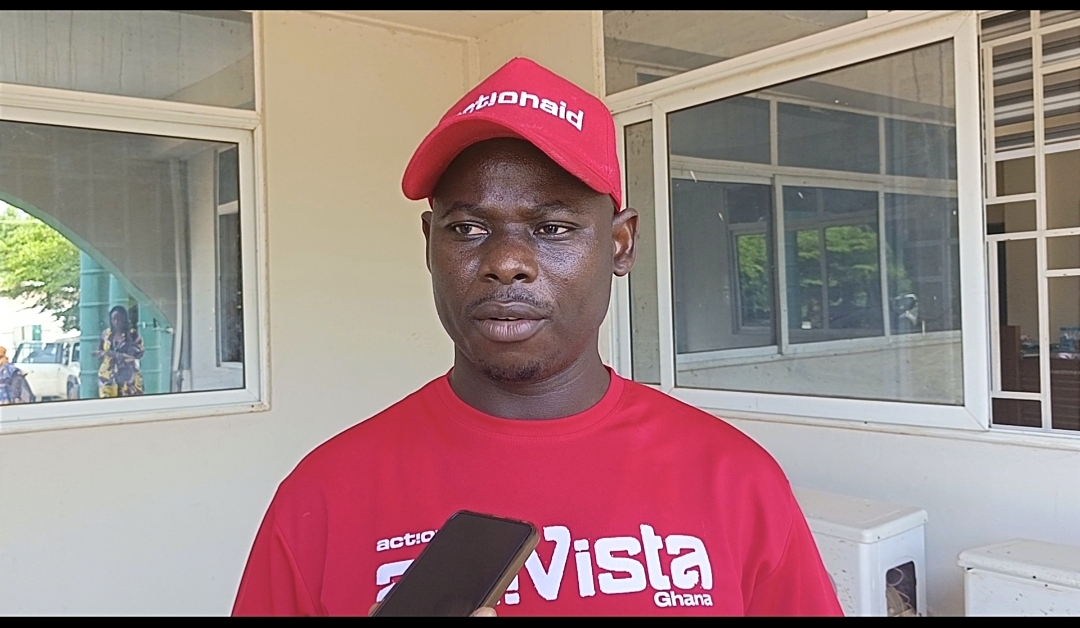
He said the engagement was also intended to renew ActionAid Ghana’s relationship with journalists and strengthen collaboration on reporting development issues from communities across the region.
“Today’s engagement is for us to renew our relationship and strengthen our ties with the media so that what we want people to know about what is happening in the development space will be carried in the right way. Together, we can help advance development through responsible storytelling.”
Mr. Akuka stressed that the organisation’s engagement with the media is not primarily intended to generate publicity for ActionAid Ghana, but to provide platforms for people whose concerns might otherwise receive little public attention.
“ActionAid is not a profit-making organization seeking publicity. It is important that we hear the voices of communities, vulnerable people, and those affected by development challenges. The media provides a platform for these voices to be heard.”
He cited survivors of gender-based violence as an example, saying responsible journalism can help bring their experiences to the attention of people and institutions capable of providing support.
“Many women who experience gender-based violence have no one to talk to. They cannot express the pain they go through. Through responsible media reporting, these stories can reach the people who matter, leading to action and support for victims and survivors.”
Mr. Akuka said ActionAid Ghana intends to work more closely with journalists to bring issues emerging from communities and districts to wider public attention and support advocacy around them.
He also encouraged journalists to examine the narratives they reproduce about Africa.
“There are so many good things in Africa that we do not portray as much as we portray the bad things. We often focus on the negatives and forget the beauty and achievements across the continent,” he said.
Mr. Akuka said reporting Africa differently should not mean overlooking poverty, conflict, inequality or other challenges. Instead, he called for reporting that provides context and reflects a fuller picture of African societies.
He expressed optimism that the training would influence how participating journalists approach stories about Ghana and the continent.
“I believe this training has enlightened and reawakened the spirit of patriotism among our journalists. We must focus more on what makes Africa beautiful and what makes Ghana and Africa worth celebrating,” he said.
“I believe this training will reform reportage about Africa, Ghana, and Africans, and it will yield positive results in the media space by projecting the good stories of our continent.”
The training forms part of ActionAid Ghana’s efforts to promote ethical and anti-racist storytelling while strengthening the media’s role in amplifying community voices and advancing social justice.
A1 Radio | 101.1MHz | Mary Atiamah Aperika | Bolgatanga