
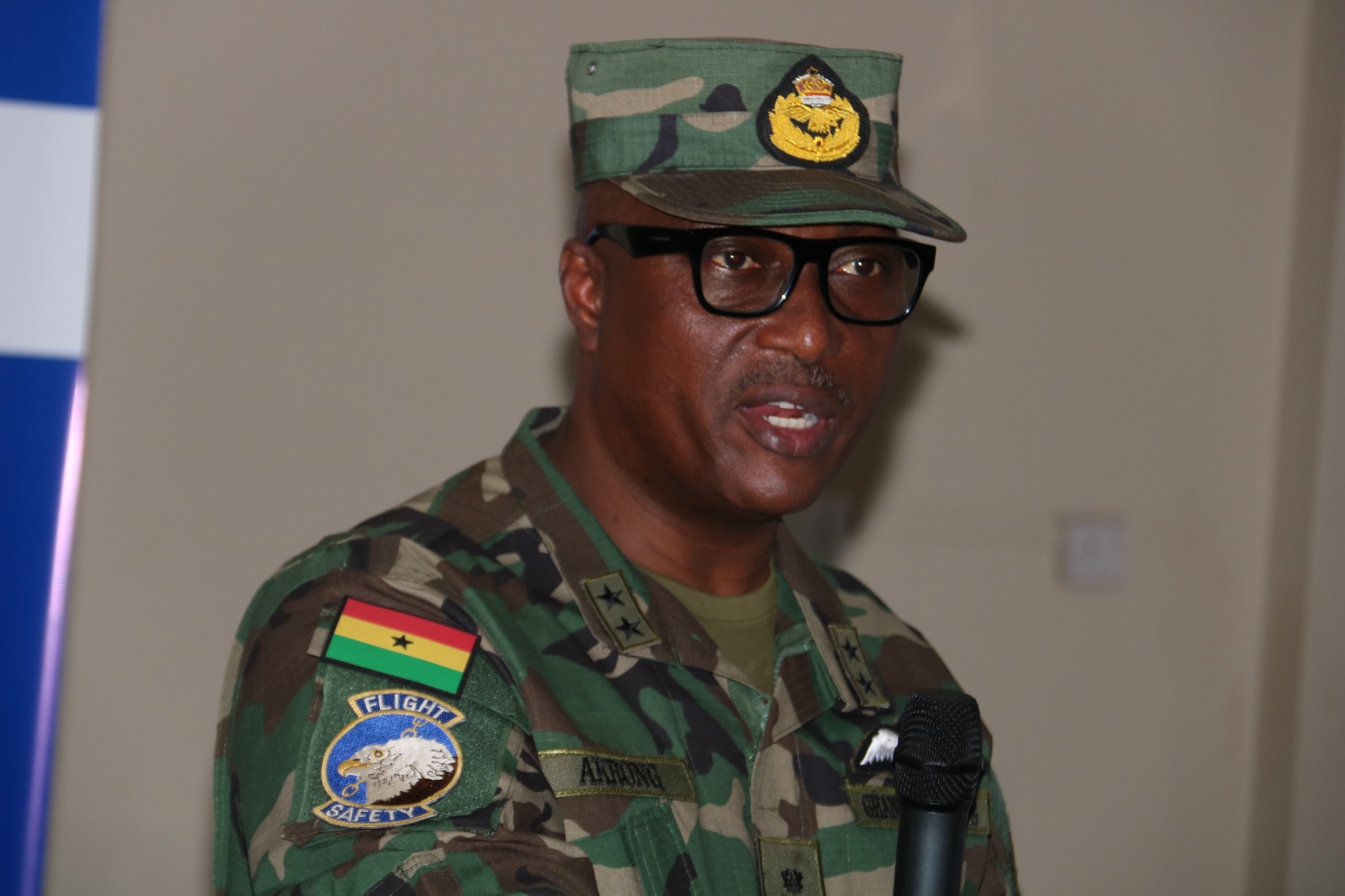
The Commandant of the Kofi Annan International Peacekeeping Training Centre (KAIPTC), Air Vice Marshal David Anetey Akrong, has warned that mistrust, poor communication and the exclusion of communities from security decision-making could undermine efforts to prevent violent extremism.
He said effective prevention required more than strengthening the capabilities of security agencies, stressing the need to build public confidence and ensure that residents were actively involved in decisions affecting their safety.
AVM Akrong made the remarks at a workshop on strengthening civilian trust and community resilience in preventing violent extremism, organised by KAIPTC and the National Peace Council (NPC), with support from the Embassy of Spain in Ghana.
The workshop, held at the TAP Hotel in Bolgatanga, formed part of a series of regional engagements aimed at strengthening cooperation between security institutions and communities.
According to the Commandant, similar workshops had already been held in Wa in the Upper West Region and Damongo in the Savannah Region, with another engagement scheduled for Nalerigu in the North East Region.
He said the engagements had revealed concerns among residents about communication gaps, limited confidence in reporting security threats, negative experiences with security personnel and the exclusion of some groups from local security decision-making.
“Effective prevention requires stronger security capabilities, but it also depends on the quality of relationships between communities and the institutions responsible for their protection,” he emphasised.
AVM Akrong cited concerns raised during the Damongo engagement, where participants called for stronger measures to protect the identities of people who provide information to security agencies.
He said residents also advocated greater participation of young people and community groups in local security structures.
Among the proposals were regular community dialogues, public education and improved feedback mechanisms to strengthen cooperation between residents and security institutions.
“Communities are not simply looking to security institutions for protection. They also want to be heard, better served and involved in decisions affecting their safety,” he stated.
The Commandant noted that security challenges in the wider region remained complex, citing armed insurgency, cross-border insecurity and population movements.
He said longstanding local disputes, competition over resources and tensions within and between communities also contributed to instability.
AVM Akrong cautioned security institutions against treating ordinary community activities or entire social groups as potential security threats.
He warned that associating particular clans, ethnic groups or pastoralist communities with insecurity could deepen mistrust and weaken cooperation between residents and security agencies.
According to him, preventing violent extremism required addressing grievances and vulnerabilities that extremist groups could exploit.
He therefore called for peaceful resolution of longstanding disputes, stronger public confidence in security institutions and greater community participation in identifying and addressing security threats.
AVM Akrong maintained that sustainable peace and security could only be achieved through trust, dialogue, accountability and mutual respect between communities and the institutions responsible for their protection.
A1 Radio | 101.1 MHz | Mary Atiamah Aperika | Bolgatanga