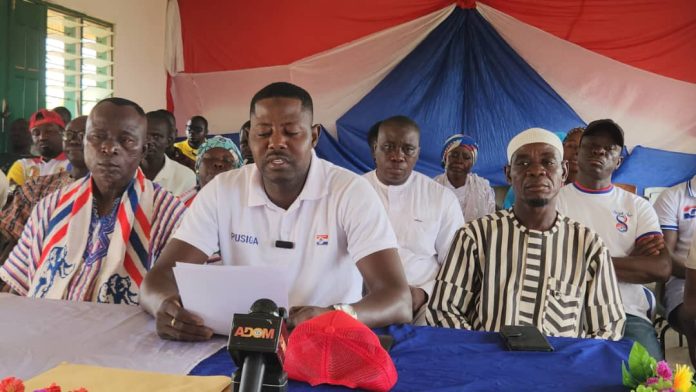
The New Patriotic Party (NPP) in Pusiga has questioned the government’s decision to pursue a 24-hour market project in the district while its Agenda 111 hospital remains unfinished.
The party argues that completing the hospital and improving deteriorated roads in Pusiga, Widana and Kulungungu should receive greater attention, particularly as the district currently has no functioning public hospital.
Addressing the media, NPP Communications Officer for Pusiga, Sumaila Jafaru, questioned what he described as the government’s development priorities for the constituency.
“Why is a new 24-hour market receiving attention while the Agenda 111 hospital remains unfinished and the inner roads of Pusiga, Widana and Kulungungu remain in poor condition?” he asked.
The Agenda 111 hospital in Pusiga is one of eight such projects initiated in the Upper East Region under the previous government. The facility remains incomplete, with the Pusiga District Chief Executive, Abdul Rahim Aguri Haruna, appealing to the government in March 2026 to complete it.
Mr Jafaru said the NPP is not opposed to the construction of a new market but believes the hospital and roads should take priority.
“We are not outrightly against the market – we are questioning the priority at the given time,” he said.
The party also questioned the decision to replace the existing market, which it claims had only minor defects before its demolition, while roads leading to the area remain in poor condition.
The NPP further argued that President John Mahama had pledged during the 2024 election campaign to complete unfinished Agenda 111 hospitals and called on the government to demonstrate that commitment in Pusiga.
Mr Jafaru said the absence of a completed public hospital affects access to healthcare, particularly for pregnant women, children and the elderly.
“A hospital is not a luxury but a necessity,” the party said.
The NPP has consequently called on President Mahama and the Member of Parliament for Pusiga, Hajia Lardi Ayii Ayamba, to push for the completion of the hospital and rehabilitation of roads in the constituency.
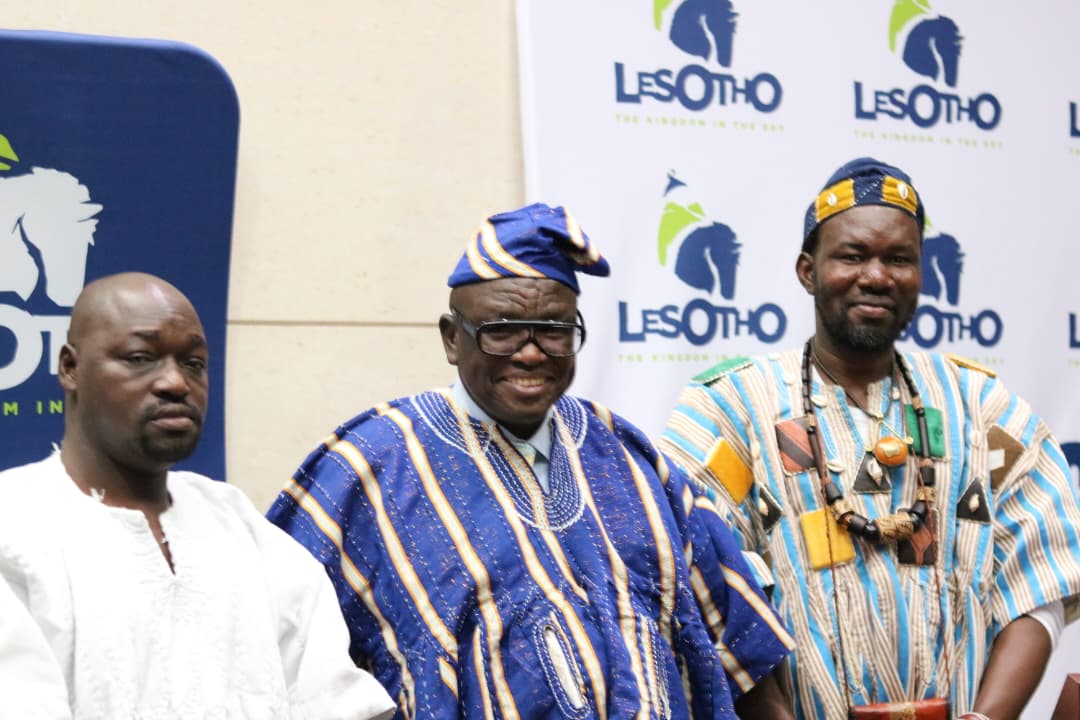
Music and cultural promotion organisation Kacstone Records, in partnership with the Sister Kingdom Network, is participating in a two-day high-level tourism summit in the Kingdom of Lesotho, where stakeholders are deliberating strategies to strengthen tourism and cultural cooperation across Africa.
The summit, dubbed the Lesotho Tourism Pitso, is being held in Maseru from Wednesday, September 16 to Thursday, September 17, under the auspices of the Lesotho Ministry of Sports, Tourism and Culture through the Lesotho Tourism Development Corporation.
The gathering brings together tourism, culture, and creative industry stakeholders from Lesotho and other parts of Africa to explore ways to position Lesotho as a competitive tourism destination while advancing intra-African tourism and cultural exchange.
The Sister Kingdom Network is a continental and global cultural-economic integration framework established to reconnect African kingdoms, chiefdoms, and traditional leadership.
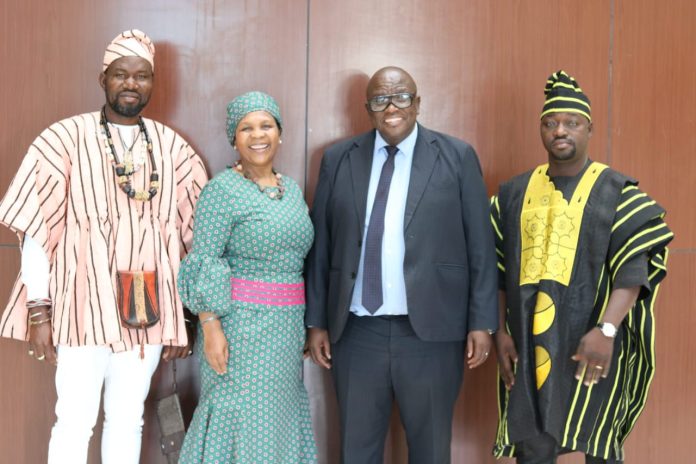
The Ghanaian delegation includes the Supreme Leader of the Sister Kingdom Network and Ambassador for Africa with the Countrystyle Community Tourism Network, Ambassador Dr. Tengol K. Kplemani, Managing Director of Kacstone Records, Wenawome Aborah Duriyem, and Public Relations Officer of Kacstone Records, Alexander Naaga Bombande.
Addressing participants at the Pitso, Ambassador Kplemani emphasised the need for African countries to place greater focus on cultural tourism and strengthen connections between Africans on the continent and in the diaspora.
“Our agenda as Africa has to do with its drivers; without the drivers of the industry, we can’t make an impact.”
He said the growth of tourism in Africa would depend largely on the commitment and collaboration of key industry players, urging stakeholders to be deliberate in their efforts to develop the sector.
Ambassador Kplemani, who also serves as an Ambassador for Africa with the Countrystyle Community Tourism Network, further cautioned that the neglect of Africa’s cultural tourism could undermine the preservation and promotion of the continent’s unique cultural and traditional heritage.
He called for stronger relationships among African communities, kingdoms and organisations to create investment opportunities and promote economic cooperation, including through initiatives such as the twinning of communities, kingdoms and institutions.
The Managing Director of Kacstone Records, Wenawome Aborah Duriyem, speaking during a panel discussion, called for greater youth participation in efforts to reshape the narrative around African tourism. He urged stakeholders to take advantage of new media platforms to promote Africa’s diverse cultures and strengthen connections among countries.
“We need to leverage the media to connect our countries and cultures, and build regional collaborations and cooperation that open our countries to bigger collaborations.”
Mr. Duriyem also advocated cultural exchange programmes between Ghana and Lesotho, saying such initiatives could deepen cultural tourism and strengthen African unity.
“This gathering is important for the growth of African tourism; we need to have regional collaboration in terms of diversity in culture and learn from each other’s perspective of life.”
He further called on tourism industry players to collaborate on cross-border events across the continent.
“Industry players in the tourism sector should collaborate to have cross-border events in Ghana, Lesotho and other African countries.”
The Principal Secretary for the Lesotho Ministry of Tourism, Sports, Arts and Culture, Mrs. Mantiti Khabo, expressed optimism about the country’s tourism prospects, describing the sector as unique and fast-rising.
“We have a beautiful country, with attractive mountains good for adventure tourism, a rich culture and hospitable people.”
Mrs. Khabo also welcomed the participation of delegations from Ghana and other African countries, including Mozambique, saying their presence demonstrated the willingness of Africans to work together for the development of tourism, arts and culture.
As part of Ghanaian hospitality and cultural diplomacy, the Ghanaian delegation presented a traditional smock to the Minister for Tourism, Sports, Arts and Culture, Mputi Steven Mputi.
The presentation showcased the traditional northern Ghanaian garment as an important symbol of Ghana’s cultural identity and formed part of efforts to promote cultural exchange and strengthen relations between Ghana and Lesotho.
The participation of Kacstone Records and the Sister Kingdom Network in the Lesotho Tourism Pitso forms part of broader efforts to promote African cultural heritage, tourism cooperation and cross-border partnerships among communities and institutions across the continent.
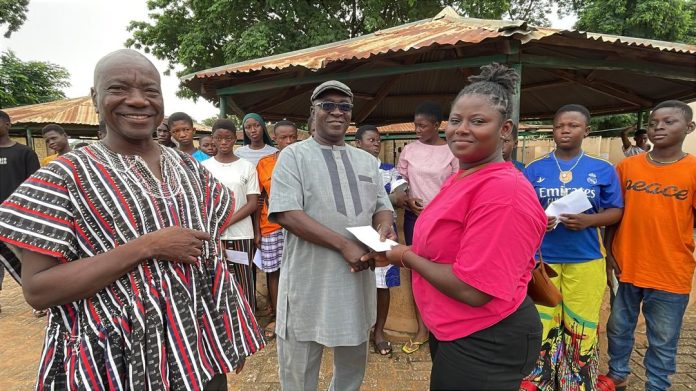
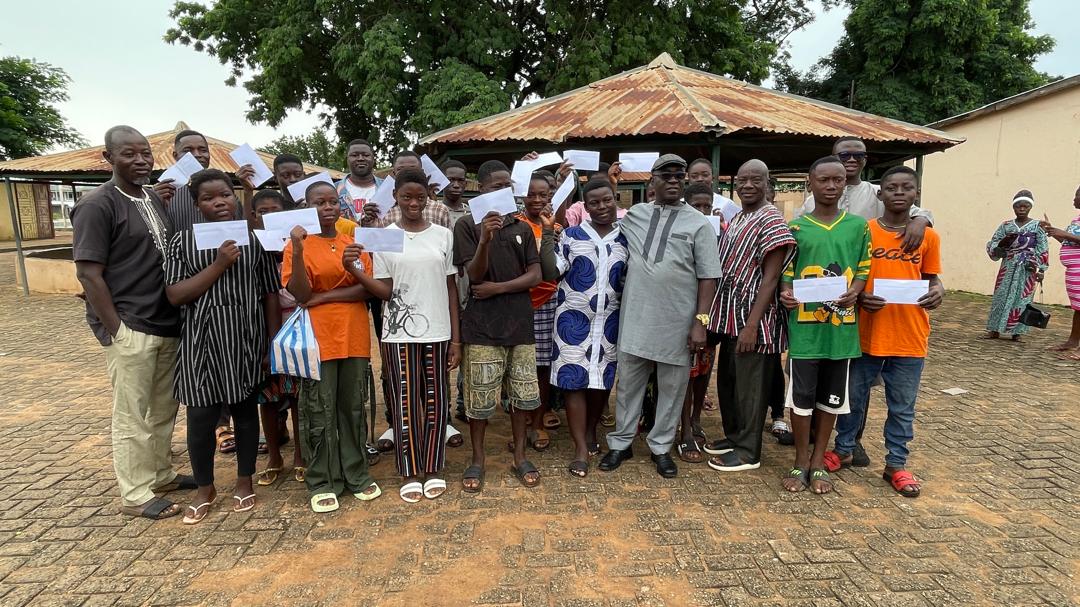
An aspirant for the Bolgatanga Central Constituency Chairman position of the National Democratic Congress (NDC), Roger Ayine Aposs, together with an alliance of individuals contesting various positions within the constituency, has provided financial support to 125 students to assist them with their educational needs.
The beneficiaries, comprising 100 first-year Senior High School (SHS) students who received GH¢500 each and 25 tertiary students, received GH¢2,000 each.
The support amounts to a total of GH¢100,000, which the organisers said was mobilised from friends and family members to assist families facing financial difficulties as their children transition to new levels of education.
Speaking during the presentation, Mr Aposs said the initiative was informed by the financial difficulties many parents face in providing basic necessities for their children entering SHS and tertiary institutions.
He said the alliance decided to mobilise resources to provide some relief to families and help students begin their academic journey with fewer financial challenges.
“We met the last time knowing that parents face difficulty in soliciting resources to meet the demands of kids going to school this time. We decided to talk to some friends and family members to solicit support and see whether we can help them.”
According to him, the GH¢500 support for SHS students could help beneficiaries purchase items such as chop boxes and mattresses, while those who had already acquired such items could use the money to purchase food, books and other school requirements.
Mr Aposs said the initiative was undertaken with the involvement of members of the alliance, including Francis Asaare Akolbila, whom he identified as the Vice Chairperson candidate, and other individuals contesting various positions in the constituency.
A beneficiary, Akolgo Eunice Abaamah, a student of the College of Nursing, Nalerigu, expressed appreciation to Mr. Aposs and the alliance for the assistance.
She said some parents were unable to meet all the financial requirements associated with their children’s education and described the support as helpful in easing the burden.
“Some of our parents couldn’t afford all of the money to support us to pay some of our fees, so I’m here to thank them for the support that the alliance has given us. I’m really grateful for their help.”
Another beneficiary, Adumolga Benedicta Ayinemah, who completed St John’s JHS and is proceeding to Senior High School, also thanked Mr. Aposs and the alliance.
She said there were some basic items her parents could not afford to provide and that the financial support would help reduce the pressure on them as they prepared her for SHS.
The 2026 Overall Best Teacher in the Talensi District, Miss Sophia Akumagoa Aliewa Bawa, has moved beyond the classroom to champion child-led initiatives aimed at addressing educational and social challenges confronting schoolchildren in the district.
Miss Bawa, who is also the Founder of the Safe Childhood Bright Future Initiative (SCBFI), said her experience as a teacher and recognition as the district’s Best Teacher prompted her to consider how she could extend her impact to children beyond the classroom.
Speaking on A1 Radio’s Teachers’ Caucus programme hosted by Agame Solomon Prosper, she said her love for children and desire to see them develop confidence and realise their potential inspired the establishment of SCBFI.
“I am a lover of children, and I get fulfilled when I see children learn, grow, gain confidence, and excel.”
According to her, the initiative is built around the belief that children should not only be recipients of interventions but should also be empowered to identify and address challenges within their schools and communities.
She said the initiative was therefore shifting from the conventional approach of adults building a future for children to creating opportunities for children to actively participate in shaping their own future.
“We are moving from building a future for the children to giving them the opportunity and watching them build that future with their own hands.”
SCBFI has introduced a Young Change-Makers programme through which selected students are given responsibilities to promote positive change in their schools and communities.
Miss Bawa said the programme was responding to challenges including poor sanitation, environmental degradation and gaps in students’ foundational learning.
Young change-makers, she explained, are encouraged to lead cleanliness activities and influence their peers to adopt better sanitation practices.
They are also expected to plant between two and three trees every term in their schools and homes and monitor their growth as part of efforts to promote environmental responsibility.
The initiative also seeks to strengthen children’s confidence by involving them in activities such as welcoming guests and organising peer-led programmes.
Miss Bawa said SCBFI was also developing interventions to address foundational literacy challenges among pupils and students, particularly those who reach Junior High School with difficulties in basic reading, spelling and pronunciation.
The initiative is introducing book-borrowing clubs, spelling bees and pronunciation exercises to encourage children to read and improve their communication skills.
She said the programmes were intended to provide additional opportunities for children to strengthen their academic abilities while developing a culture of reading.
The initiative is also seeking to challenge perceptions that technical and vocational education is less prestigious than academic education.
Miss Bawa said some children with practical abilities could be disadvantaged by an education system and society that place strong emphasis on academic performance.
“Society makes it look like if you are doing technical work, you are not respected.”
SCBFI is therefore engaging former students who pursued vocational training to mentor younger children. Programmes in areas including liquid soap production, sewing and local crafts are also being introduced to help children identify and develop practical skills and talents.
Miss Bawa said SCBFI had so far partnered with six schools in the Tongo Central area. They include Salvation Army Junior High School, St Theresa Junior High School, Tenzuk Junior High School, Wobil Junior High School, Tongo Girls Model JHS and Tongo Junior High School.
She said the schools had responded positively to the initiative, with headteachers supporting the programme and nominating students to serve as young change-makers. The initiative is also addressing issues affecting adolescents, including teenage pregnancy and menstrual hygiene.
Miss Bawa said SCBFI’s mentorship programmes deliberately involved both boys and girls, particularly in discussions around menstruation, to promote understanding and reduce stigma.
She said educating boys about menstruation was important because they would grow into brothers, husbands, fathers and community members who would need to understand and support girls and women.
Miss Bawa urged parents, teachers and community members not to give up on children, stressing that every child has the potential to succeed if given the necessary encouragement and support.
“Let us not give up on our children. Let us continue to encourage our children. We should know that every child has potential, and that potential only needs endorsement for it to come up.”
Through SCBFI, she said she hoped to strengthen collaboration among schools, communities and other stakeholders to create an environment where children could develop academically, socially and practically while taking an active role in addressing challenges affecting their communities.
Weaknesses in science education at some Senior High Schools in the Upper East Region could leave local students unable to meet increasingly stringent admission requirements for science and health programmes at the University of Technology and Applied Sciences (UTAS), a Dean at the university has warned.
Dr Margaret Wekem Kukeba, Dean of the School of Nursing and Midwifery, said shortages of science teachers, inadequate laboratory facilities and limited practical lessons are leaving some students insufficiently prepared for university-level science programmes.
The situation, she said, has become more concerning as UTAS tightens admission requirements for some programmes in response to regulatory requirements.
“We’ve recently been told that we cannot just admit based on the normative criteria, which is C6 and below. We’ve had to cut down our criteria to a particular grade based on the regulators’ demands,” she said.
Dr Kukeba warned that unless science education at the secondary-school level improves, some students from the region could struggle to meet the new requirements.
“What may happen to our region is that we may have the university, but our own people may not be able to attend it because of that,” she said.
She was speaking on A1 Radio during a discussion on “The Future of Science and Technology Education in the Upper East Region: The Role of the University of Technology and Applied Sciences.”
Dr Kukeba said some students arrive at UTAS without sufficient practical knowledge in basic science, requiring additional support before they can effectively undertake their programmes.
She identified shortages of teachers in Physics, Chemistry, Mathematics, Biology and Computer Science as some of the challenges affecting science education in the region.
Dr Kukeba proposed greater collaboration among Senior High Schools to make better use of the limited number of specialised science teachers available.
She said, for example, schools with Physics teachers could support nearby schools without teachers in the subject, while similar arrangements could be developed for other science disciplines.
UTAS, she said, is also considering more deliberate outreach by its academic departments to support Senior High Schools and strengthen the preparation of students interested in science and technology programmes.
The university currently runs bridging and access programmes to address some gaps in students’ science knowledge, but Dr Kukeba said this places additional pressure on lecturers who have to revisit basic concepts alongside their regular university teaching.
“When they come, we will not be struggling to have to go back to the basic,” she said of the need to strengthen students’ preparation before university.
Dr Kukeba, a former student of Bolgatanga Girls Senior High School, said improving science education at the secondary level would create a stronger pool of students capable of pursuing science, technology and health-related programmes at UTAS and other tertiary institutions.
The Dean of the School of Nursing and Midwifery at the University of Technology and Applied Sciences (UTAS), Dr Margaret Wekem Kukeba, says the university’s research must go beyond academic recognition and translate into practical solutions to challenges facing the Upper East Region.
Dr Kukeba said while UTAS is proud of the growing recognition of its research, rankings and publications should not be treated as an end in themselves.
“We are looking at how to translate that to transformative impact that can support our region. We are looking at how we can translate our research so that we can solve the problems that are here,” she said.
Speaking on A1 Radio during a discussion on “The Future of Science and Technology Education in the Upper East Region: The Role of the University of Technology and Applied Sciences,” Dr Kukeba said research should respond directly to challenges in health, agriculture, technology and other sectors.
She cited disease surveillance, public health, agriculture, Geographic Information Systems, computing and cybersecurity as areas where expertise within the university could be applied to regional problems.
Dr Kukeba said the university’s research performance demonstrates the scientific expertise available within the institution, but the greater challenge is converting that knowledge into technologies, skills and interventions that improve people’s lives.
She said this would require universities to move beyond publishing research to developing technologies, building technical capacity and supporting the practical application of scientific knowledge.
Dr Kukeba also raised concerns about the ability of Ghanaian scientists to apply skills acquired through advanced training when they return to institutions without the necessary equipment.
“We have the potential. But unfortunately, we finish learning that, and we come back and we do not have the equipment,” she said.
She pointed to the Upper East Region’s mineral resources, including gold, as an area where stronger scientific capacity and appropriate equipment could enable local expertise to play a greater role in exploration and development.
According to Dr Kukeba, UTAS has begun developing expertise in geology, but further investment in scientific infrastructure would be required to maximise the potential of such programmes.
She therefore called on the government, private sector, development partners and other stakeholders to support universities with the equipment, resources and partnerships needed to strengthen research and innovation.
“For science, it’s very critical to our development… It’s now left with how we can actually all put our hands on deck,” she said.
Dr Kukeba said stronger collaboration between universities, government and industry could help turn research into practical solutions and enable UTAS to contribute more directly to the development of the Upper East Region.
The Dean of the School of Computing and Information Sciences at the University of Technology and Applied Sciences (UTAS), Professor Edward Y. Baagyere, has called for greater emphasis on science and technology from the earliest stages of education to support the development of the Upper East Region.
Prof. Baagyere said interest in science should be deliberately cultivated among children from the early years of schooling rather than waiting until students are making decisions about their future careers.
“Science should be something that you are passionate for. So this passion can be generated right from your early days of schooling,” he said.
Speaking on A1 Radio during a discussion on “The Future of Science and Technology Education in the Upper East Region: The Role of the University of Technology and Applied Sciences,” Prof. Baagyere said teachers and the education system have a critical role in making science practical and attractive to learners.
He said greater use of practical experiments could help children understand how scientific concepts apply to everyday life and reduce the fear some students develop towards subjects such as Mathematics and Chemistry.
Prof. Baagyere argued that inadequate exposure to science at the early stages of education could affect students’ willingness and ability to pursue science-related programmes and careers later.
“We should really redimension our way of teaching science to make it very palatable, acceptable and well leveraged. So when they grow, they will be able to use it, apply it and understand it,” he said.
Reflecting on his experience as a General Science student, Prof. Baagyere recalled that science classes were dominated by boys, with relatively few girls pursuing the subject.
He said the way science is introduced and taught could play a role in encouraging more children, including girls, to develop an interest in the field.
Prof. Baagyere pointed to countries including Japan, China, South Korea and Rwanda as examples of places where science and technology have featured prominently in development strategies.
He said the Upper East Region must similarly develop a culture in which young people see science and technology as tools for solving problems rather than difficult subjects to avoid.
The UTAS Dean said strengthening science education from the basic level could help build a generation of scientists and technology innovators capable of developing solutions to challenges confronting the Upper East Region.
The discussion comes as UTAS highlights its progress in teaching, learning, research and community service during its six years of existence. The university says it won the National ENACTUS Competition four consecutive times from 2021 to 2024, beating institutions including the University of Ghana, Kwame Nkrumah University of Science and Technology and the University for Development Studies.
UTAS subsequently represented Ghana on the global stage, with its team reaching the round of 16 in competitions held in the Netherlands and Kazakhstan.
The university was also ranked 10th in Ghana in 2025 based on its H-Index in the AD Scientific Index global ranking of higher education institutions. UTAS says it maintained that position in 2026 before moving to 8th in the 2027 ranking. Prof. Baagyere believes these developments must be matched with stronger efforts to inspire the next generation of scientists and technology innovators, particularly from the Upper East Region.
The Dean of the School of Public Health at the University of Technology and Applied Sciences (UTAS), Prof. James Akazili, has called for deliberate investment in science, technology and innovation, arguing that Ghana cannot achieve sustained development without committing resources to these areas.
Prof. Akazili said countries that have recorded significant development have consciously invested in science and innovation to improve productivity, develop solutions to local challenges and drive economic growth.
“If you look at countries that have development, they deliberately embark on science and innovation. A country’s development falls back heavily on its conscious investment in science and its related courses to improve growth,” he said.
Speaking on A1 Radio on the topic, “The Future of Science and Technology Education in the Upper East Region: The Role of the University of Technology and Applied Sciences,” Prof. Akazili said Ghana must move beyond discussions about the importance of science and commit resources to developing the necessary skills, institutions and innovations.
He said universities have an important role in equipping young people with scientific and technological skills that can be applied to challenges confronting their communities and the wider economy.
Prof. Akazili also called for greater attention to science and technology education in the Upper East Region, arguing that deliberate investment could help develop young innovators capable of producing solutions relevant to the region and the country.
He said strengthening science education, research and innovation would also provide opportunities for universities such as UTAS to contribute more directly to Ghana’s development.
Gurene is expected to be examined at the Basic Education Certificate Examination (BECE) for the first time in 2027, following a directive for the language to be included among subjects available for candidates to register.
The Upper East Regional Education Directorate has consequently directed Municipal and District Directors of Education to prepare schools for the teaching and examination of the language.
In a letter dated September 7, 2026, Upper East Regional Director of Education Razak Abdul-Korah said the Director of Schools and Instructions had, in an earlier letter dated January 29, 2026, tasked the West African Examinations Council (WAEC) to include Gurene among subjects available for BECE registration.
“There is every indication” that candidates sitting the 2027 BECE will constitute the first cohort to be examined in Gurene, according to the Regional Education Directorate.
Municipal and District Education Directors have therefore been directed to incorporate Gurene into school timetables, rationalise and deploy appropriate teachers and take other steps necessary for its implementation.
The National Council for Curriculum and Assessment (NaCCA) has also developed curriculum and teaching and learning materials to support the teaching of Gurene at different levels of education.
The latest development addresses a longstanding concern among Gurene-speaking communities over the inability of students to write the language in national examinations despite its teaching and development over the years.
Earlier in 2026, BONABOTO called for Gurene to be made an examinable subject, arguing that although the language had received recognition from the Ghana Education Service, its examination had not been operationalised.
The September 7 directive requires education authorities in the Upper East Region to prepare schools for the implementation of Gurene and ensure they are adequately prepared for its teaching and examination.
The letter was also copied to the President of the Gurene Language Development Association (GULDA).
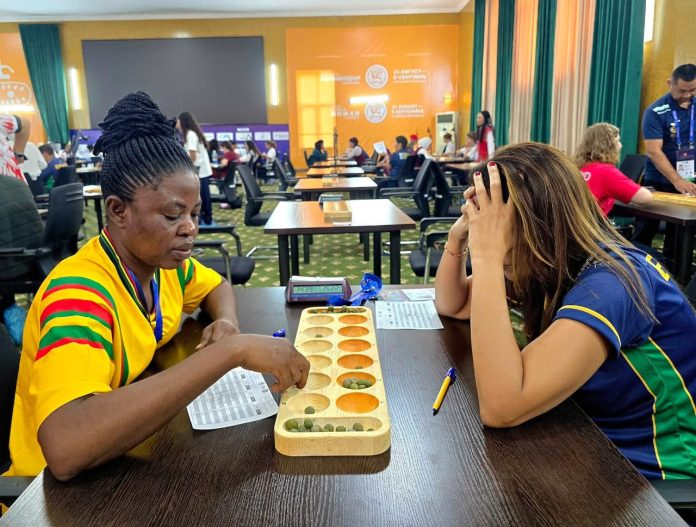
Gifty Apana Atogbase, an Oware player based in the Yorogo community in the Upper East Region, has been crowned World Female Oware Champion after representing Ghana at the VI World Nomad Games in Kyrgyzstan.
Ms Atogbase represented Oware Society Ghana at the international competition, which brought together competitors in traditional sports and games from countries around the world.
The VI World Nomad Games were held from August 31 to September 6, 2026, with the opening ceremony in Bishkek and the main competitions held in the Issyk-Kul region.
Oware, listed as “Owari” at the Games, was among the traditional board games featured at the competition.
Ms Atogbase officially received her crown in September following her performance at the Games.
Her achievement gives Ghana a world title in the female Oware competition and puts the spotlight on a traditional strategy game that has long been played in Ghana and other parts of Africa.
Ms Atogbase competed under the banner of Oware Society Ghana, which represented the country and showcased the traditional game at the international event.