
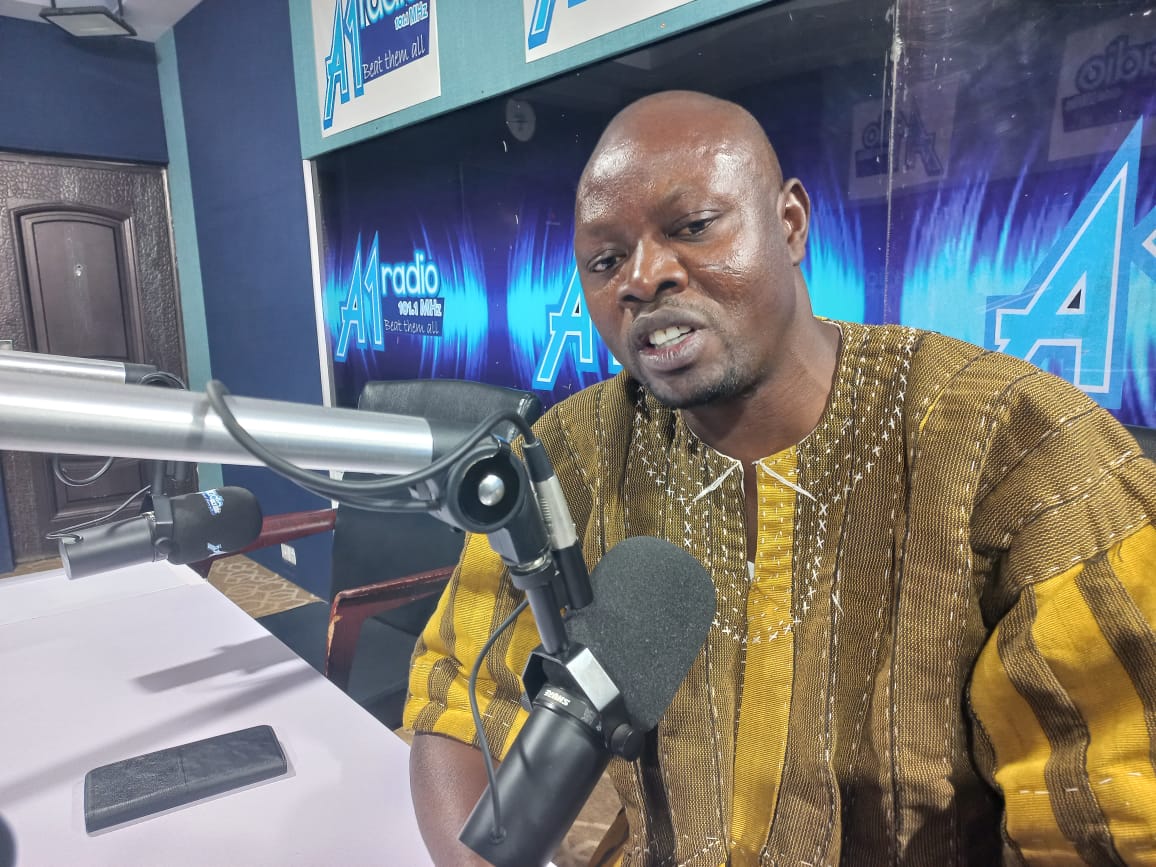
The Managing Director of the Irrigation Company of Upper Region (ICOUR), Dominic Anarigide, is calling for a multi-stakeholder approach to boost tomato production in the Upper East Region, acknowledging that ICOUR alone cannot drive the level of transformation needed to revitalise the sector.
He said key actors, including the Ministry of Food and Agriculture, input suppliers, soil and technical experts, and traders, must work together to address the challenges facing tomato production.
“They must be brought on board to deliberate,” he said.
Mr. Anarigide made the remarks during an interview with Gerard Asagi on A1 Radio’s Daybreak Upper East.
He noted that farmers must be properly incentivised to invest in large-scale tomato production, especially given past experiences where many incurred heavy losses and debts.
“The farmers must be assured of support from government, for example, the right inputs in terms of seeds, and the traders have to play a role by saying that this or that variety, if produced, is what they will buy, so that farmers are assured of a ready market before they produce.”
“Farmers would not go into large-scale production if they are not sure that their goods will be bought,” he added.
Mr. Anarigide also called for a meeting between tomato traders, aggregators, and farmers at ICOUR to begin discussions on the specific tomato varieties to be cultivated.
He explained that such engagement would help traders understand projected volumes, product quality, and sourcing locations.
“We can say, this is the quantity of tomatoes farmers at Vea can produce. This is the quantity of tomatoes farmers at Tono can produce, then we put it together and see whether or not offtakers can take these quantities from farmers,” he said.
The call for collaboration follows Burkina Faso’s recent ban on the export of fresh tomatoes, which has given Ghanaian traders until the end of March to stop sourcing tomatoes from the country.
A1 Radio | 101.1 Mhz | Mark Kwasi Ahumah Smith | Bolgatanga