Farmers in the Gambigo Electoral Area are raising alarm over a deepening agricultural crisis as the community’s main dam has dried up, threatening livelihoods, food production, and youth employment.
Once a thriving hub for dry-season farming, Gambigo is now grappling with severe water shortages, rising input costs, and declining returns. Farmers say the situation has become unsustainable, forcing many to scale down production or abandon farming altogether.
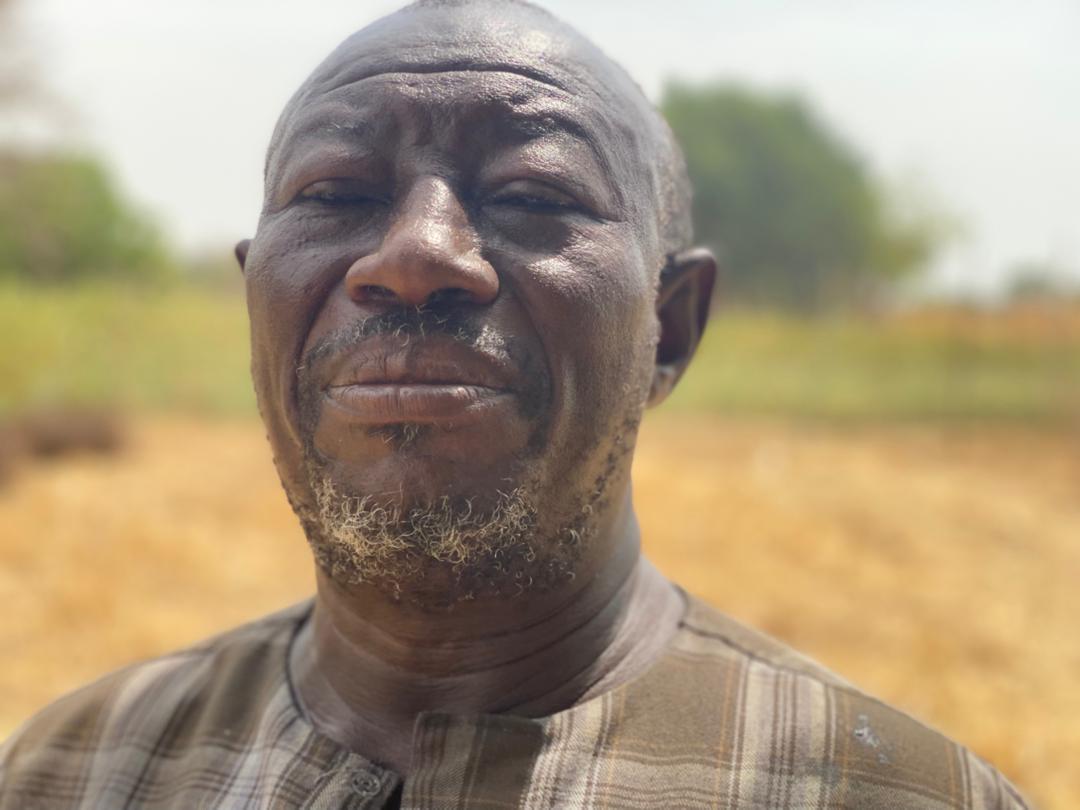
Ayimila Abubakar Atera, a farmer and former Assembly Member for the area, described the situation as dire. He said although farmers remain willing to work, the lack of water and high cost of inputs are crippling their efforts.
“The farmers are there, but the conditions are not. Farming today requires serious investment, especially for dry-season farming where water is everything,” he said.
He explained that the dried-up dam, which previously supported irrigation, has left farmers without a reliable alternative. He called for urgent government intervention to rehabilitate existing dams and invest in irrigation systems such as mechanised boreholes and canals.
“We need functional dams and proper irrigation systems. If these are in place, farmers here can do wonders,” he added.
Beyond water shortages, farmers are also battling high input costs. Fertilisers, improved seeds, agrochemicals, and fuel for irrigation have all increased significantly, making farming more expensive.
Mr. Abubakar Atera criticised what he described as inadequate government support, arguing that current interventions focus more on short-term relief than sustainable solutions.
“Farming is not about giving us free inputs today and stopping tomorrow. Reduce the cost of inputs and create a good market, and farmers will take care of themselves,” he said.
He also raised concerns about seed quality, noting that cheaper varieties often fail, forcing farmers to opt for more expensive but reliable options.
The economic reality, he said, is discouraging. Farmers can spend between GH₵4,000 and GH₵5,000 to cultivate an acre, only to earn about GH₵3,500 from the harvest—resulting in losses.
Young farmers are among the hardest hit.
A graduate of Tamale Technical University who turned to farming due to unemployment, said the situation is pushing many young people away from agriculture.
“Even if you farm and harvest, selling is another problem. Prices are low, but the cost of inputs is very high. You don’t make profit, so it discourages you,” he said.
He added that water scarcity has significantly shortened the farming season, while the lack of infrastructure such as mechanised boreholes and protective fencing has worsened conditions.
“Before, we could farm for months, but now there is no water. The dam is dry, and we don’t have boreholes to support us,” he said.
Farmers are calling on government and relevant agencies to prioritise the rehabilitation of dams in the area, including desilting and expanding water storage capacity. They are also demanding investment in irrigation systems and measures to stabilise input costs and market prices.
Some farmers pointed to neighbouring Burkina Faso as an example, noting that despite similar conditions, stronger policy support has enabled more stable agricultural production.
For many in Gambigo, farming remains the primary source of income due to limited formal employment opportunities. However, farmers warn that without urgent intervention, the sector risks collapse, worsening poverty and food insecurity.
“We are ready to work, but we need the support to make farming viable again,” one farmer said.
A1 Radio | 101.1 MHz | Samuel Adagom | Bolgatanga|