
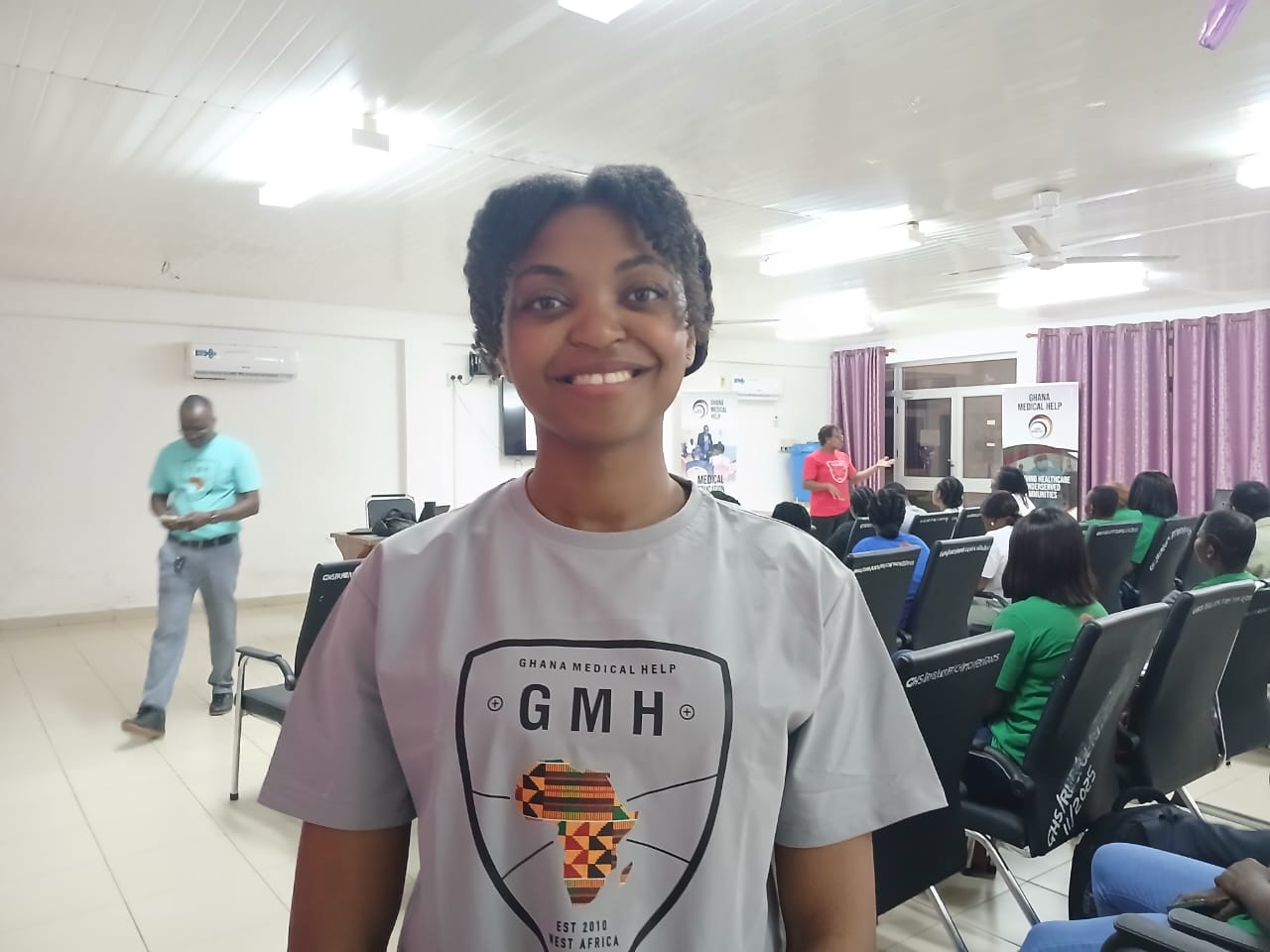
A Canadian medical student conducting research in Ghana’s northern regions is drawing attention to the country’s community-based health delivery system, calling it a model she has not encountered in Canada or her home country of Zimbabwe.
Ashley Mutasa, a medical student at the University of British Columbia, said she was struck by the structure of Ghana’s Community-based Health Planning and Services, known as CHPS, during visits to both the Upper West and Upper East regions.
“Something that I found very fascinating was the healthcare at the community level with the CHPS,” Ms. Mutasa said. “I don’t think that’s a model that I’ve seen in Canada or in Zimbabwe. Really catching people within the community and giving them access to things like getting your blood pressure checked, catching things early before they become a chronic issue that then puts more strain on the healthcare system.”
Ms. Mutasa, who is originally from Zimbabwe and received funding to study in Canada, said her time in Ghana has been defined largely by the energy she observed among health workers committed to improving outcomes. “People seem unified on the same mission of trying to improve health here in Ghana,” she said. “You need people who are going to be the conduits of change.”
Her observations aligned closely with those of Dr. Dominic Akaateba, co-founder of Ghana Medical Help, who described the CHPS system as the single most important development in Ghana’s health architecture.
“I say that the best thing to happen to Ghana’s health system is the concept of the CHPS,” Akaateba said. “There’s no reason why a pregnant woman in a rural village should not give birth in an institution that is capable of taking it, especially when it’s not a complicated delivery.”
Dr. Akaateba’s organization is planning this year to take its maternal and newborn care training directly to health centers and CHPS compounds, the lowest rung of the country’s health system, so that CHPS nurses can manage routine deliveries safely and reduce the rates of maternal deaths at the community level.
Ghana’s CHPS system was introduced in the early 2000s and places community health workers in small, strategically located compounds, or CHPS compounds, throughout rural areas. The system is designed to bring primary healthcare to populations who would otherwise have no practical access to a clinic or hospital.
Ms. Mutasa said she also observed what she described as the key challenge threatening progress: an inequitable distribution of resources and health workers between urban and rural areas. While she praised Ghana’s community health model, she noted that incentive structures often push trained workers toward the cities.
“People who are working in the rural setting might have a higher workload, they’re working longer hours, they have more responsibilities, but they’re being paid the same as someone who’s working in the city,” Ms. Mutasa said. “So that can be very frustrating.”
She pointed to Canada’s approach of offering financial incentives, higher pay and reduced administrative fees, to attract practitioners to rural communities, suggesting a similar model could help Ghana retain skilled staff in underserved regions.
A1 Radio | 101.1 MHz | Mark Kwasi Ahumah Smith | Bolgatanga