
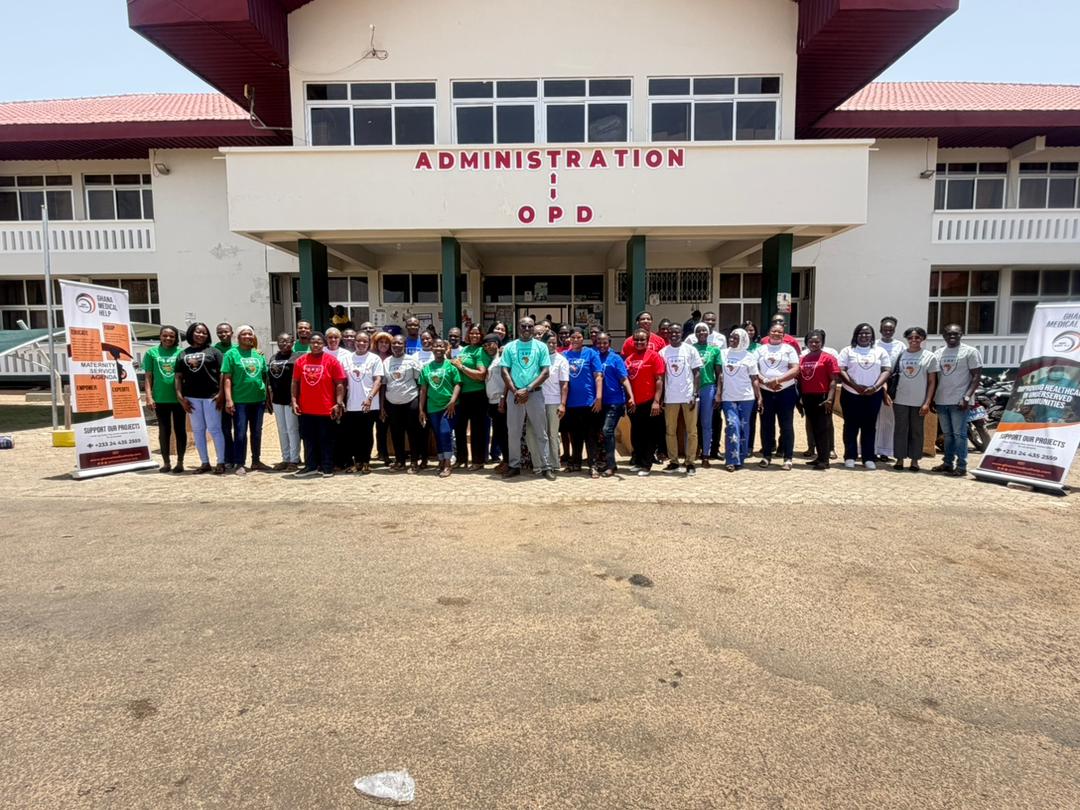
Midwives and doctors in Ghana’s Upper East and Upper West regions are receiving hands-on training in emergency obstetric and newborn care under a programme organisers say is strengthening clinical confidence while building a local system to sustain skills long after external trainers leave.
The training was conducted this month by Ghana Medical Help through three-day sessions across both regions. More than 40 health workers from 11 districts in the Upper West Region and about 50 professionals from 15 districts in the Upper East Region took part.
The sessions focused on life-threatening conditions including postpartum haemorrhage, eclampsia and newborn resuscitation, which remain leading causes of maternal and neonatal deaths in facilities without specialist support.
“A lot of people felt that in situations where they had to deal with postpartum hemorrhage before the trainings, they didn’t feel confident or empowered to use the tools or the knowledge to actually stop that,” said Ashley Mutasa, a medical student at the University of British Columbia in Canada and a volunteer with Ghana Medical Help. “With the training, it’s not just like we’re giving knowledge, but we also allow them to have opportunities to practice those skills in real time.”
Participants practised techniques for controlling postpartum haemorrhage using equipment already available in most facilities. They also trained in neonatal resuscitation, with emphasis on the “golden minute”, the first 60 seconds after birth when a baby is not breathing and rapid intervention can prevent brain injury or death.
Mutasa said participants reported improved confidence in recognising and responding to complications such as preeclampsia and eclampsia.
The programme uses a train-the-trainer model, requiring participants to return to their facilities and train colleagues, extending the impact beyond those directly reached.
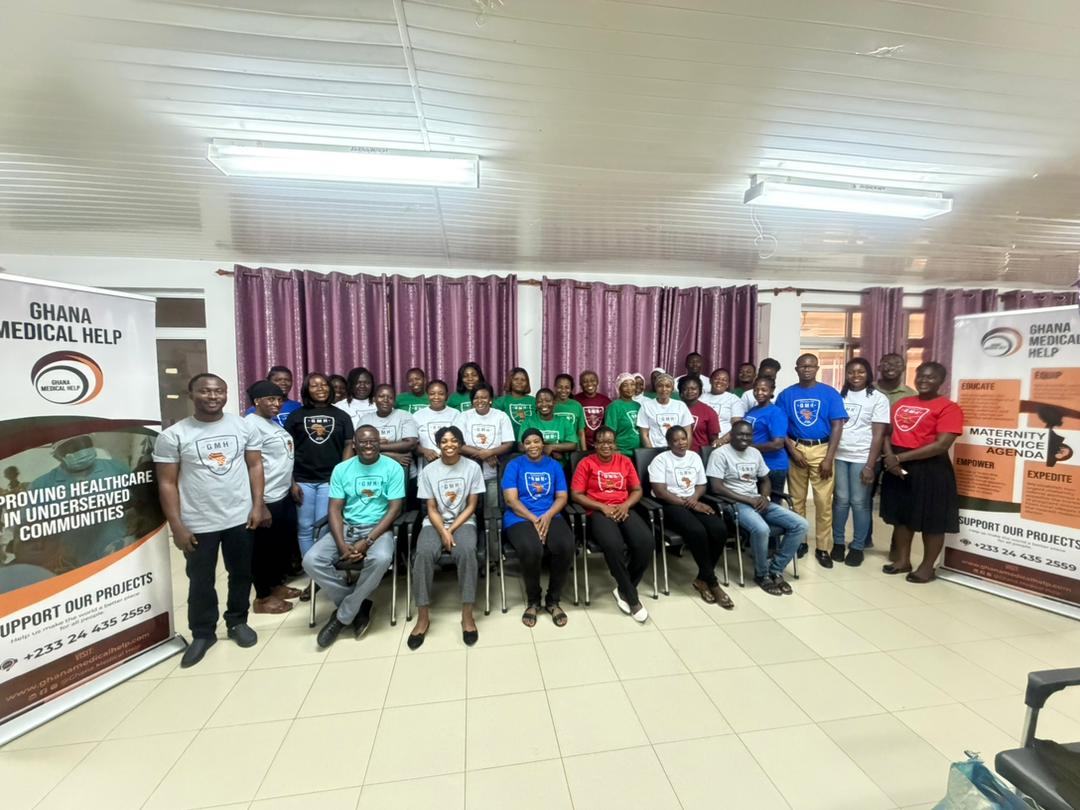
Dr. Dominic Akaateba, co-founder of Ghana Medical Help, said sustainability is central to the design.
“We always look at sustainability,” he said. “If Ghana Medical Help ceases to exist today, the training will still continue because the resources are there, the knowledge has been imparted, the tools for the training have been made available.”
He said the organisation has, over the past three years, supplied districts in the Upper West Region with training mannequins to enable continued simulation-based practice. This year’s Upper East sessions also served as refresher training for facilities that already received equipment in earlier phases.
However, organisers say a major challenge remains the retention of trained health workers in northern Ghana.
“You train people and then people go,” Mutasa said. “The skills maybe leave with the people who’ve been trained.”
She said some health workers identified incentives such as staff accommodation, improved salaries and cohort-based postings as ways to improve retention in rural areas.
Dr. Akaateba said staffing challenges remain a structural issue affecting rural health delivery.
“Doctors refuse postings sometimes in rural areas because their knowledge does not get updated,” he said. “And again, sometimes they get frustrated.”
He said Ghana Medical Help’s ongoing webinar programme for nurses and midwives is intended to provide continuous professional development and reduce professional isolation among rural health workers.
Mutasa also raised concerns about the realism of training mannequins currently in use, saying limited simulation quality can affect confidence when clinicians encounter real emergencies.
“If you only see it on a dummy, but some of the dummies that we have at the moment are not adequate enough to simulate a real-life condition, then that makes it hard when you’re now trying to transfer it in a real situation,” she said.
Some participants have suggested supplementing simulation with supervised clinical practice in hospitals, allowing trainees to manage real cases under experienced guidance.
Even as the train-the-trainer model expands, logistical constraints remain a challenge. Organising follow-up sessions at district hospitals and CHPS compounds requires transport, venues and basic support that many facilities lack.
“If you’re going to ask someone to come from the CHIPS compound, or come from another district, but you’re not able to provide some of those things, then it’s really hard for people to feel incentivized to come and do the training,” Mutasa said.
Ghana Medical Help says it is assessing how to strengthen support systems for peer-led training at the community level.
Dr. Akaateba said the broader goal is to reduce preventable complications that drive hospital visits.
“I would be glad if my OPD attendance is less,” he said, referring to outpatient cases. “And the way to do it is not to stay in the clinic. That’s why we decided to step out. Get into the community.”
A1 Radio | 101.1 MHz | Mark Kwasi Ahumah Smith | Bolgatanga