
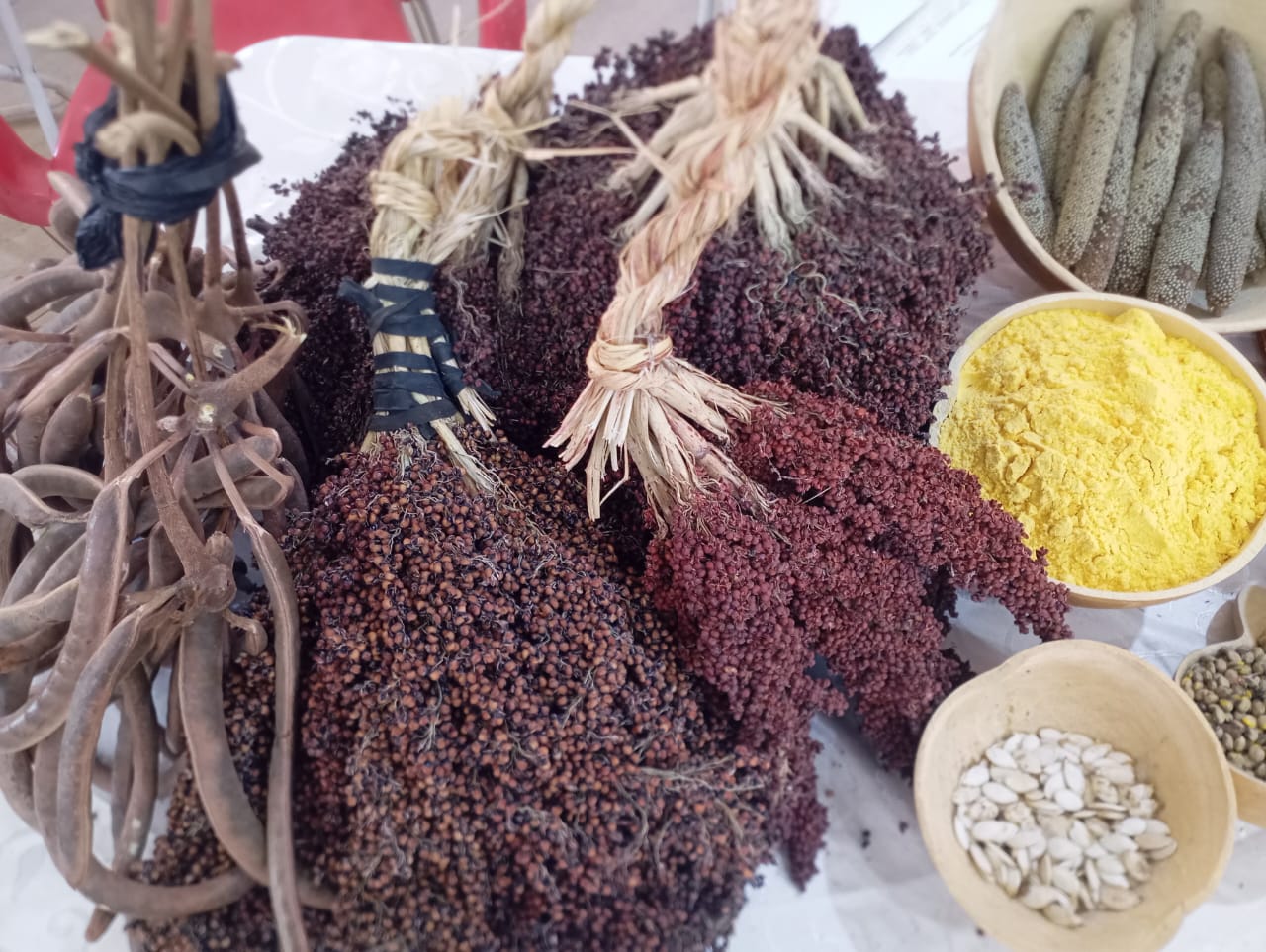
Trax Ghana and The Beela Project partnership is intensifying efforts to promote seed sovereignty among farmers as part of measures to protect and preserve indigenous seed varieties.
Speaking at the third edition of the Seed Fair held at the GNAT Hall in Bolgatanga, Field Coordinator of the project, Robert Anaab, said the initiative seeks to empower farmers to take full control of the production, storage and preservation of their own seeds.
According to him, access to seeds alone does not guarantee independence for farmers unless they have the ability to produce and manage them.
“Having seeds to plant does not necessarily mean you have control over them. The goal is to ensure farmers have seed sovereignty, the power to produce, control and decide what seeds to cultivate,” he said.
Mr. Anaab expressed concern over the gradual decline of indigenous seeds due to challenges associated with improper isolation and seed selection practices among farmers.
He explained that due to land scarcity, many farmers cultivate seed crops and food crops on the same land, leading to cross-pollination and reduced genetic purity of local seeds.
To address the challenge, he said the Beela Project is equipping farmers with improved seed production techniques, including isolation by time, where planting periods are staggered to maintain seed quality and purity.
Mr. Anaab further highlighted the project’s collaboration with the Ministry of Food and Agriculture, particularly the Nangodi Directorate, describing the partnership as instrumental to the success of the initiative over the past three years.
He noted that some farmers under the project had received recognition during recent Farmers’ Day celebrations for their organic farming practices and contributions to sustainable agriculture.
The Field Coordinator also acknowledged the role of partnerships with organisations outside Ghana, especially in Francophone countries, in strengthening technical knowledge and operational capacity through training and knowledge sharing.
Touching on participation in the Seed Fair, Mr. Anaab emphasized that the programme is open to everyone interested in food sustainability and agriculture, regardless of profession.
“You can be a teacher or a doctor with a backyard garden and still be a farmer. This seed fair is open to everyone willing to think about the food they consume,” he said.
He added that the event was designed not only to promote indigenous seed conservation but also to encourage broader public interest in farming and sustainable food systems.
The Seed Fair attracted farmers, NGOs, traditional authorities, stakeholders and seed enthusiasts from across the region to showcase indigenous crop varieties and exchange ideas on sustainable agricultural practices.
A1 Radio | 101.1 MHz | Gerard Asagi | Bolgatanga