

World Vision Ghana (WVG) and its implementing partners have reviewed the first six months of the Farmer Managed Natural Regeneration (FMNR) Heritage Project in the Nabdam District of the Upper East Region, with stakeholders calling for stronger collaboration to restore degraded lands and improve livelihoods.
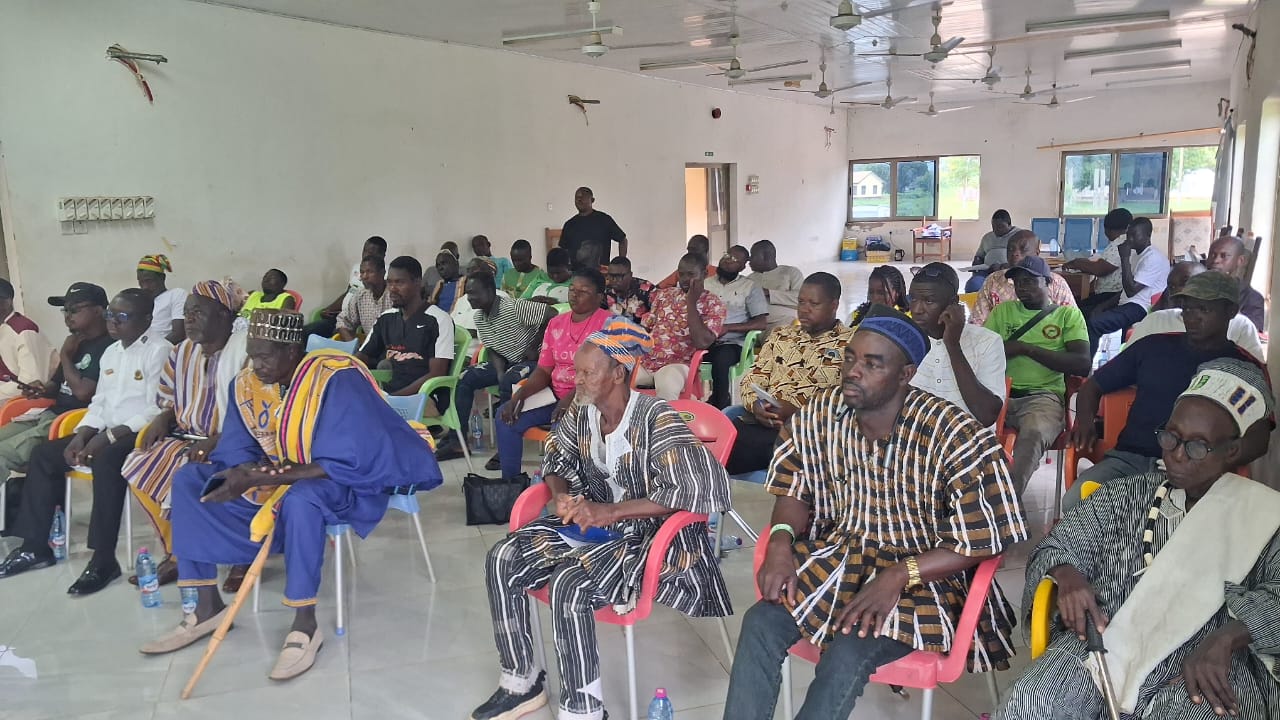
The review meeting brought together officials from the Nabdam District Assembly, the Department of Agriculture, Forestry Commission, NADMO, Ghana National Fire Service, traditional authorities, lead farmers, and community members to assess progress and discuss findings from a baseline survey that will guide the project’s implementation over the next two years.
The FMNR Heritage Project is funded by the European Union through the European Forest Institute (EFI) under the Sustainable Forest and Cocoa Programme. The project is being implemented by World Vision Ghana alongside three partner organisations.
Project Manager for the FMNR Heritage Project at World Vision Ghana, Jonas Bugre, said the meeting served two key purposes: reviewing achievements made over the past six months and sharing baseline findings that will help measure the project’s impact.
According to him, the project seeks to restore 1,500 hectares of degraded land while improving food security and livelihoods in the district.
Mr. Bugre disclosed that the baseline survey revealed only 76 hectares of degraded land had so far been restored, highlighting the enormous task ahead.
“The project is a land restoration and livelihood project. We needed to establish where we are now so that by the end of the two years, we can determine whether the interventions have made any significant improvement,” he explained.
He also expressed concern over food security in the district, noting that the baseline found only 8.5 percent of households were food secure.
“We know two years may not completely change the situation, but we are confident the interventions will make meaningful improvements,” he added.
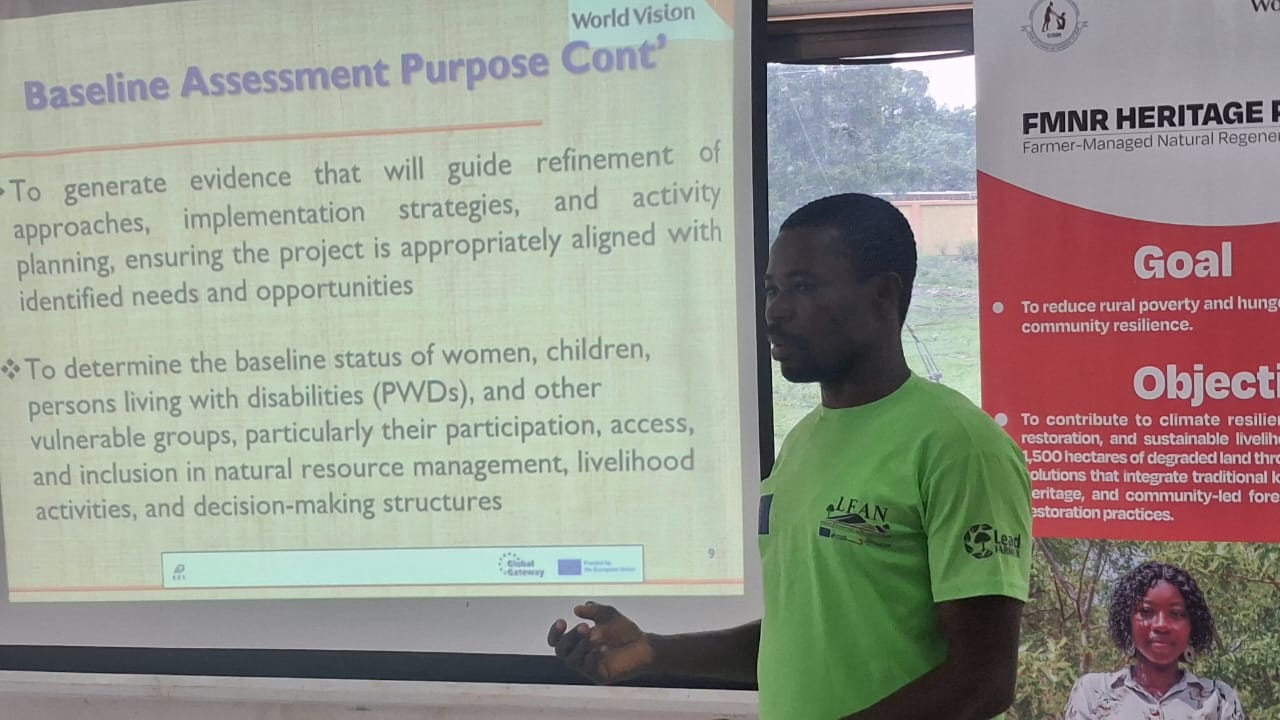
Mr. Bugre appealed to traditional leaders, government institutions, and farmers to remain committed to the project, stressing that its success depends on collective ownership.
“We cannot do this work alone. We need the continued support of chiefs, community members, the District Assembly, and all implementing partners,” he stated.
Project Manager of the Centre for Community Development Initiatives (CODI), an implementing partner of the FMNR Heritage Project, Julius Agolisi, said the baseline assessment was designed to help stakeholders understand the extent of environmental degradation and identify practical solutions rooted in indigenous knowledge.
He explained that the FMNR Heritage Project focuses on restoring degraded lands by promoting farmer-managed natural regeneration rather than relying solely on conventional tree planting.
“The project allows us to use indigenous knowledge to reclaim degraded lands. The baseline data helps us understand the challenges and identify the appropriate interventions,” Mr. Agolisi said.
He noted that the findings examined the level of environmental degradation, the human activities responsible for the destruction, and practical measures required to restore the landscape.
Mr. Agolisi urged all stakeholders to play active roles in preventing bushfires, indiscriminate tree felling, and other practices contributing to environmental degradation.
The Nabdam District Director of Agriculture, Rasheed Imoro, described the baseline findings as a wake-up call for all stakeholders.
He stressed that achieving the project’s target of restoring 1,500 hectares would require intensified collaboration among government agencies, development partners, and local communities.
“If we are not doing something now, I don’t know how our agriculture and environment will look three or four years from now. Climate variability is already affecting our livelihoods,” he warned.
Mr. Imoro advocated greater emphasis on farmer-managed natural regeneration, explaining that indigenous tree species are better adapted to the ecological conditions of the Upper East Region than many exotic species.
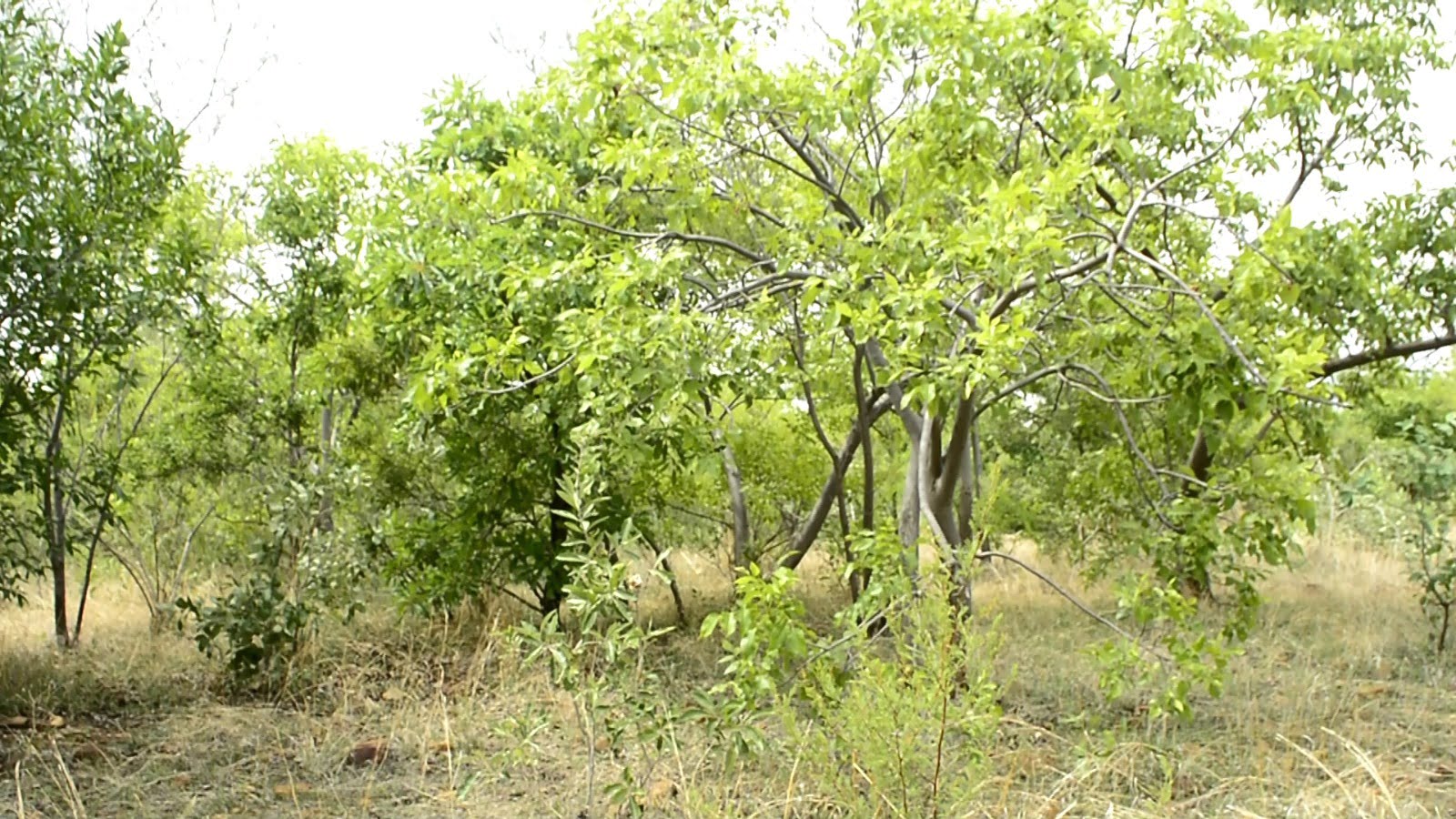
He said integrating organic soil management practices with reduced use of inorganic fertilizers would also improve soil fertility and environmental sustainability.
The Nabdam District Forest Range Manager of the Forestry Commission, Michael Manor, welcomed the project, describing it as timely and critical for restoring the district’s degraded landscape. He said the Forestry Commission’s mandate aligns closely with the objectives of the FMNR Heritage Project.
“This project has come at the right time to help improve public appreciation of forest restoration and conservation,” he said.
Mr. Manor, however, expressed concern over rampant charcoal production, indiscriminate tree felling, bushfires, and illegal mining activities, which continue to destroy young trees and forest resources.
He called on chiefs, religious leaders, schools, and community members to support environmental restoration efforts and help enforce existing bylaws protecting economically important tree species such as shea trees.
“We must all become advocates for environmental restoration wherever we find ourselves,” he appealed.
The Nabdam District Chief Executive, Francis Tobig, said the project presents a practical solution to environmental degradation because it prioritises nurturing naturally occurring tree species already adapted to the local climate.
According to him, many tree planting initiatives have recorded poor survival rates because they introduced species unsuited to the ecological conditions of northern Ghana.
“I have always said it is better to have 100 trees survive than plant one million trees that eventually die,” Mr. Tobig remarked.
He endorsed calls for government and development partners to complement tree planting programmes with farmer-managed natural regeneration to maximise environmental restoration efforts.
The District Chief Executive also announced plans to introduce an award scheme in collaboration with the Forestry Commission to recognise communities and institutions that record the highest survival rates for planted and naturally regenerated trees.
He further appealed to residents to reduce bushfires and protect regenerating vegetation to ensure the long-term success of the project.
The FMNR Heritage Project is expected to run for two years, focusing on restoring degraded lands, strengthening food security, and promoting climate-resilient livelihoods through community-led environmental conservation initiatives.
A1Radioonline.com|101.1Mhz|Joshua Asaah|Nangodi