
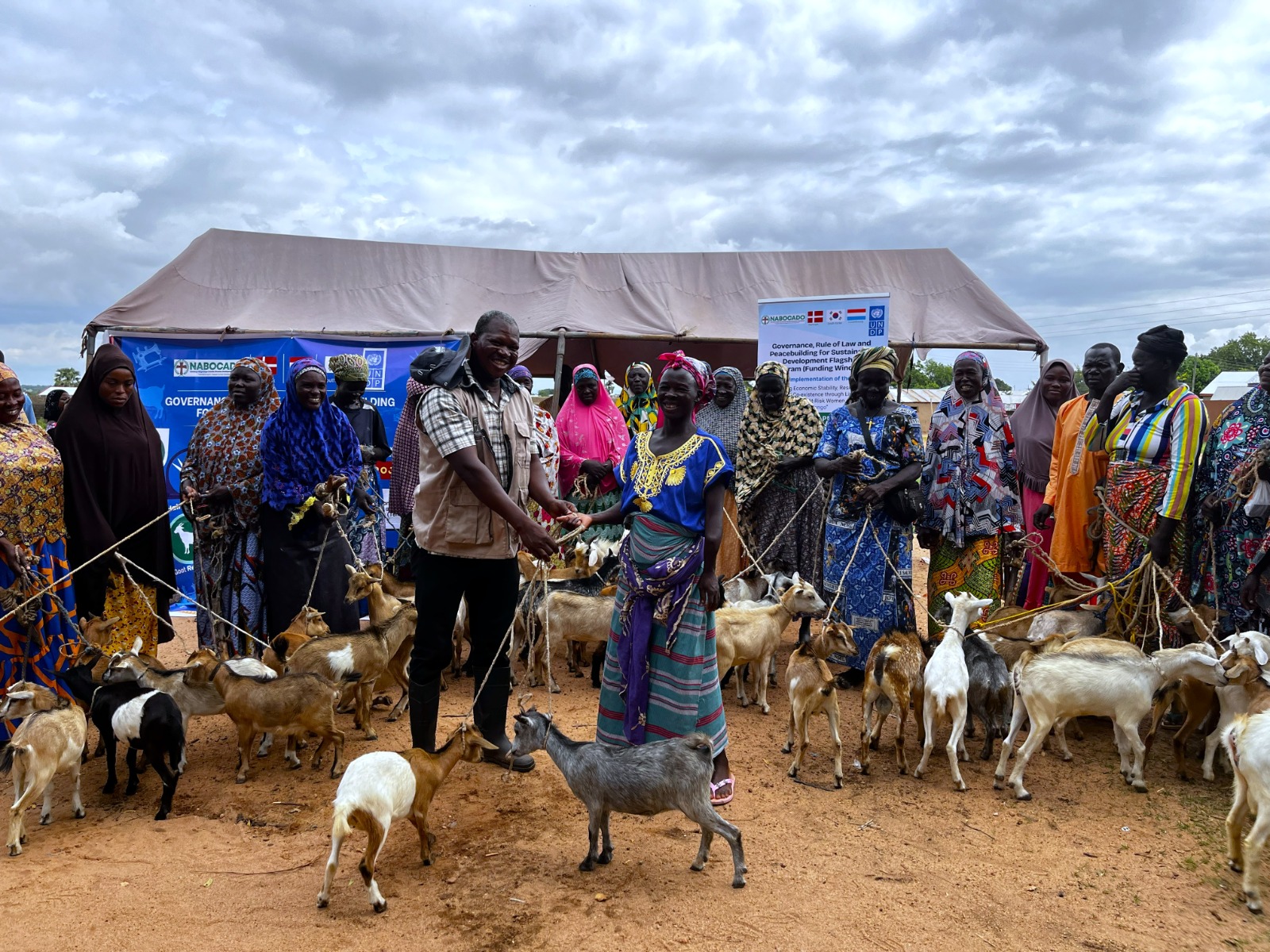
The Navrongo-Bolgatanga Catholic Diocesan Development Organisation (NABOCADO), in partnership with the United Nations Development Programme (UNDP) Ghana, has supported 130 beneficiaries in Kongo, a community in the Tempane District of the Upper East Region, with vocational equipment, livestock, and agro-processing support to strengthen peaceful coexistence, social cohesion, and economic resilience among diverse groups in the area.
The intervention, known as the Livelihood for Peace Project, was held on Thursday, July 16, 2026, and forms part of the Governance, Rule of Law and Peacebuilding for Sustainable Development Flagship Programme, funded by the governments of Denmark, Luxembourg, and the Republic of Korea. It is designed to improve livelihoods while addressing vulnerabilities that could contribute to conflict.
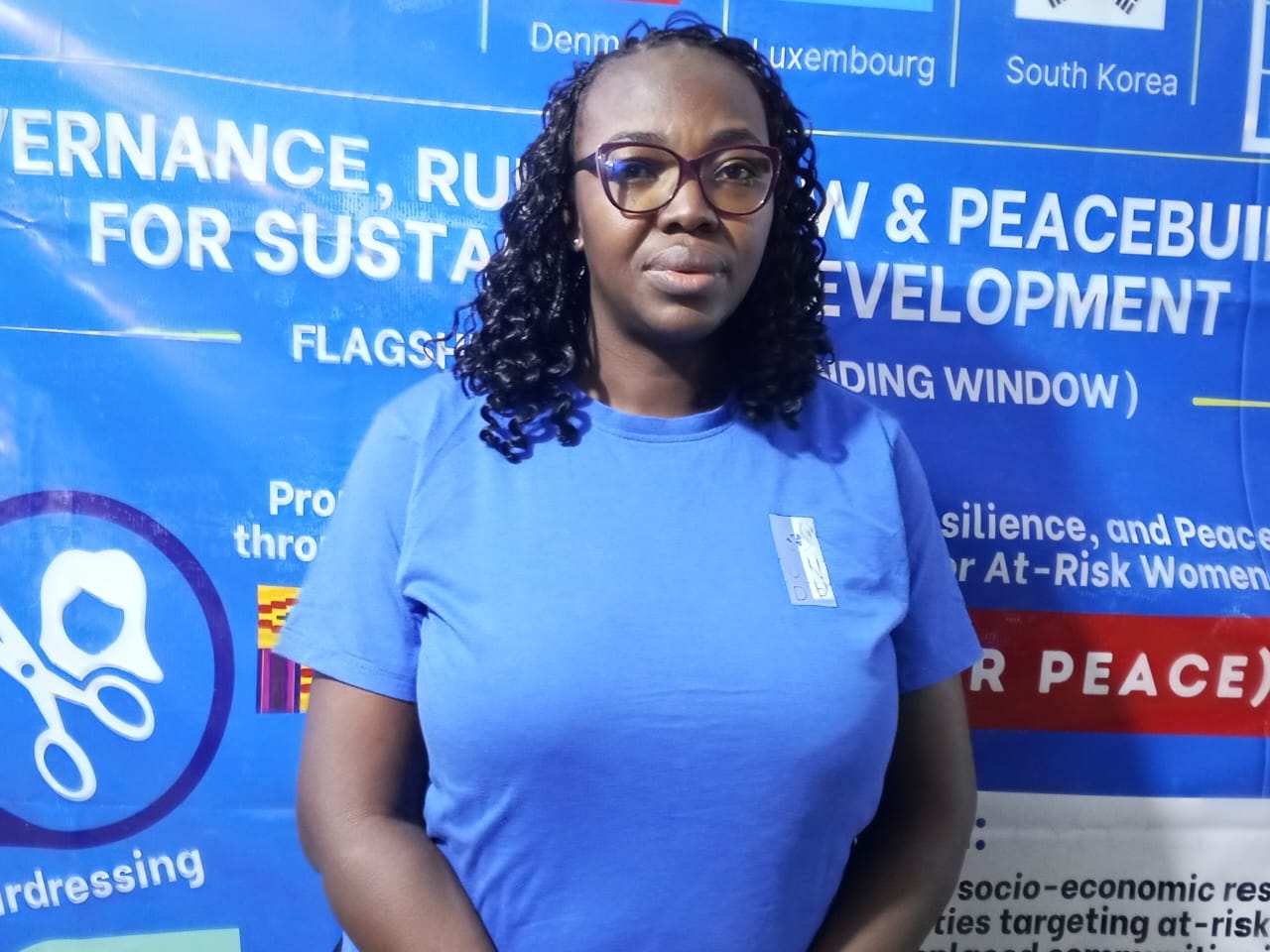
Speaking at a ceremony to officially hand over the support items to the targeted beneficiaries, Peace and Governance Analyst at UNDP Ghana, Melody Azinim, said the initiative forms part of a wider governance, rule of law, and peacebuilding programme designed to strengthen peace structures while addressing the social and economic challenges affecting vulnerable communities.
She explained that Kongo, a border community, was selected because of some challenges it faced in the past with conflict among some groups in the community, making it important to combine peacebuilding efforts with economic support.
According to Madam Azinim, communities along borders often face unique development challenges despite their economic opportunities, particularly through cross-border trade.
She said the project, therefore, focuses on empowering women and young people, who are often among the groups most affected by unemployment and have limited representation in peacebuilding processes.
“The focus is to ensure that women and young people are actively participating and are also able to utilise their potential in terms of the options available within some of these border areas,” she said.
Madam Azinim added that beneficiary selection was designed to ensure representation from the diverse groups within Kongo, to promote inclusion and respect for diversity.
She explained that local peace structures that will be established under the initiative will provide platforms for dialogue, help address misunderstandings, and encourage residents to work together towards a common development goal.
The Director of Justice, Peace, and Human Response at NABOCADO, Theophilus Abolga, said the intervention uses economic empowerment as a strategy for building sustainable peace by helping residents establish reliable sources of income.
He explained that the 130 beneficiaries were selected across different areas of support, including women’s groups, young women, and livestock beneficiaries.
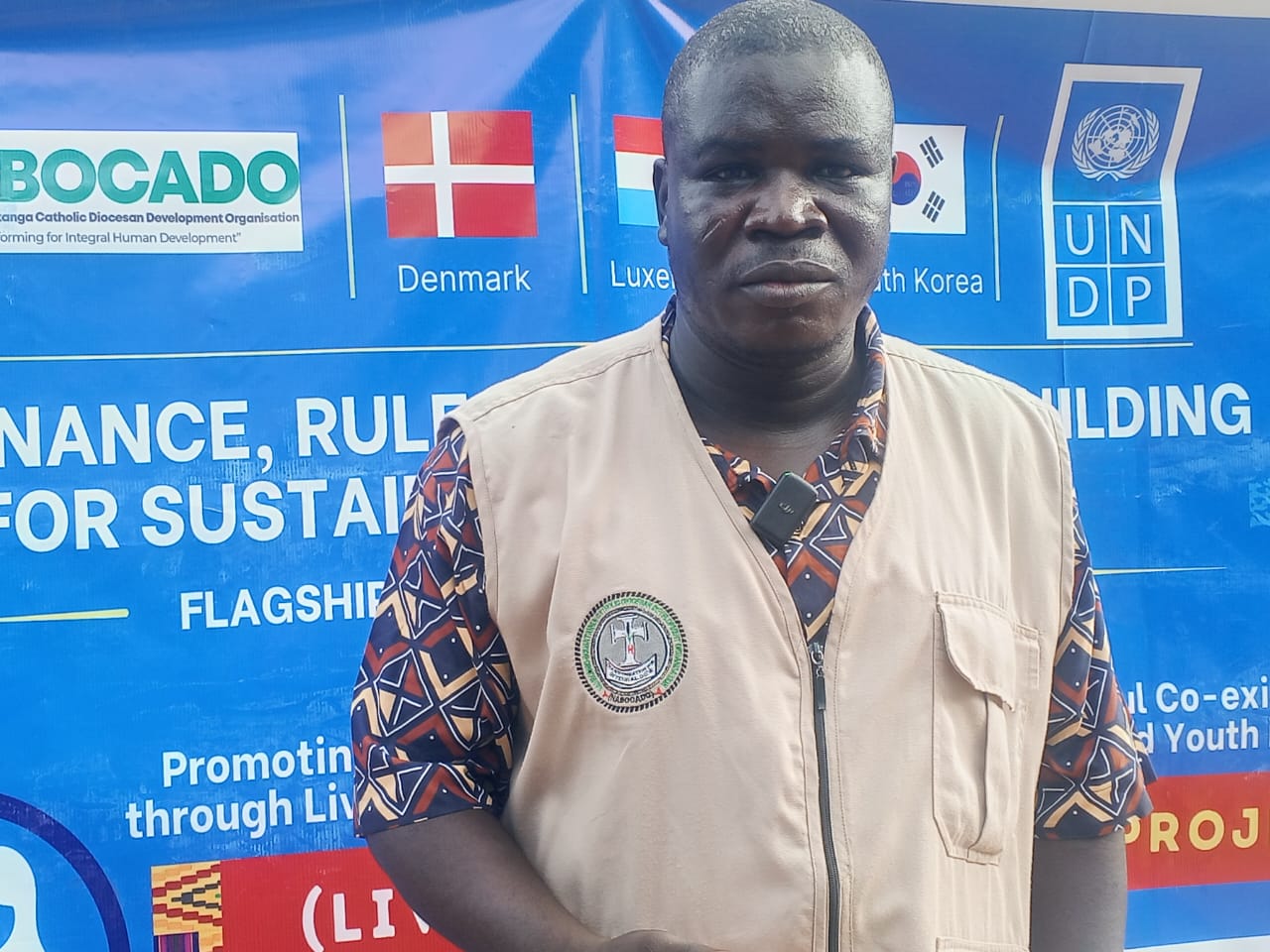
According to Mr. Abolga, 77 women, organised into three groups, received support for agro-processing activities. They will process farm produce such as soybeans, cotton bran, and groundnuts into goods, including groundnut oil and kulikuli for sale.
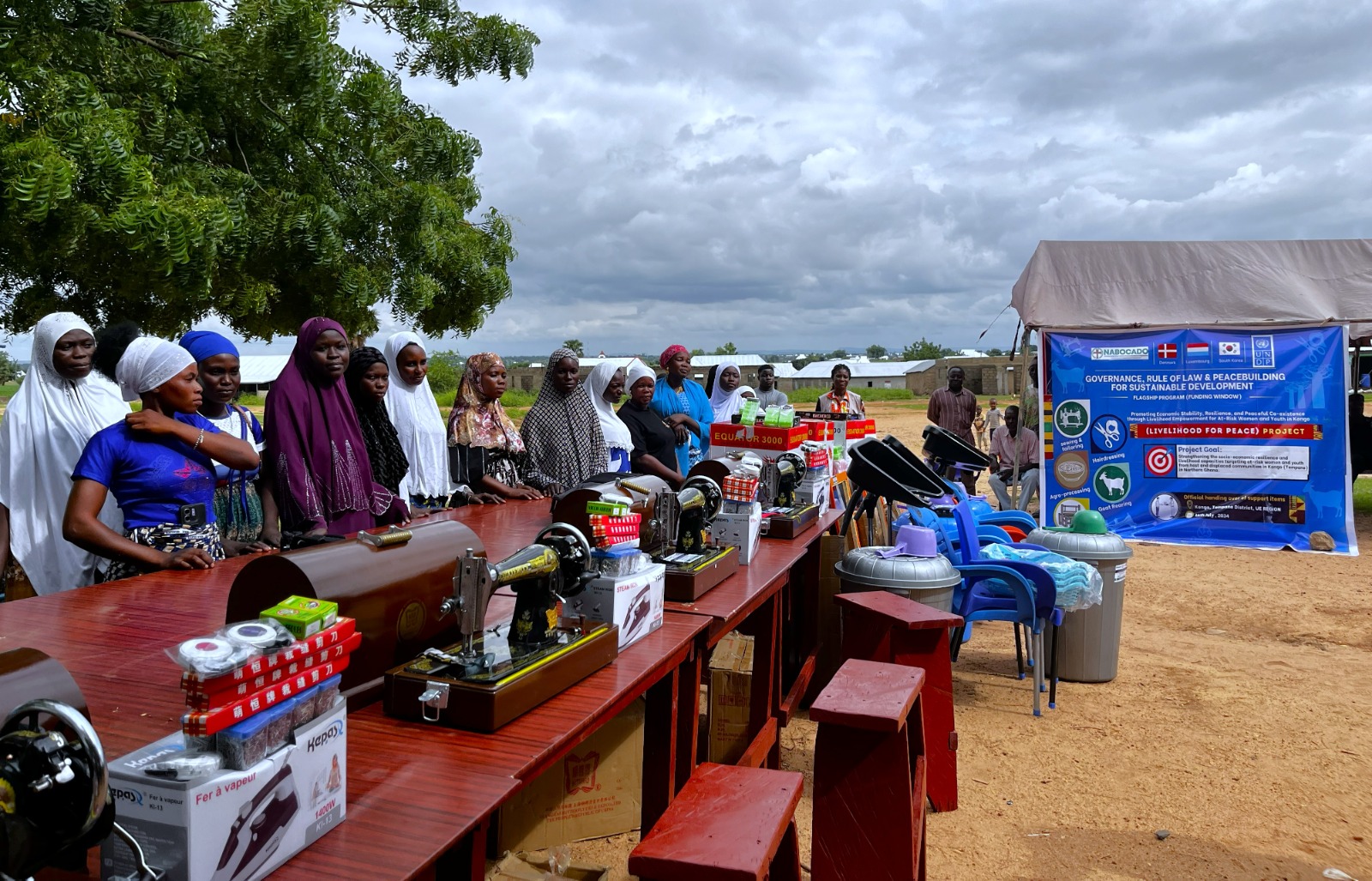
He added that 13 young women were provided with vocational equipment, including sewing machines, Hairdressing startup tools, weaving and other tools, to help them establish their own businesses.
Mr. Abolga further said 40 beneficiaries received livestock support involving 88 goats, with each beneficiary receiving two female goats, while eight male goats were set aside for breeding.
Beyond the distribution of equipment and livestock, Mr. Abolga said beneficiaries will be trained in savings, cooperative arrangements, financial management, and business management to help sustain the intervention.
He expressed hope that the six-month initiative would encourage residents to protect their livelihoods and avoid actions that could undermine peace.
“We are using livelihood support to build peace. When people have something valuable to protect, they are less likely to engage in violence that could destroy what they have built,” Mr. Abolga said.
One beneficiary, Zeliya Mamudu, a trained seamstress from Kongo, said the support had given her the chance to begin practising her skills after completing her training in 2020 without the equipment needed to start work.
“I completed my training in 2020, but I had no sewing machine to start work, even though I had my certificate. With this machine, I can now work hard to support myself and my family,” Madam Mamudu said.
Madam Mamudu, another beneficiary, said the intervention would also help promote peace among families and community members by reducing economic hardship.
“When there is a lack of something, there is often a lack of understanding. With this support, we will work hard, support our families, and help build peace and unity among the youth and women in Kongo,” she added.
The intervention is expected to serve as a model for using economic empowerment as a tool for peacebuilding, helping conflict-affected communities strengthen social cohesion, improve economic opportunities, and work together towards sustainable development.
A1Radioonline.com|101.1Mhz|Simon Ayamdoo|Kongo