
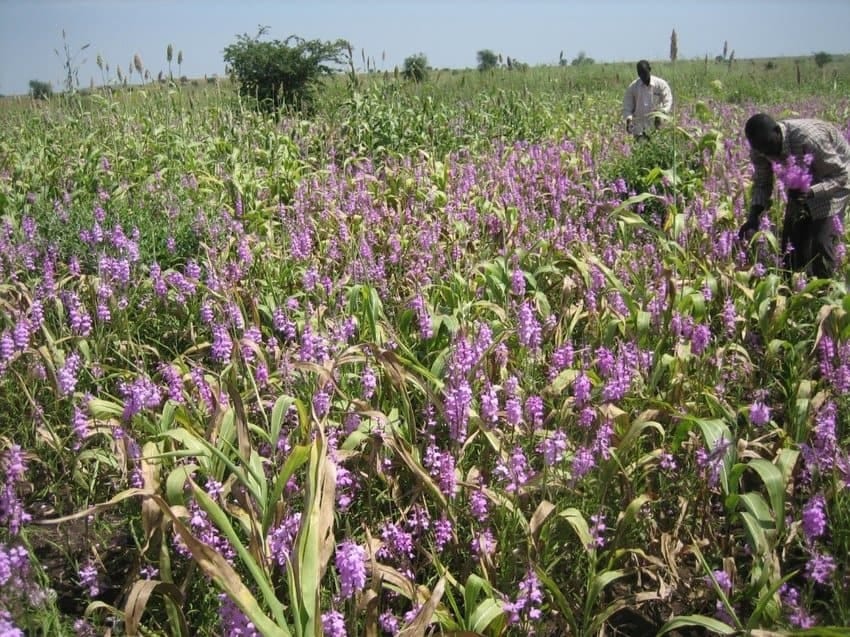
Farmers in heavily Striga-infested fields in the Upper East Region risk losing between 60% and 100% of their cereal harvests, prompting the Forum for Natural Regeneration (FONAR) and the Ministry of Food and Agriculture (MoFA) to launch a campaign to control the parasitic weed.
The campaign, launched in the Kparaboug community in the Nabdam District, seeks to increase awareness of Striga hermonthica, commonly known as witchweed, and equip farmers with measures to control its spread.
The intervention comes amid estimates that between 200,000 and 300,000 hectares of cereal farmland are infested with Striga nationwide, with the Upper East Region identified as one of the country’s hotspots.
Agriculture is the mainstay of more than 80% of people in the Upper East Region, which lies within the Guinea-Sudan savannah zone. Farming largely depends on rain-fed cereals such as sorghum, millet, maize and upland rice.
Striga, however, attacks the roots of these crops underground, drawing water and nutrients from them before its distinctive pink-purple flowers become visible above the soil.
In heavily infested fields, yield losses can reach between 60% and 100%, effectively wiping out entire harvests.
Surveys conducted by the Council for Scientific and Industrial Research’s Savanna Agricultural Research Institute (CSIR-SARI) in the 2000s found that more than 60% of cereal fields in the Upper East Region were infested. Some areas in Nabdam, Talensi, Bongo, Kassena-Nankana and Builsa recorded infestation rates exceeding 80%.
In some communities, farmers have abandoned fields because continued cultivation is no longer viable.
The weed is particularly difficult to control because a single Striga plant can produce up to 50,000 microscopic seeds, which can remain viable in the soil for between 15 and 20 years.
Speaking at the campaign launch, FONAR Executive Director Sumaila Saaka described Striga as more than a weed, arguing that its prevalence also points to deteriorating soil and land conditions.
“For too many seasons, we have watched our beloved sorghum, millet and maize turn yellow, stunted and sometimes completely wiped out. The answer is rooted deep in the soil. Its name is Striga, the witchweed,” he said.
Mr Saaka said the impact on farmers in parts of Nabdam had become severe.
“I will not be exaggerating to say that in parts of this district, Striga is stealing up to 100 per cent of our grain harvest. It is a thief, hiding beneath our feet, robbing our children of food and our families of income,” he said.

He linked the spread of Striga to deforestation and declining soil health, saying trees that previously formed an important part of the agricultural landscape have increasingly disappeared.
“Our grandfathers’ farms were dotted with mighty Faidherbia, shea and dawadawa trees. But today, the land is bare, the soils are hard and hungry, and Striga has moved in,” he said.
Mr Saaka called for a community-wide response involving farmers, traditional authorities and district assemblies.
“The success of this campaign does not rest in the hands of FONAR alone. It rests squarely in yours. When you return home, I beg you, talk to your neighbours. Show them the pink flower and tell them it must be burned,” he said.
“Let the gathering here this morning be the starting point of a community-wide movement that says, ‘Striga must go, and the trees must return.’”
He also urged district assemblies to prioritise Striga control in their agricultural plans, warning that continued infestation threatens food security and rural livelihoods.
Speaking on behalf of the Nabdam District Director of Agriculture, Musah Adams, a senior agricultural officer in charge of crops, welcomed the partnership and described Striga as a “deadly” threat to farming.
He encouraged farmers to share information from the campaign with others and adopt recommended control measures on their farms.
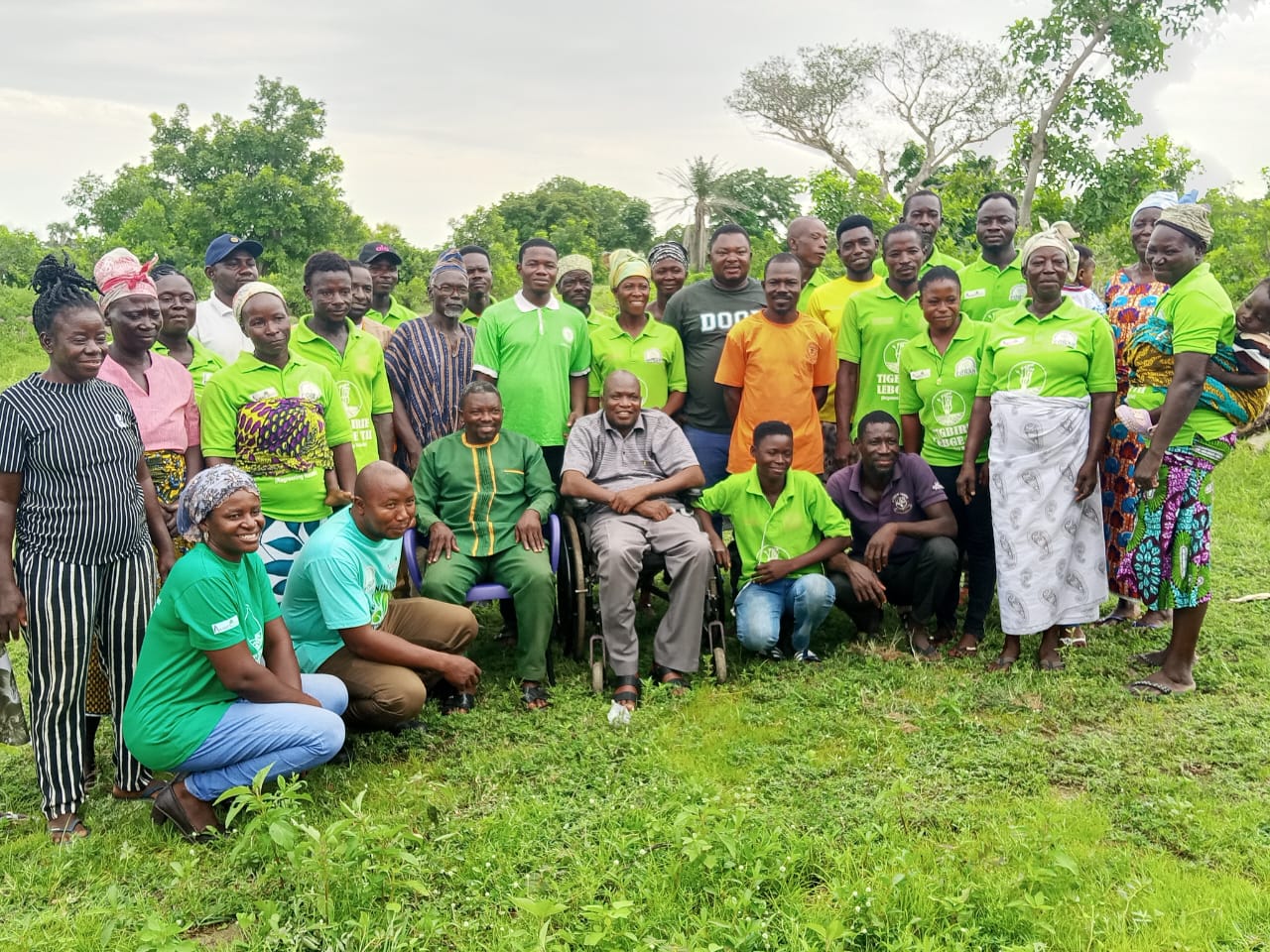
Farmers and community leaders at the launch welcomed the intervention, saying Striga had damaged their crops for years while many had limited knowledge about how to effectively control it.
The FONAR and MoFA campaign is expected to build community awareness and encourage coordinated action against a weed that continues to threaten cereal production and household incomes across the Upper East Region.
A1 Radio | 101.1 MHz | David Azure | Bolgatanga