

Smallholder farmers from the Upper East and North East Regions have received practical training in producing and using alternative agricultural inputs as part of efforts to reduce their reliance on synthetic inputs and build more resilient farming systems.
The farmers were trained in compost production and management, natural methods of controlling pests and diseases, and ecological approaches to weed management using resources that can be sourced locally.
The two-day training formed part of the “Strengthening Agroecology for Resilient Livelihoods: Empowering Women and Smallholder Farmers in Northern Ghana” project, led by the Widows and Orphans Movement (WOM).
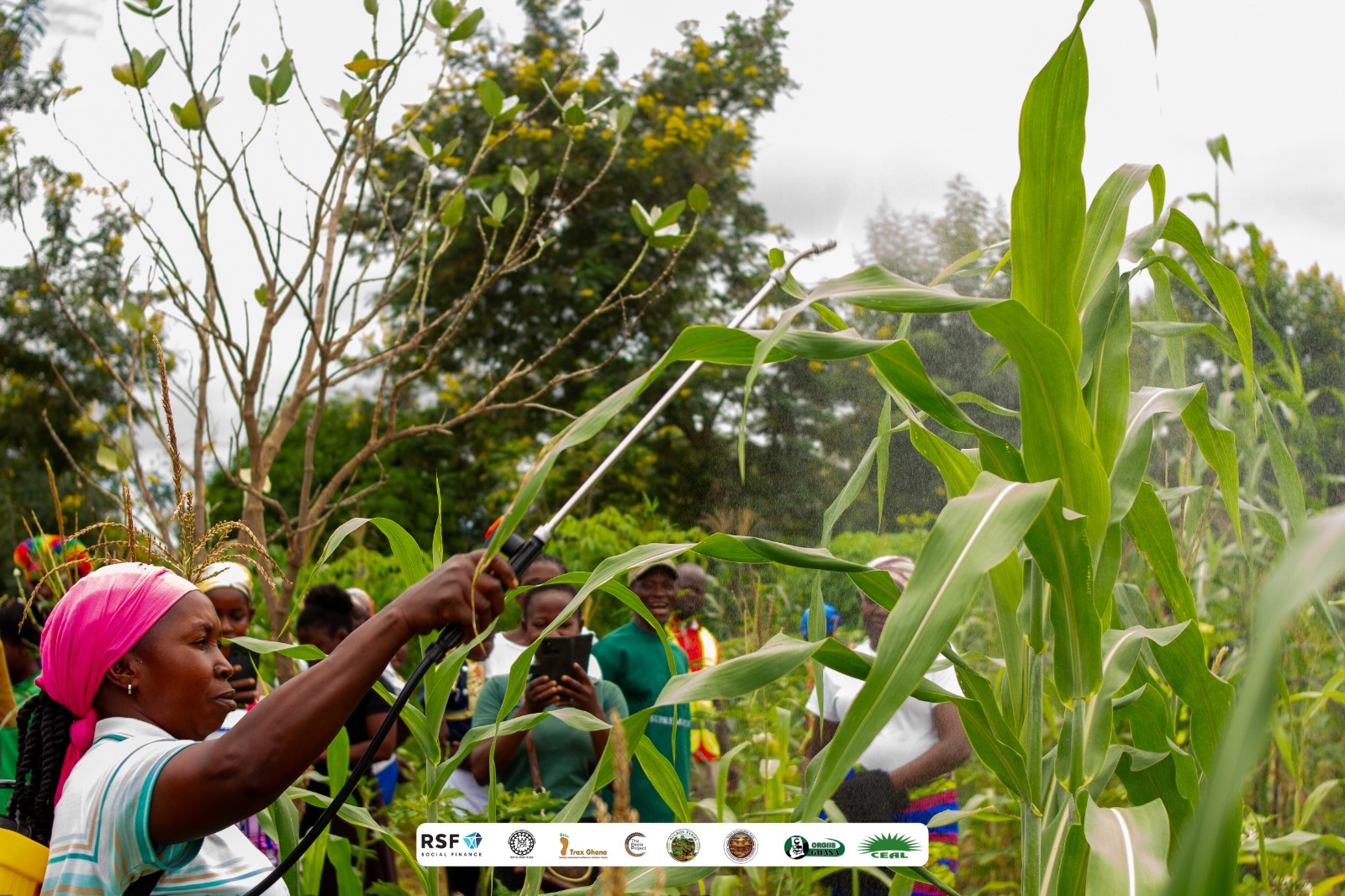
It was hosted at Bugbon Farms and brought together farmers from different communities represented by six organisations implementing the project in the Upper East and North East Regions.
Practical demonstrations were led by agroecological farmer Fuseini Bugbon, who has more than three decades of experience in sustainable and ecological farming.
Mr. Bugbon demonstrated how farmers could produce and apply alternative farm inputs to address soil fertility, pest, disease and weed management challenges.

The practical sessions were intended to help farmers explore how resources available within their communities could be used on their farms while reducing dependence on externally sourced synthetic inputs.
Beyond the demonstrations, farmers from different communities shared traditional farming practices, indigenous knowledge and locally developed approaches to addressing agricultural challenges.
According to the organisers, the exchanges were intended to recognise farmers not simply as recipients of agricultural knowledge but as people whose experiences and innovations can contribute to solutions to challenges confronting food production.
Participants called for the practical agroecology training to be extended to more farmers, citing knowledge gaps that could hinder the wider adoption of sustainable farming practices.
The training also brought together Directors from the Departments of Agriculture in West Mamprusi, Talensi, Nabdam and Kassena-Nankana West districts.
The Agriculture Directors expressed support for agroecological approaches and highlighted their potential contribution to sustainable agriculture, food security, soil health, natural resource conservation and biodiversity protection.
Participants also discussed indigenous knowledge, including the use of medicinal plants and locally available herbs.
Farmers shared knowledge of ethnomedicinal and herbal practices passed down through generations, prompting discussions about the need to document and preserve indigenous knowledge while exploring how it can responsibly complement contemporary approaches to sustainable development.
The training also examined challenges facing smallholder agriculture, including climate variability, declining soil fertility, biodiversity loss and dependence on external agricultural inputs.
The project is being implemented by a six-member consortium led by the Widows and Orphans Movement (WOM), in partnership with Trax Ghana and The Beela Project, Bugbon Farms, Volta Sustainable Farms, the Organisation for Indigenous Initiatives and Sustainability (ORGIIS), and the Centre for Ecological Agriculture and Livelihoods (CEAL).
It is supported by The 11th Hour Project Food Sovereignty Fund RSF.
A1 Radio | 101.1 MHz | Joseph Yaro | Bolgatanga