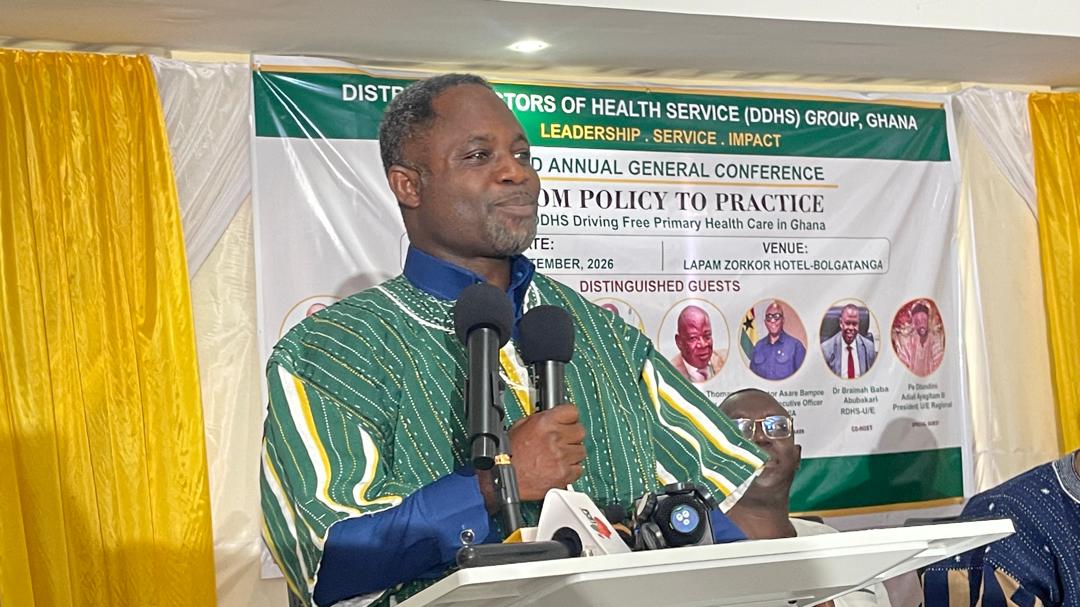
Health Minister Kwabena Mintah Akandoh has clarified that the government’s Free Primary Healthcare policy will not mean that healthcare services are being provided at no cost to the state.
He said government will continue to pay healthcare providers for services delivered under the programme, while patients will receive covered services without payment.
Mr. Akandoh explained that the policy is therefore “free” only from the perspective of the ordinary Ghanaian accessing services at participating facilities.
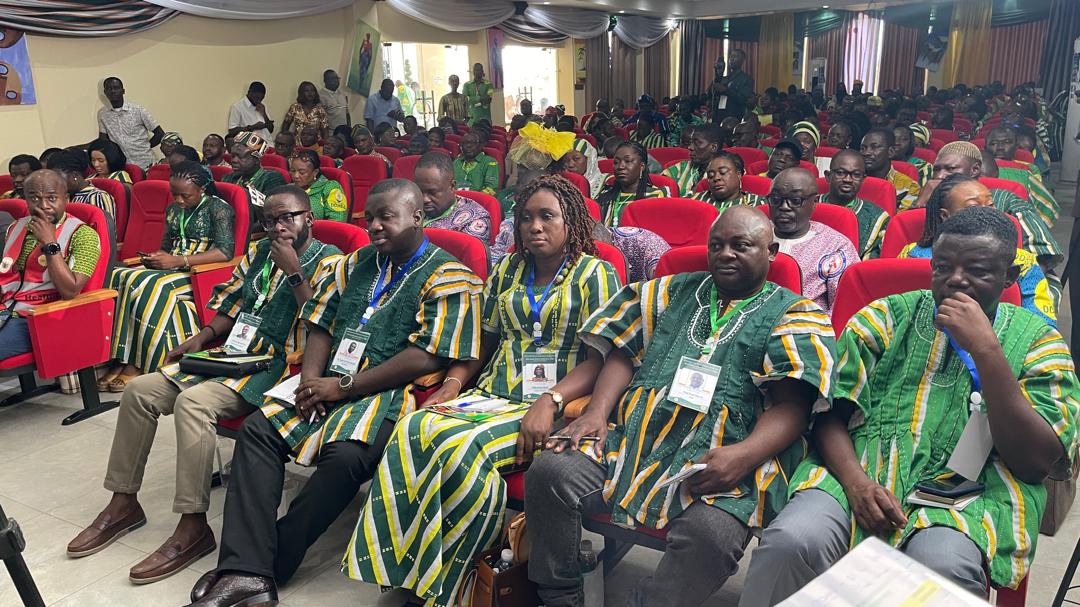
Speaking at the 33rd Annual General Conference of the District Directors of Health Service Group in Bolgatanga, he said government had put in place funding mechanisms to ensure that health facilities can provide the services.
“The Free Primary Healthcare is not free when it comes between government and a service provider. It’s not free because government is going to pay,” he said.
He said services provided under the programme would be financed through mechanisms including population-based payments and the existing payment arrangements under the National Health Insurance Scheme.
Mr. Akandoh said government had also increased tariffs paid to healthcare service providers by a minimum of 50 percent across the board.
He therefore rejected concerns that the Free Primary Healthcare policy would automatically result in a shortage of medicines and other essential resources because services are being provided free to patients.
“If there’s a stock-out, you are to be blamed. If there are no basic equipment, you are to be blamed because government will do its best,” he said.
The minister explained that Free Primary Healthcare would cover services at CHPS compounds, health centres and polyclinics, while the National Health Insurance Scheme would continue to play a major role beyond the polyclinic level.
He said patients should therefore not assume that the introduction of Free Primary Healthcare means all treatment at district, regional and teaching hospitals will automatically be free.
Mr. Akandoh said the policy is intended to complement, rather than replace, the National Health Insurance Scheme.
He also stressed that the programme goes beyond treating illnesses, with prevention and health promotion forming a critical component. For him, preventing diseases before they occur would reduce pressure on the health system and lower expenditure on treatment.
A1Radio|101.1Mhz|Joshua Asaah|Bolgatanga