
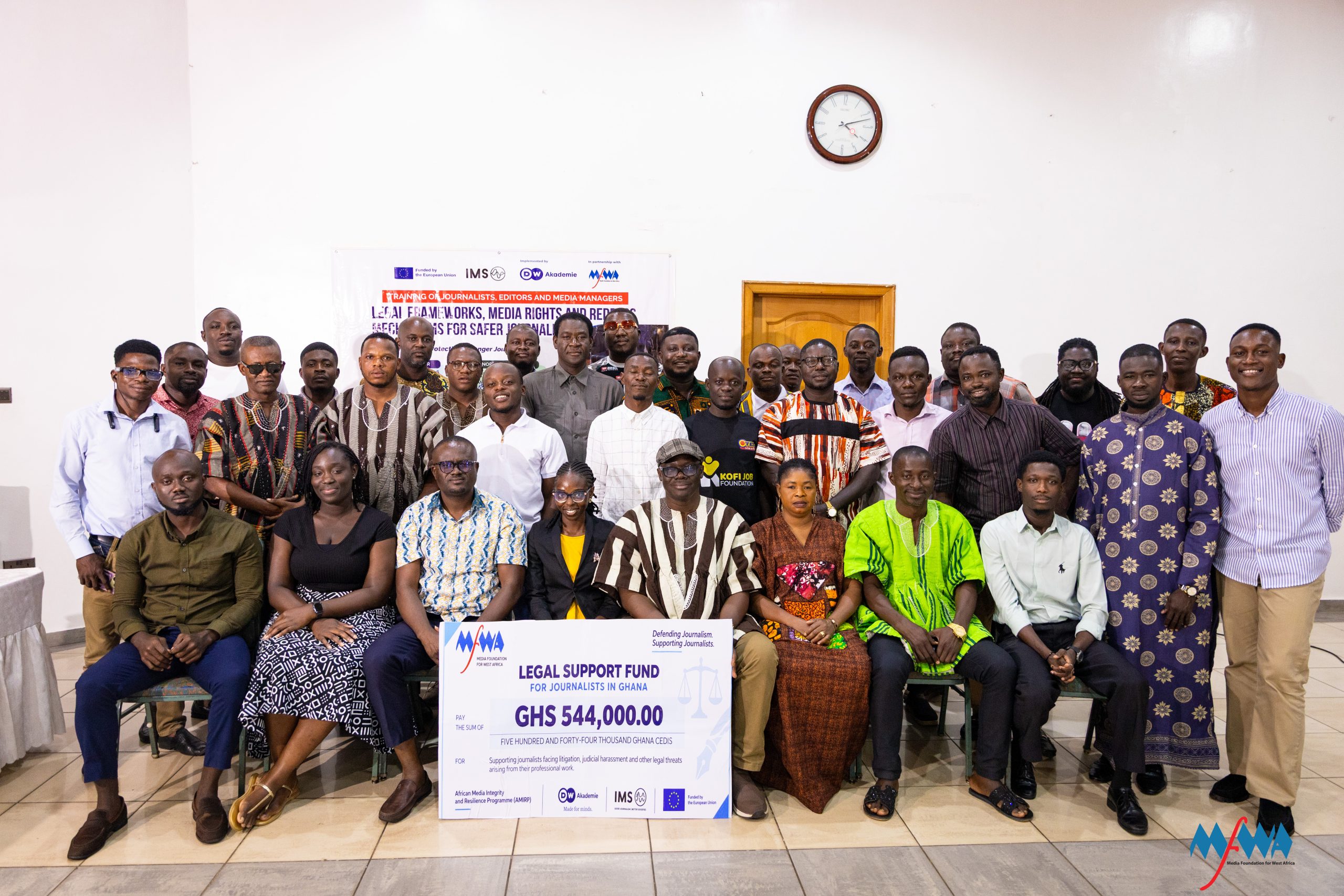
The Media Foundation for West Africa (MFWA) has trained journalists on the legal framework governing media practice in Ghana as part of efforts to strengthen the media’s capacity to manage legal risks and withstand judicial intimidation.
The training forms part of the MFWA’s African Media Integrity and Resilience Programme: Ghana, Central African Republic (AMIRP Programme), a two-and-a-half-year project being implemented in Ghana in collaboration with DW Akademie, with funding from the European Union through International Media Support (IMS).
The programme combines intensive residential training on media law and legal risk management with the operationalisation of a Legal Support Fund (LSF) to provide financial assistance for legal representation to journalists facing litigation or judicial harassment arising directly from their legitimate professional activities.
Speaking at the training in Kumasi, Program Manager of the MFWA, Dr. Daniel Kwame Ampofo Adjei, said the initiative was driven by the need to build a resilient media capable of contributing effectively to democratic participation.
He said citizens’ voices were central to meaningful democracy and that the media remained an important platform through which those voices were expressed.
Dr. Ampofo Adjei said the media was increasingly confronted with legal challenges, including defamation suits and injunctions, while many media houses lacked the financial resources to defend themselves in court even when they believed they had acted properly.
“The idea is to empower the media by giving them knowledge of the legal frameworks that govern freedom of expression in Ghana,” he said.
He disclosed that the MFWA had so far trained 60 media personnel, with two training sessions organised in the southern sector and one in the northern sector.
As part of the programme, the MFWA is also providing about GH¢544,000 for the Legal Support Fund to assist journalists who require legal representation in connection with their professional activities.
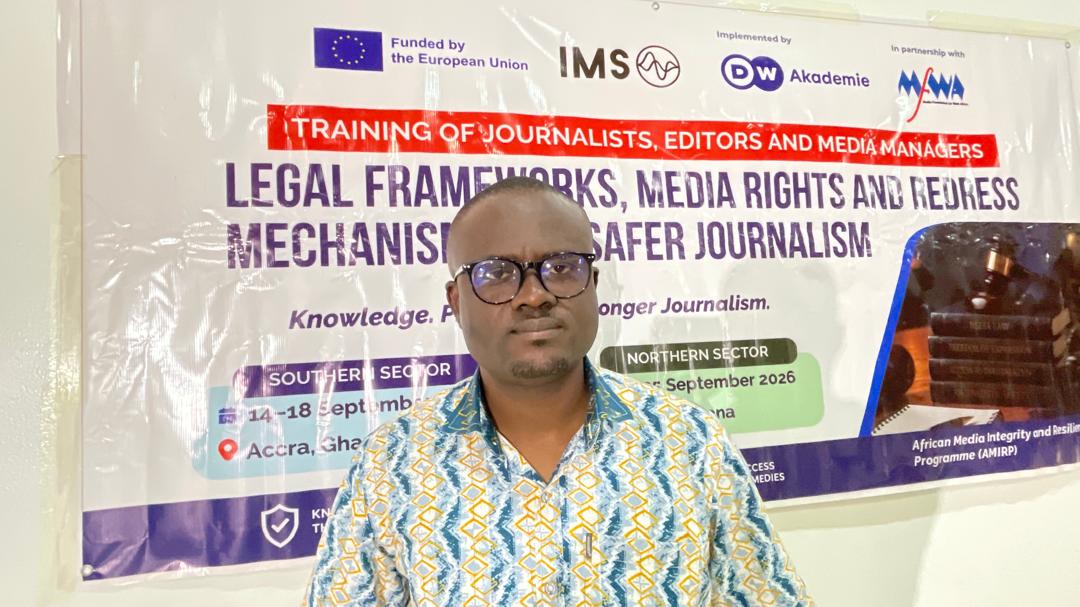
Dr. Ampofo Adjei said the programme also included a review of the curricula of media and communication training institutions in Ghana to ensure that journalism education remained relevant to contemporary challenges.
He said a consultant was currently reviewing the curricula, after which the findings would be subjected to stakeholder validation before recommendations were made and shared with major public and private institutions involved in journalism training.
He urged journalists to apply the knowledge gained from the training by maintaining professional and ethical standards. He cautioned that the availability of legal support should not encourage journalists to become careless or reckless in their work.
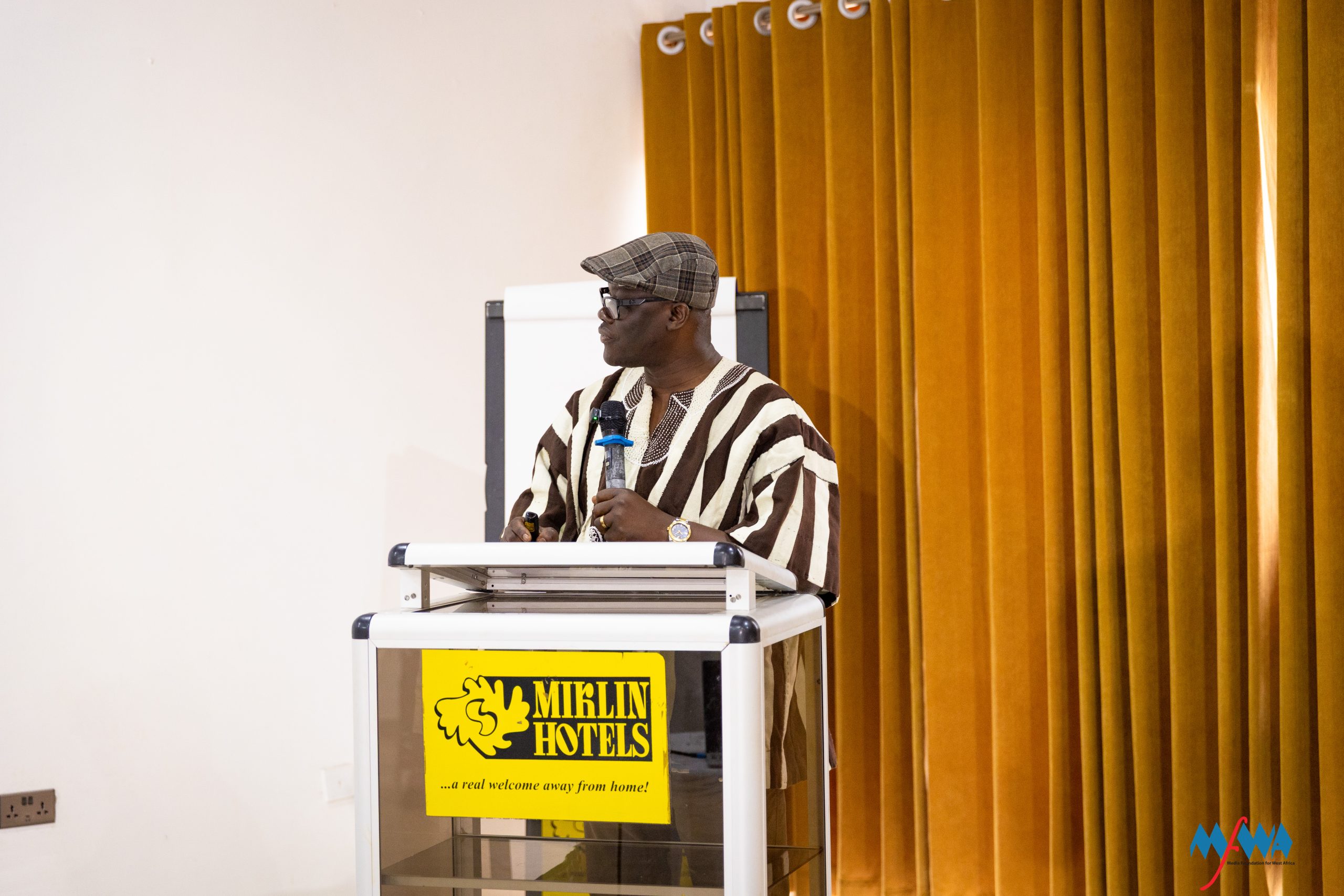
Private legal practitioner and broadcast journalist, Samson Lardy Anyenini, who facilitated the training, said the media was increasingly facing lawsuits, making the establishment of the legal support fund particularly important.
He explained that while people who disagreed with media reports had the right to seek redress through available constitutional and legal channels, some lawsuits could be intended to discourage the media from pursuing issues of public interest.
Mr. Anyenini said such cases could include Strategic Lawsuits Against Public Participation (SLAPPs), where litigation may be used to intimidate or prevent journalists from continuing to report on particular issues.
He said some litigants could also seek injunctions to stop media houses from continuing to publish or discuss matters under investigation.
“These things are costly, and media houses are unable to afford them. So to have a fund that is available to assist, I think, is going to be very useful,” he said.
Mr. Anyenini nevertheless urged journalists to undertake their work boldly while exercising the necessary professional care to minimise legal risks.
He said journalists must painstakingly verify information, seek responses from persons who are the subjects of their reports, obtain supporting documentation and use the Right to Information (RTI) process where necessary.
He also advised journalists to distinguish between opinions, allegations and established facts and to preserve the evidence relied upon in their publications in anticipation of possible legal challenges.
According to him, the Constitution provides protections for the media while also placing responsibilities on journalists to promote accountability and serve the interests of the Ghanaian people.
He urged journalists not to abandon their watchdog role because of the possibility of lawsuits, stressing that accountability would remain a key responsibility of the media for as long as public officials exercised power.
“For as long as that will remain, the media has a role to play. There will be people in government, there will be office holders, they must be held to account to the people who give them the power,” he said.
A1Radio | 101.1Mhz | Joshua Asaah |Kumasi