
For families in Ghana’s Upper East Region, a diagnosis of cancer, kidney failure or heart disease can mean more than a battle for survival. It can also mean exhausting savings, abandoning businesses and travelling hundreds of kilometres in search of specialist healthcare.
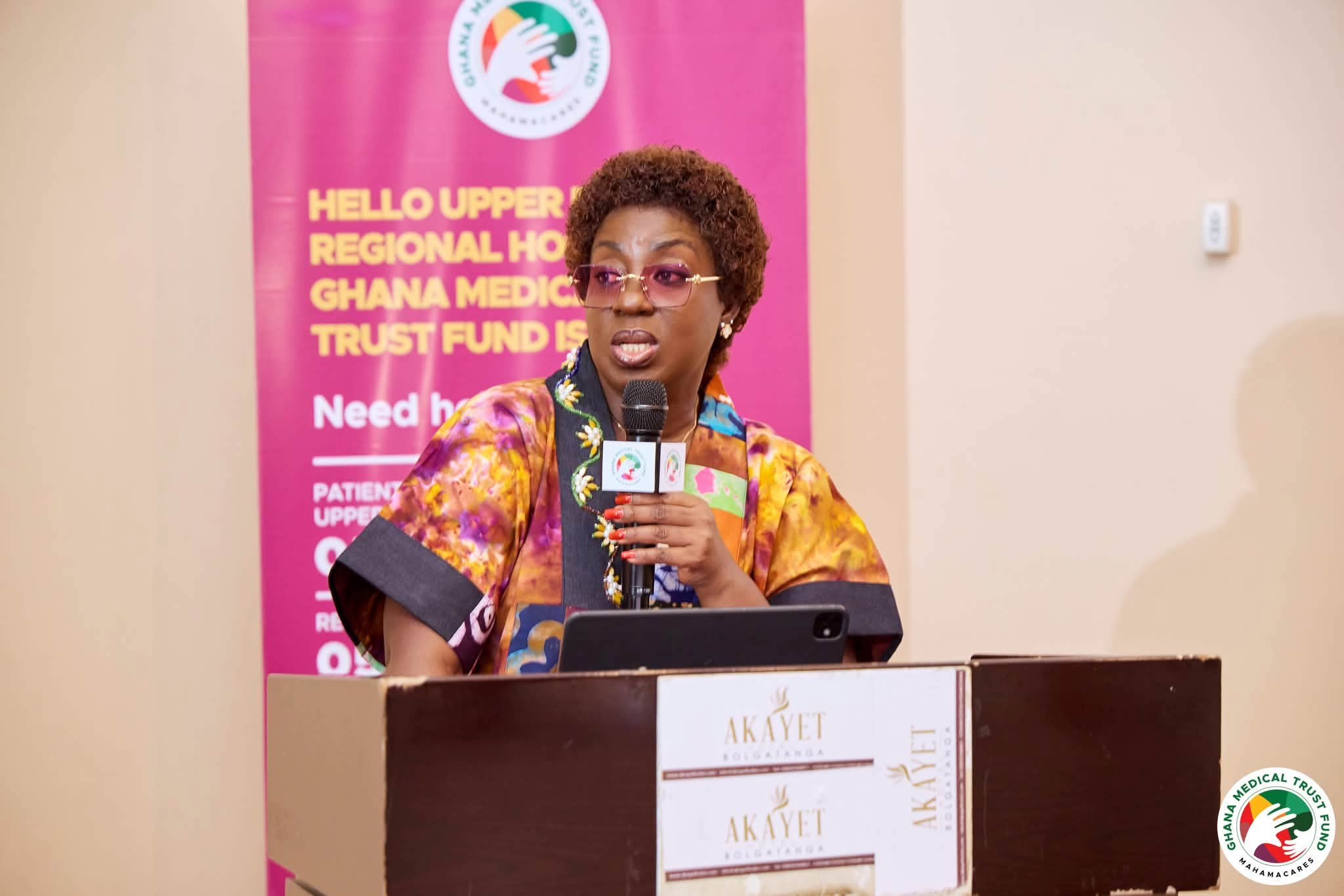
The Administrator of the Ghana Medical Trust Fund, popularly known as MahamaCares, Adjoa Obuobia Darko-Opoku, says the initiative seeks to ease this burden by ensuring that financial hardship and geographical location do not prevent Ghanaians from accessing treatment for serious chronic illnesses.
Speaking at a stakeholder engagement in Bolgatanga as part of the Fund’s nationwide sensitisation tour, Mrs Darko-Opoku described the devastating financial consequences that serious illnesses can have on families.
“Serious illness changes far more than a patient’s health. Money reserved for school fees becomes money for investigations. A small business loses its working capital to hospital bills,” she said.
She explained that the Fund, established under President John Dramani Mahama’s administration, is intended to provide financial support for eligible patients battling conditions such as cancer, kidney failure, diabetes and heart disease.
According to her, the initiative recognises that the cost of specialised treatment often places an unbearable burden on patients and their families, particularly those living far from major referral hospitals.
For residents of the Upper East Region, who frequently travel to Tamale or Accra for specialist care, Mrs Darko-Opoku said improving access to treatment closer to home remained a priority.
She disclosed that the Fund was supporting efforts to strengthen specialist services at Tamale Teaching Hospital and improve the referral system to reduce the challenges faced by patients in northern Ghana.
The interventions, she explained, are intended to ensure that a person’s chances of survival are not determined by where they live.
Mrs Darko-Opoku outlined four strategic pillars guiding the Fund’s operations: financial support for eligible patients, medical equipment and infrastructure support, specialist training and capacity building, and research and innovation.
She disclosed that the Fund had already supported the restoration of the Cardiac Catheterisation Laboratory at Korle Bu Teaching Hospital.
It is also supporting dialysis services and the expansion of cardiovascular care at Komfo Anokye and Tamale Teaching Hospitals.
According to her, strengthening these facilities would improve access to specialist treatment and benefit patients referred from the Upper East Region and other parts of northern Ghana.
Mrs Darko-Opoku further revealed that the Fund had undertaken a pilot involving 50 patients to test its operational processes ahead of wider implementation.
She said key operational tools, including an approved medicines list and a tariff manual, had also been developed to guide the provision and financing of treatment.
The Administrator emphasised that transparency, accountability and public trust would remain central to the Fund’s operations.
Explaining the eligibility requirements, Mrs Darko-Opoku said applicants must be Ghanaian citizens with active National Health Insurance Scheme (NHIS) membership and a confirmed diagnosis of a condition covered by the Fund.
She stressed that patients cannot apply directly for support.
Instead, applications must be initiated by specialist clinicians at accredited health facilities through the Fund’s dedicated digital platform.
According to her, the arrangement is intended to ensure that applications are supported by appropriate medical assessments and that assistance reaches eligible patients.
Mrs Darko-Opoku encouraged healthcare professionals and other stakeholders to familiarise themselves with the Fund’s procedures to help patients understand how to access support.
She maintained that the ultimate objective of MahamaCares was to reduce the financial burden of chronic illnesses while strengthening Ghana’s capacity to provide specialised healthcare.
For families in the Upper East Region, she said, improving access to treatment and reducing the cost of care could make the difference between receiving timely medical attention and abandoning treatment because of financial difficulties.
A1 Radio | 101.1 MHz | David Azure | Bolgatanga