
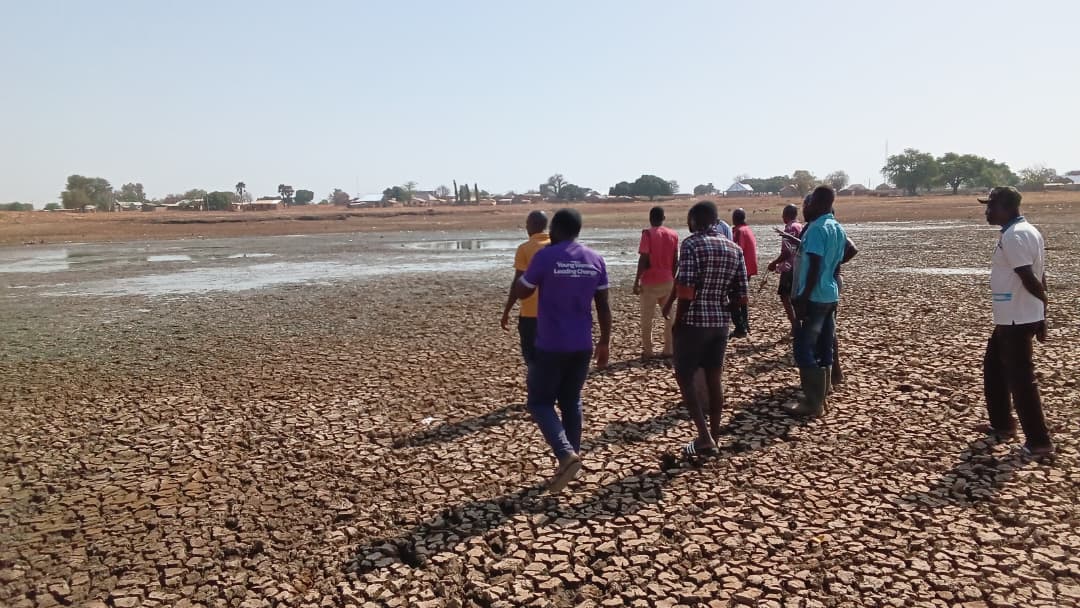
Farmers in the Dorongo community in the Bolgatanga Municipality of the Upper East Region are welcoming Burkina Faso’s decision to ban tomato exports to Ghana, describing it as an opportunity to revive local production after years of struggle.
They say the influx of imported tomatoes, coupled with inadequate irrigation infrastructure for dry-season farming, has long affected their ability to compete.
The ban, announced in a March 16, 2026 letter signed by Burkina Faso’s Ministers of Trade and Agriculture, is intended to supply the country’s local processing factories. The move has raised optimism among farmers in Ghana about increased demand for locally produced tomatoes.
Abagna Alex Abunga, Chairman of the Dorongo Farmers and Water Users Association, said the development could be a turning point if the government invests in irrigation.
“Now that Burkina Faso has announced this ban, if the Ghanaian government comes to support and desilt our dam, I believe we will produce more tomatoes to feed Ghana and will never suffer because of this ban,” he said.
Another farmer, Paul Aloliga, expressed hope that the ban would address persistent challenges, including post-harvest losses and mounting debts.
“I was overjoyed when I heard about the ban on tomato exports to Ghana. As farmers, we struggle to get our produce sold, and it often rots in the fields. Meanwhile, women bypass us to buy tomatoes from Burkina Faso. It’s frustrating. The ban has given us hope if the government supports us,” he said.
“If the Ghanaian government supports us and desilts our dam, we can produce enough tomatoes to feed our country,” he added.
Daniel Abagna, also a farmer, described the ban as a potential boost to incomes if the right measures are implemented.
“I think farmers in Ghana, particularly in Dorongo in the Bolgatanga Municipality, are very happy. I think it is because tomatoes were imported from Burkina Faso that most tomato farmers did not earn much income. And so if the president of Burkina Faso has directed that tomatoes will no longer be imported to Ghana, what it means is that farmers in Ghana are going to be rich,” he said.
He added: “We have the capacity to produce tomatoes and feed the whole nation. I can tell you that in Bolga Municipal, Dorongo is not the only farming community. But in those days, when I was a child and the dam was in good condition, Dorongo used to fill about five trucks in a day.”
Another farmer, Nsoberila Awal, emphasised the need for improved tomato varieties and support from agricultural researchers.
The Assembly Member for Dorongo, Atugra Richmond, also expressed concern over the lack of response to previous calls for the desilting of the Dorongo Dam, urging authorities to act swiftly.
According to him, any intervention must begin immediately, as the dam is already dry just four months into the dry season.
The Dorongo Dam, constructed in 1963, has not undergone major rehabilitation in decades, limiting irrigation and affecting crop yields.
With Burkina Faso’s export ban taking effect, farmers say they are ready to meet local demand, if the government provides the necessary support.
A1 Radio | 101.1 Mhz | David Azure | Bolgatanga