
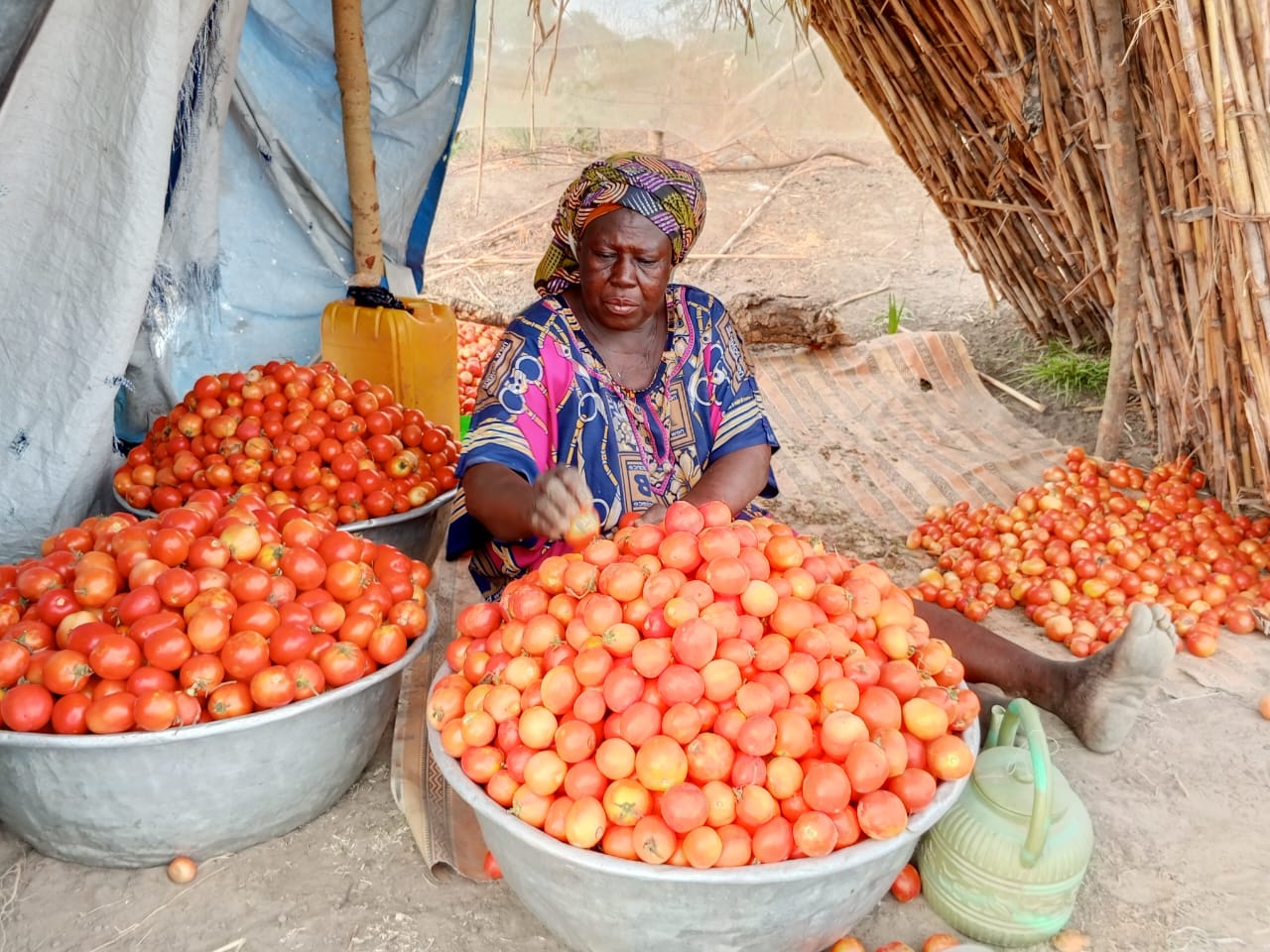
Tomato farmers in the Upper East Region are calling on the government to fast-track the rehabilitation of the Vea Irrigation Dam to boost local production and reduce the country’s dependence on imports. Their appeal follows the recent suspension of tomato exports from Burkina Faso, a development they say has exposed Ghana’s vulnerability to seasonal shortages.
Farmers say the situation at the Vea Irrigation Scheme has worsened over time due to deteriorating infrastructure. Broken canals and laterals have significantly reduced the flow of water to farms, making it difficult for many to sustain dry-season farming. As a result, some farmers have been forced to scale down operations or abandon tomato production altogether.
Without reliable irrigation, both farmers and traders continue to depend heavily on tomatoes imported from Burkina Faso. These imports are often preferred because of their lower water content and longer shelf life. However, farmers note that the cost of transporting tomatoes into Ghana, coupled with duties, has contributed to rising prices in local markets, placing an additional burden on consumers.
Although the government has directed the Ghana Irrigation Development Authority (GIDA) to fast-track dry-season production schemes to mitigate the impact of the export ban, farmers insist that rehabilitating the Vea Dam remains the most critical step toward restoring local production capacity.
They argue that the challenges facing tomato production extend beyond irrigation alone. Poor road networks continue to limit access to markets, while the absence of processing facilities leads to significant post-harvest losses. Farmers also point to the need for certified seeds and training in climate-smart agricultural practices to improve yields and enhance the quality of locally produced tomatoes.
In addition, many farmers face difficulties securing reliable markets and fair prices for their produce. Delayed payments and price disagreements with traders often result in produce going unsold and eventually rotting on farms, discouraging further investment in tomato production.
Farmers say addressing these issues in a coordinated manner will be essential to strengthening Ghana’s tomato sector. They maintain that with improved irrigation, better infrastructure, and stronger market systems, the country can reduce its reliance on imports and build a more resilient agricultural economy.
A1 Radio | 101.1 MHz | Moses Azubire Anaba | Bolgatanga