
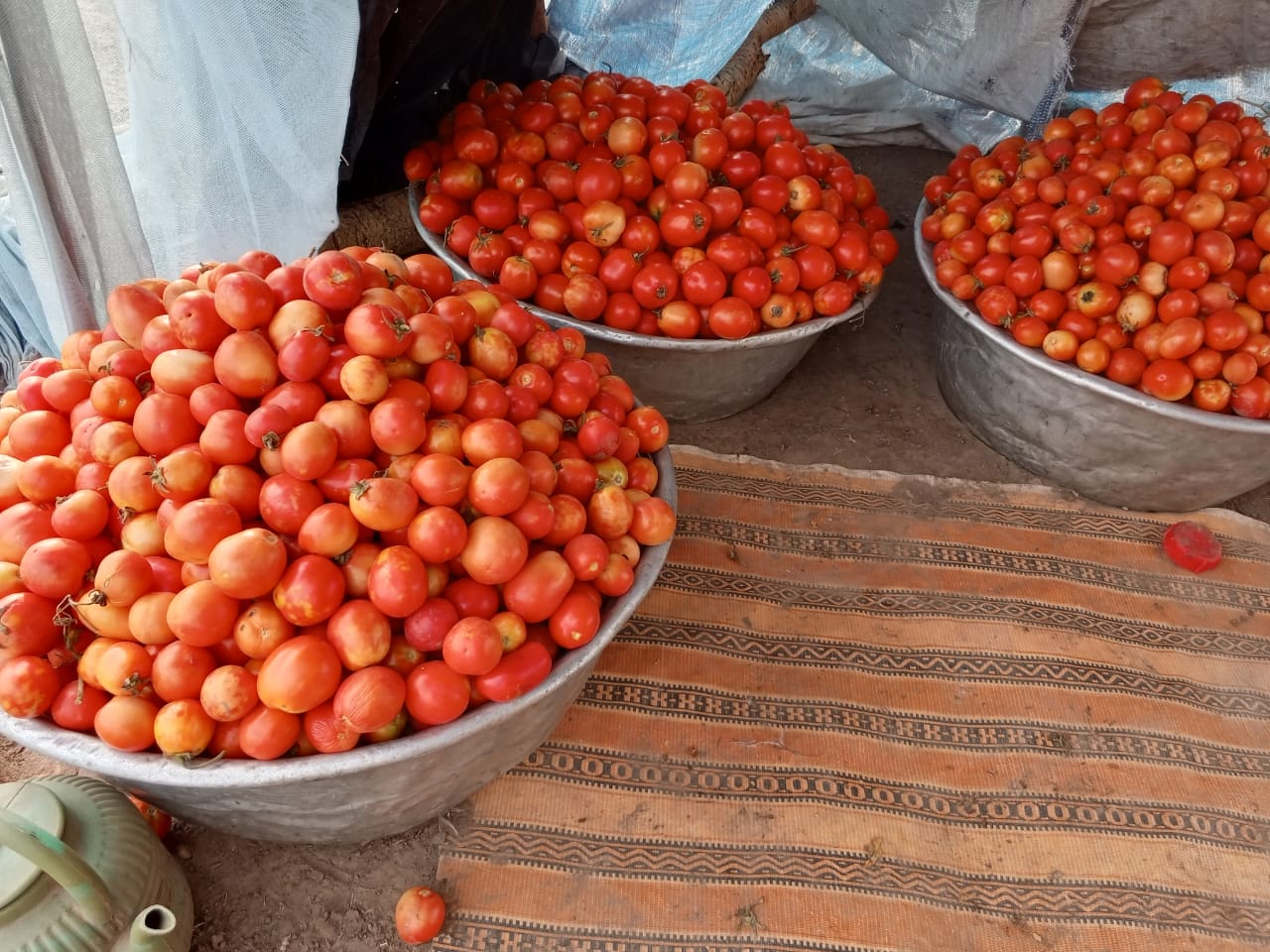
A graduate and tomato farmer, Tahiru Azaare Ayuuba, says Burkina Faso’s ban on the export of tomatoes to Ghana should serve as a wake-up call for the country to strengthen its agricultural sector.
According to him, Ghana has no justification for relying on imports when it has the capacity to produce enough locally.
“This should cause Ghana to step up agribusiness; we can’t continue to be fed by Burkina Faso. We have a lot of arable land here, we have no excuse. People in the desert are doing serious farming,” he said.
Mr. Ayuuba stressed that the provision of essential inputs would significantly boost production and attract more farmers into tomato cultivation.
“If the government can provide quality seeds, fertilisers, tractors, weedicides, pesticides and all other chemicals to support production, this could help,” he stated.
He added that the export ban has given local farmers renewed hope.
“I was happy when I heard about the ban on tomato exports to Ghana. As farmers, we struggle to get our produce sold, and it often rots in the fields. Meanwhile, women bypass us to buy tomatoes from Burkina Faso. It’s frustrating. The ban has given us hope if the government supports us,” he said.
Farmers in the Nyariga and Zaare communities in the Bolgatanga Municipality are also welcoming Burkina Faso’s decision, describing it as an opportunity to revive local production after years of struggle.
They say the influx of imported tomatoes, coupled with inadequate irrigation infrastructure for dry-season farming, has long undermined their competitiveness.
Salima Adamu, a member of the Zaare-Nyariga Farmers and Water Users Association, said the development could mark a turning point if government invests in irrigation.
“Now that Burkina Faso has announced this ban, if the Ghanaian government comes to support and expand our dams, I believe we will produce more tomatoes to feed Ghana and will never suffer because of this ban,” she said.
Another farmer expressed optimism that the ban could help address persistent challenges, including post-harvest losses and tensions between farmers and buyers.
“I was happy when I heard about the ban on tomato exports to Ghana. As farmers, we struggle to get our produce sold, and it often rots in the fields. Meanwhile, women bypass us to buy tomatoes from Burkina Faso. It’s frustrating. The ban has given us hope if the government supports us,” the farmer said.
“If the Ghanaian government supports us and expands our dams, we can produce enough tomatoes to feed Ghana and neighbouring countries,” the farmer added.
Madam Salima Adamu also described the ban as a potential boost to farmers’ incomes if the right measures are implemented.
“I think farmers in Zaare in the Bolgatanga Municipality are very happy. It is because tomatoes were imported from Burkina Faso that most tomato farmers did not get enough money. And so if the president of Burkina Faso has directed that tomatoes will no longer be imported, it means tomato farmers in the Upper East are going to benefit,” she said.
She added that the region has the capacity to meet national demand if properly supported.
“We have the land to produce tomatoes and feed the whole nation,” she said.
Another farmer emphasised the need for improved tomato varieties and support from agricultural researchers, noting that any meaningful intervention must begin immediately as many dams have already dried up.
With Burkina Faso’s export ban set to take effect, farmers say they are ready to meet local demand if the government provides the necessary support.
A1 Radio | 101.1 MHz | Moses Anaba Azubire | Bolgatanga