Summary:
- A small village in northern Ghana is recycling plastic water sachets, keeping their community clean without government help and serving as an example, experts say, for communities across the nation.
- Ghana generates 840,000 tonnes of plastic waste every year but recycles less than 10 percent, leaving most communities to burn their rubbish, fueling air pollution and related diseases.
- A promised government recycling plant in the region has sat unfinished for over five years, forcing communities like Asaloko to solve a national problem on their own.
By Mark Kwasi Ahumah Smith
ASALOKO, Upper East Region – Every Saturday morning, before the sun has climbed high enough to bake the red laterite earth here, Mary Asaah is already moving. She sweeps her compound here in this community of about 1,200 people, then works her way outward, combing the dirt paths for something she and her neighbours treat like currency: empty water sachets.
The small, clear plastic pouches are everywhere in Ghana. They are how most people drink water – torn open with teeth, drained in a few gulps, then discarded to pollute streets and waterways or be burned.
But in Asaloko, they do not stay discarded for long. Residents collect them and take them to a sachet-water company in the nearby town where they are exchanged for fresh supplies of drinking water.
“The water sachet is like our gold,” says Ms Asaah in her local language of Gurune. “People guard their water sachets jealously and are always on the lookout for sachets that blow in from other communities or are dropped by passersby”.
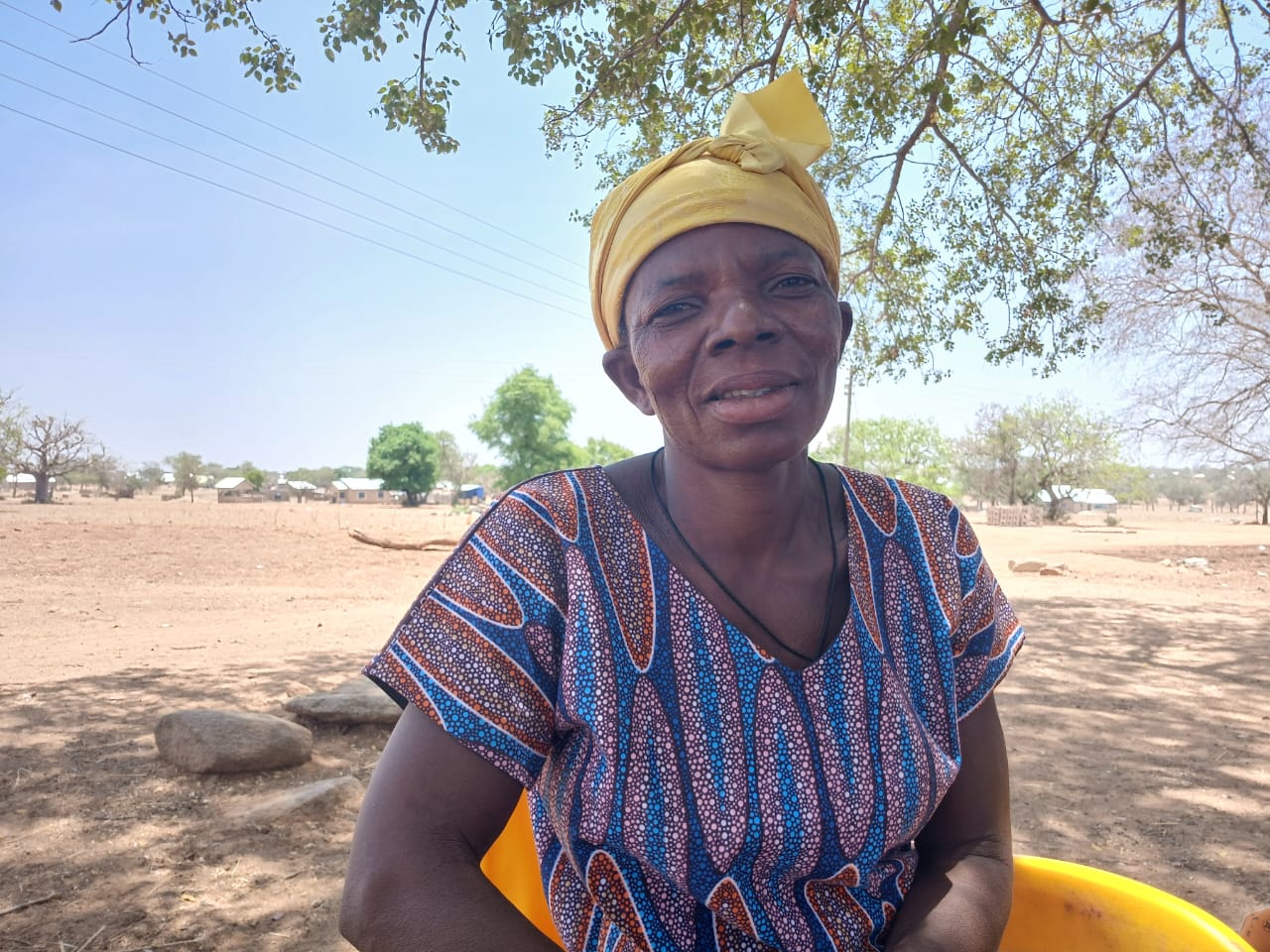
Not only has the program saved women like Ms Asaah money, according to a local coordinator for the company, as much as 5 tonnes of sachets leave Asaloko this way every year.
Experts say what the community of Asaloko is doing is small in scale but significant in implication. Ghana generates roughly 840,000 tonnes of plastic waste every year, and less than 10 percent is recycled. The rest clogs drain, smothers farmland, drifts into rivers, or is burned in open fires. Sachet water, the primary source of drinking water for millions without a reliable piped supply, is a major contributor to this waste.
In rural districts where formal waste collection is almost non-existent, burning has long been the default solution. Households gather their waste into piles and burn it daily or weekly, sending toxic air pollutants into bodies of adults and children nearby.
Against that backdrop, Asaloko’s organised, incentive-driven recycling system stands out as a community-led response to a national challenge.
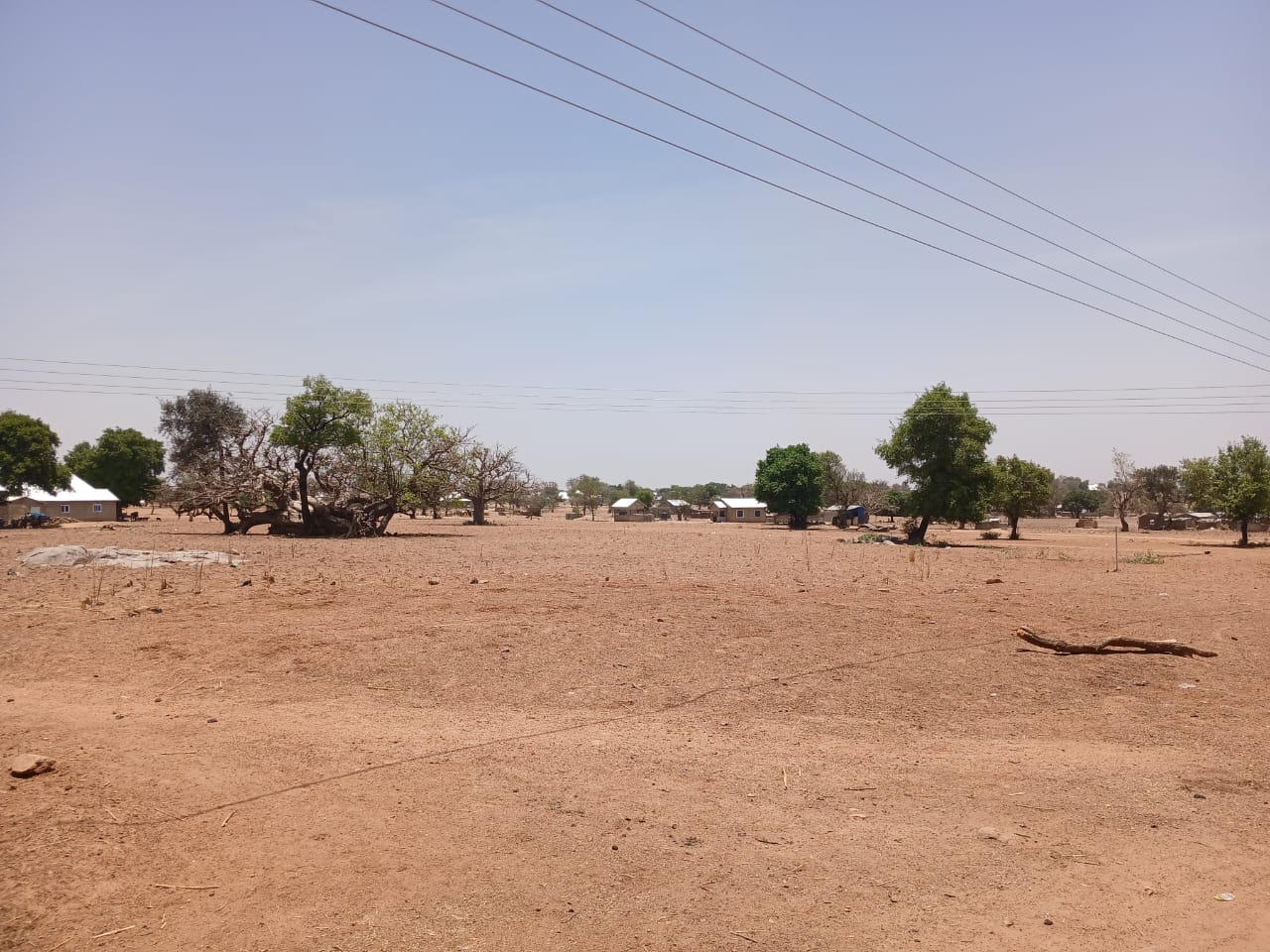 Portions of the Asaloko community are kept swept and maintained on a weekly basis.
The initiative did not begin with an attempt to save the environment. It began with soap and water. When WaterAid Ghana, a local branch on the international NGO, brought its Water, Sanitation and Hygiene (known as WASH) programme to Asaloko, the focus was hygiene: toilets, handwashing, and clean water access. But the message about hygiene took root in the community’s minds.
“This behaviour change is what has enabled initiatives like community clean-up exercises and the collection and trading of used water sachets instead of burning them,” said Fauzia Aliu, WaterAid Ghana’s Advocacy, Campaigns and Inclusion manager, in a statement sent to this reporter. “While plastic waste management was not the original entry point, the environmental awareness created through WASH interventions naturally extended to plastic waste.”
According to Rosina Nsobila, a community resident, first, the residents burned all the rubbish they could find. After more education, they began segregating waste.
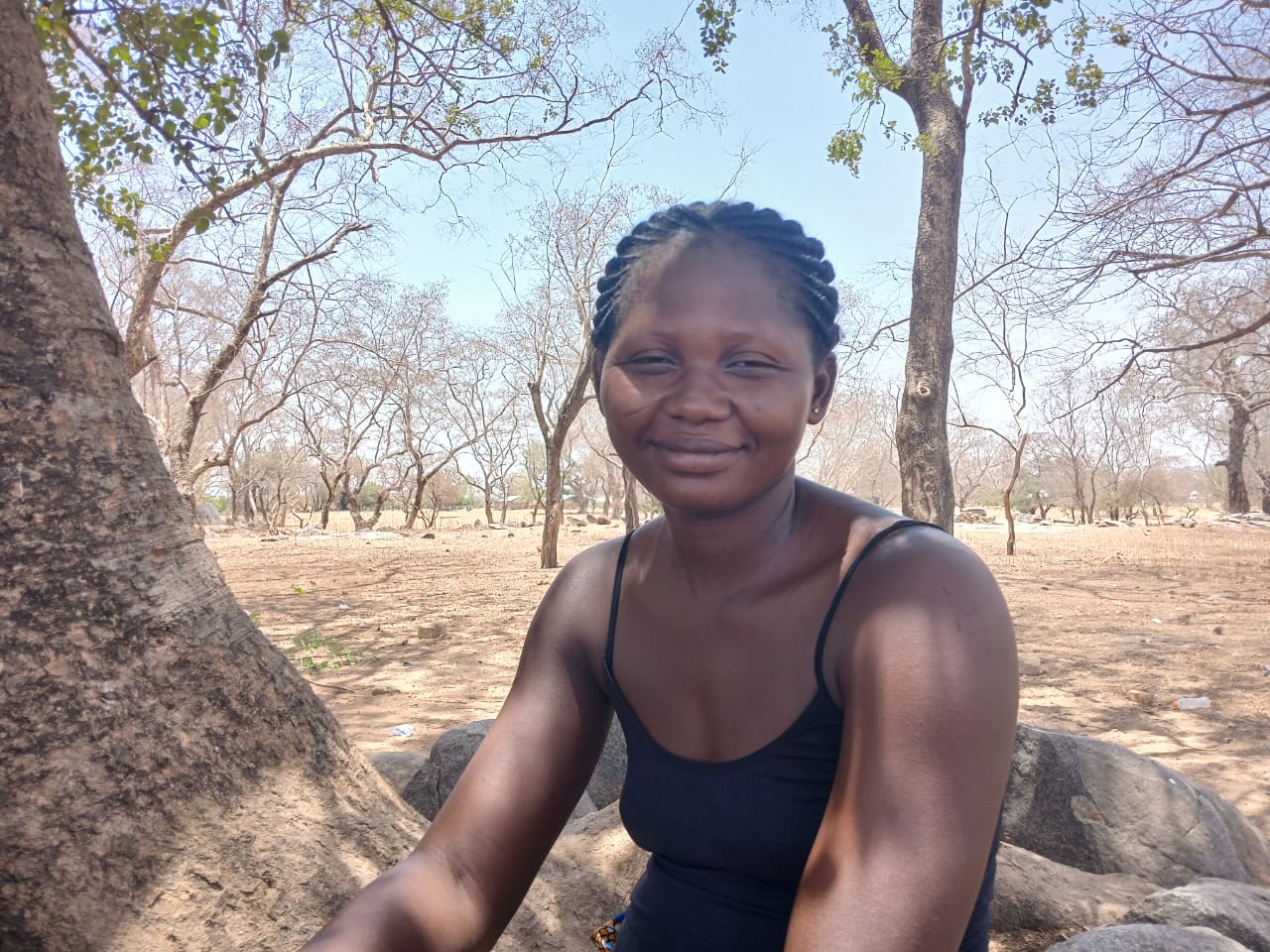
The community elder, Achinges Abeliwine, speaks of Asaloko’s approach to waste with pride. Organic matter – leftover food and crop stalks – goes into pits or back onto the fields as compost. Trees are planted, not cut down. Every Saturday, residents clean together.
“We want our community to be nice and attractive to strangers,” he says in Gurune. But he is also honest about the limitations of the community’s approach.
When plastic burns, it releases fine particles known as PM2.5, small enough to bypass the body’s natural defences and lodge in the bloodstream. Scientists link this form of air pollution to 35,000 deaths in Ghana each year and say it contribute to the country’s exploding rates of diseases like diabetes, hypertension, stroke and cancer. It also releases toxins such as hydrogen chloride and carbon monoxide and can build up in people’s bodies over time. WaterAid’s Aliu warns that women and children face the greatest exposure because they are most often the ones managing household waste.
The sachet water company in Balungu that drives Asaloko’s recycling economy is called Dem Dhat. Its management describes the sachet swap, plastic in, water out, as the company’s contribution to fixing a problem that businesses like theirs helped create. It is a practical, business-driven response to a problem the public system has yet to solve.
Community member Nsobila sees it as a matter of social justice. “Companies that are into plastic recycling should come to our community so we can call them when we gather the rubbish,” she says in Gurune.
Not everything in Asaloko can be recycled or composted. Diapers, single-use plastic cutlery, and food wrappers still get burned. To deal with that, the community needs a composting and recycling plant to help the community recycle other plastic waste, while supporting the community to compost its organic matter quicker. But that comes with a big cost – GHC224 million ($US20 million), according to a recent price quote from Zoomlion Ghana, operators of the Accra Waste Recovery Plant.
The community says that would make this village almost completely free of air pollution.
“We plead with authorities, private organizations and NGOs to help us with a processing plant to help recycle the rubbish,” the community elder, Abeliwine says.
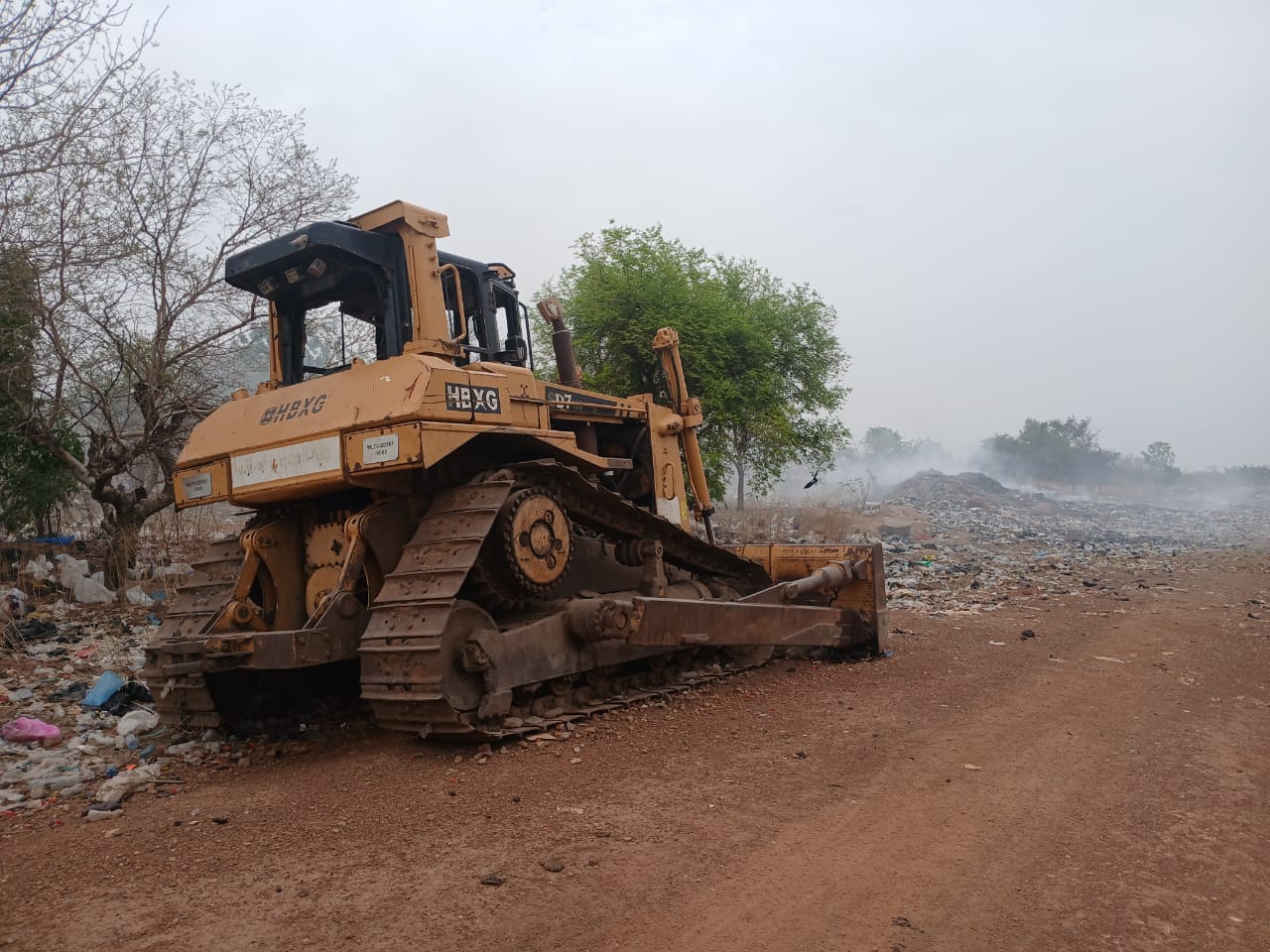 Broken down bulldozer at the land fill site at Sherigu
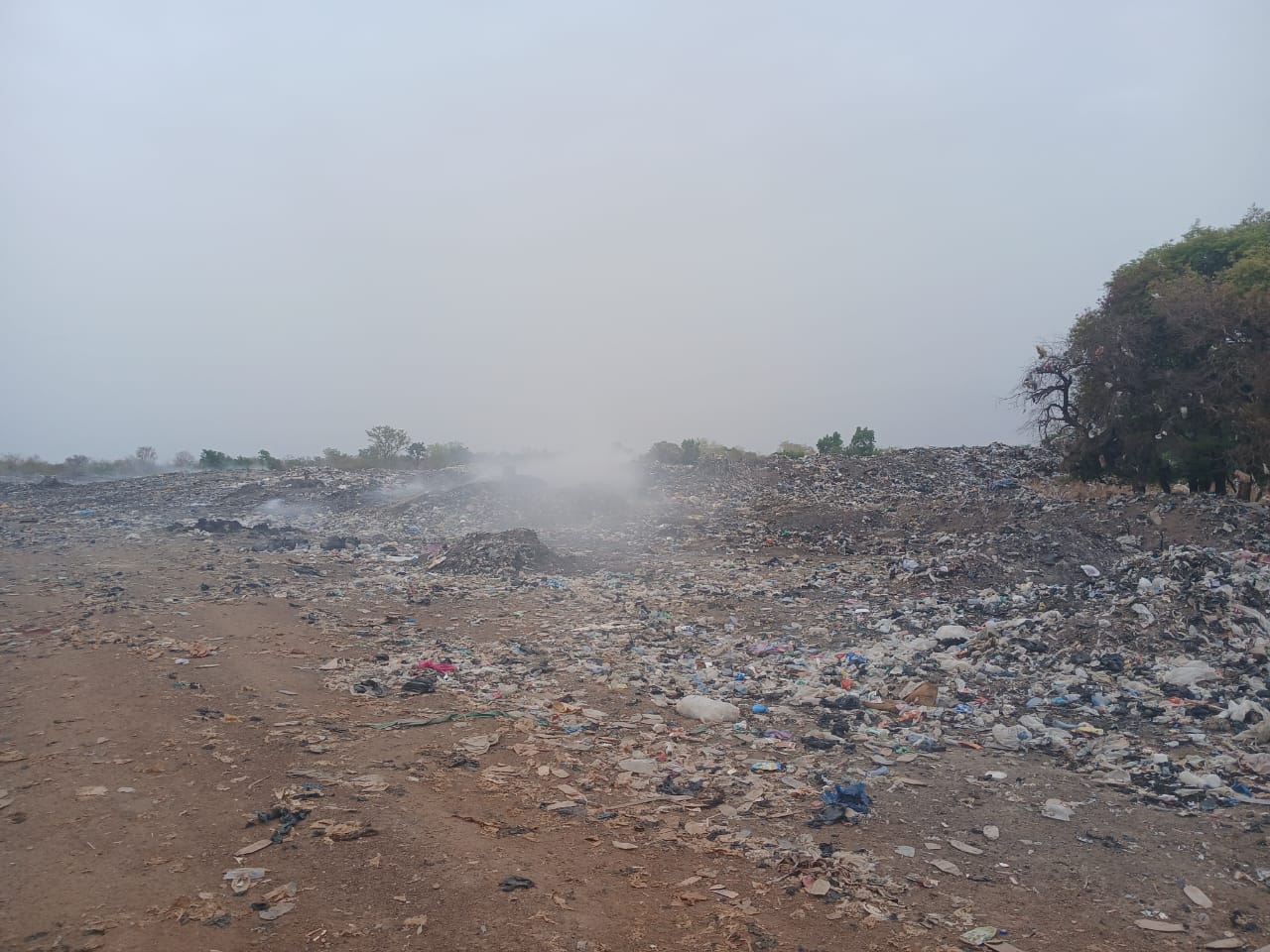
Thirty kilometers away, in Sherigu, a community on the edge of Bolgatanga town, you can see what the absence of a real solution looks like. The municipal landfill there burns without end. At its edge, an abandoned bulldozer rusts, a reminder of an attempt to impose order that was never sustained. A man who gave his name as Abu and used to work at the site says he suffers from a chronic cough and eyes that itch constantly from years of proximity to the smoke. When the rains come, the fires slow. When they stop, they roar back.
“The smoke affects the health of community members,” says Stephen Abelimah Akugre, the Assembly Member for the Kumblingo/Bolingo electoral area and presiding member of the Bolgatanga Municipal Assembly. The fire, he says, is endless, fed by a growing pile of rubbish that no one has the equipment or the will to properly manage.
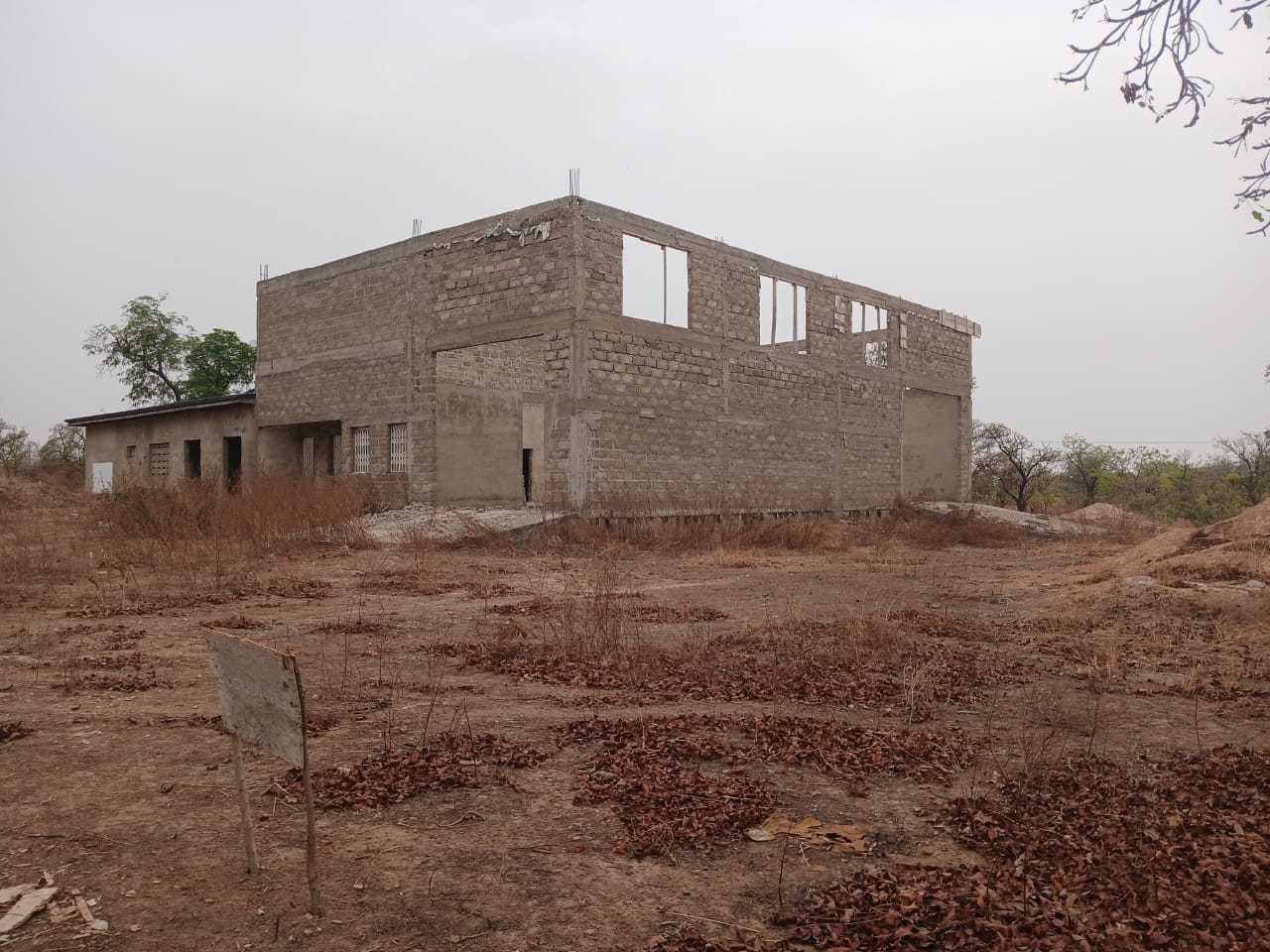
Sherigu was supposed to be different. In 2020, amid ceremony and speeches, Ghana’s then president, Nana Akufo-Addo, cut the sod for a composting and recycling plant there, a facility meant to transform how the entire Upper East Region manages solid waste.
The plant was estimated to cost GHC 100 million ($US17 million) and was to be built by the Jospong Group, operators of Zoomlion Ghana Limited. Construction was to be supervised by the Bolgatanga Municipal Assembly. More than five years later, it has not been completed. In an interview on A1 Radio, Roland Ayoo, the Bolgatanga Municipal Chief Executive, says the delay was caused by land disputes. When asked for a timeline, he offered none.
But he promised “the Assembly is committed to ensuring it is completed.”
The air pollution from the landfill, meanwhile, does not wait. It continues to sicken and kill residents here.
The failure is not due to a lack of policy. Ghana banned certain plastic imports as far back as 2008 and set up a Plastic Waste Recycling Fund in 2011, financed through a 10 percent Environmental Excise Tax. A National Plastics Management Policy followed. But a 2024 performance audit by the Auditor-General found weak enforcement and poor implementation, leaving communities to manage the problem on their own as plastic pollution is projected to rise sharply by 2040.
WaterAid’s Aliu says a scaled solution would see household-level waste sorting, stronger ties between communities and recycling markets, dedicated budget lines at the district assembly level, and behaviour-change campaigns that build on the trust WASH programmes have already established.
“When communities are empowered with knowledge and ownership, they can drive transformative change,” Aliu says, “not only in sanitation but also in broader environmental management.”
Back in Asaloko, on a Saturday morning, the community sweeps together. Children chase a football across a compound that is, by any measure, cleaner than most in Ghana. The elder Abeliwine sits under a tree in the community’s ‘Tingaama’ [a shrine], quietly enjoying the serenity of the community. Mary Asaah adds another sachet to her sack, one pouch at a time, building toward a weight that will earn her family liquid “gold”.
This story was a collaboration with New Narratives as part of the Clean Air Reporting Project. Funding came from the Clean Air Fund which had no say in the story’s content.