
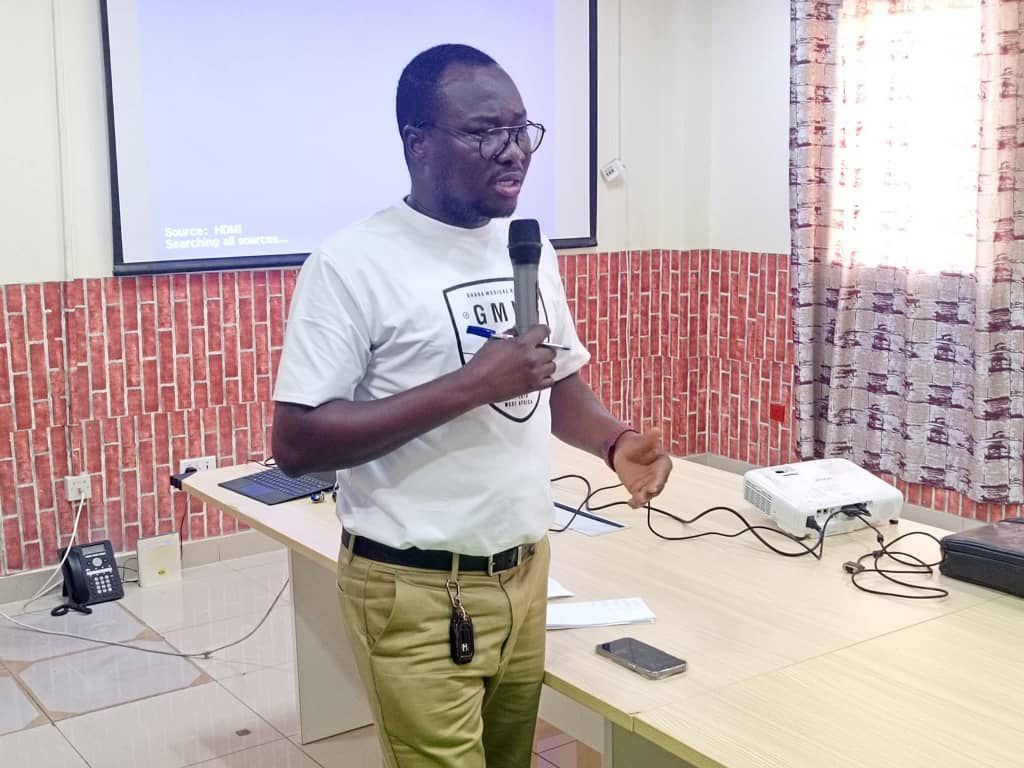
Even as Ghana Medical Help trains growing numbers of midwives and doctors in the country’s Upper East and Upper West regions, the organization’s co-founder says a persistent staffing crisis threatens to undo those gains. To this end, a new mentorship network has been setup to offer a solution.
Dr. Dominic Akaateba, a physician specialist at the Upper West Regional Hospital, described a pattern in which health workers posted to rural northern Ghana frequently leave, either returning to school, relocating for personal reasons, or transferring to facilities in southern Ghana where equipment and working conditions are better.
“You tend to have lots of staff who either come and get frustrated and leave altogether,” Dr. Akaateba said. “And so those challenges are real.”
The shortage of medical equipment in the north is a significant driver of the exodus. Dr. Akaateba said many doctors who prefer not to accept postings in the north cite the absence of the tools they need to practice effectively.
“Accommodation and staffing challenges are real,” he said. “Sometimes the equipment to do work with is not available.”
Ashley Mutasa, a University of British Columbia medical student conducting research in the region, independently identified the same structural problem during her visits to both the Upper West and Upper East regions. “It seems like a lot of resources are concentrated in Accra,” Ms. Mutasa said. “Once you get to a rural setting, there’s not as many resources, not as much investment.”
Ms. Mutasa drew a comparison to Canada’s rural health challenge, noting that the Canadian government offers incentives such as higher pay and reduced administrative fees to attract practitioners to remote communities. She suggested Ghana could develop similar mechanisms to make rural postings more attractive and competitive.
In response to the staffing gap, Ghana Medical Help has launched a mentorship program that places trained doctors in the Upper East and Upper West regions on a shared digital platform with specialist physicians at the University for Development Studies, the University of Ghana, Kwame Nkrumah University of Science and Technology, as well as consultants in Canada, the United States and the United Kingdom.
Health workers who encounter uncertain clinical situations, including during the management of pregnant women in emergencies, can post their questions to the platform and receive guidance from obstetricians and gynecologists.
“That kind of relationship helps people to continue to work rather than get frustrated and then run away,” Dr. Akaateba said.
He acknowledged that even trained health workers who remain in the region may leave over time, noting that annual refresher trainings are partly a response to natural attrition. “One of the reasons why we run these refresher trainings every year is the fact that we train a group of people. Next year, those guys are either going to school, and we cannot stop them from going to school, or they change their destiny, or they get married and go elsewhere,” he said. “So we just have to keep training.”
Dr. Akaateba expressed confidence that the combination of training, donated equipment, mentorship support and the expansion of dialysis centers would eventually create the conditions for health workers to build sustainable careers in the north. “I’m sure people get attracted to the North by these trainings,” he said.
A1 Radio | 101.1 MHz | Mark Kwasi Ahumah Smith | Bolgatanga