
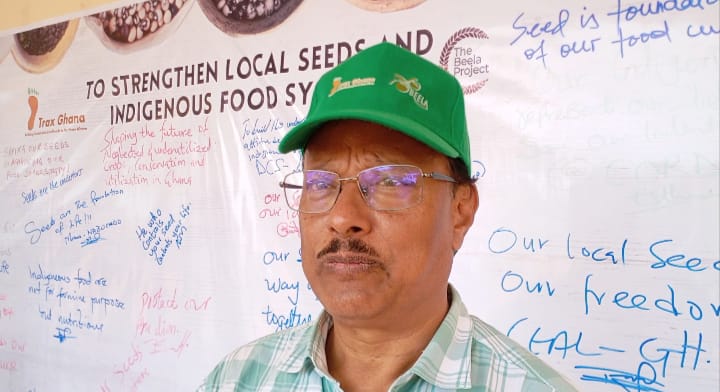
A representative of the Canadian non-governmental organisation SeedChange, Dr. Pratap Shrestha, has called for the integration of indigenous farming practices and local food culture into Ghana’s agro-ecotourism development agenda.
Speaking at a seed fair organised by Trax Ghana and the Beela Project, Dr. Shrestha said the diversity of local seeds, traditional farming systems and indigenous cuisine could attract tourists from around the world.
He said agro-ecotourism could thrive by capitalising on the uniqueness of local food systems and cultural heritage tied to farming communities.
“You see how rich the culture and agriculture are here, both in terms of seeds, farming and the food associated with them. That will be very interesting for people coming from outside,” he said.
Dr. Shrestha said visitors are often more interested in authentic local food experiences rather than globally available meals.
“I come here not to eat burger or pizza because I can find that elsewhere,” he said. “I want to eat the local food prepared in the local way, and that becomes a lifelong memory for visitors.”
He described local food culture as a strategic asset that can support sustainable tourism while encouraging the preservation of indigenous seeds and traditional agricultural practices.
According to him, promoting local cuisine and farming heritage through agro-ecotourism would help preserve culture while also creating economic opportunities for rural communities.
Meanwhile, Dr. Shrestha said seed fairs play a vital role in preserving indigenous seed varieties and protecting the food heritage of farming communities.
Speaking at the same seed fair, he expressed concern about the growing loss of local seed varieties as commercial and corporate seeds become more dominant in agricultural systems.
“We are losing our indigenous local seeds because commercial and corporate seeds are displacing them,” he said. “Yet these local seeds are the foundation of our food culture and the livelihoods of farming communities.”
He explained that seed fairs provide a platform for farmers to showcase, exchange and conserve indigenous seed varieties while raising awareness about their importance.
Dr. Shrestha identified four key benefits of seed fairs: promoting seed diversity, creating awareness about indigenous seeds, facilitating seed exchange among farmers, and influencing policies that support the conservation and use of local seed varieties.
Despite increasing pressure from seed companies, he said many farmers continue to preserve a wide range of indigenous seeds.
“The surprising thing is that farmers are still maintaining and conserving a large variety of seeds despite the pressure from companies to use commercial seeds,” he said.
A1 Radio | 101.1 MHz | Gerard Asagi | Bolgatanga