
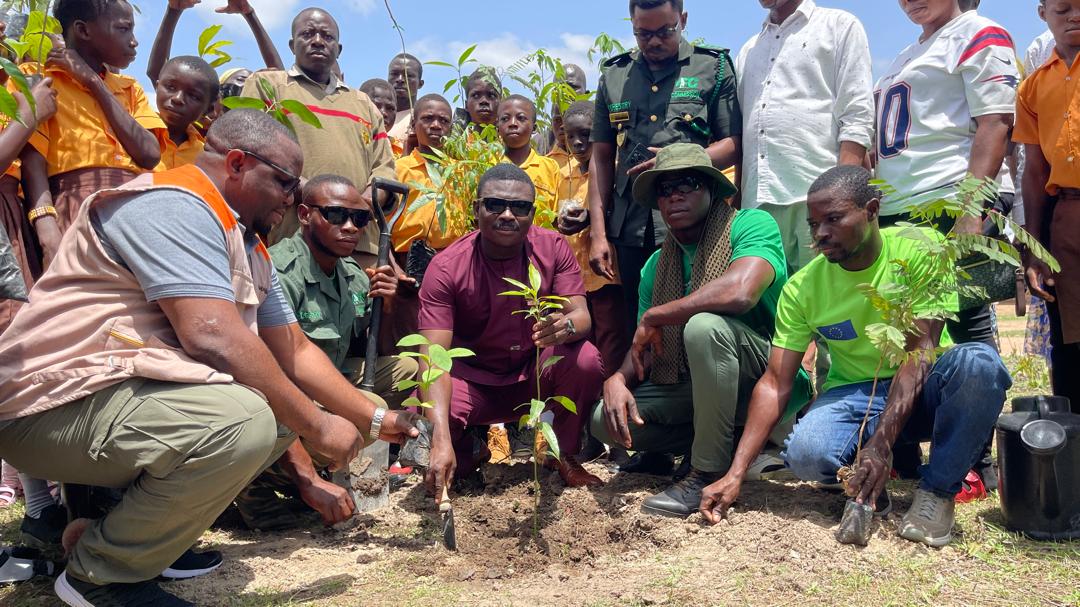
World Vision Ghana (WVG), through its Farmer-Managed Natural Regeneration (FMNR) Heritage Project, has joined the national Tree for Life Restoration Initiative by planting tree seedlings at Ziemboug Primary School in the Nabdam District of the Upper East Region to help restore degraded lands and strengthen climate resilience.
The exercise, held under the theme “Forests and Economies,” formed part of a nationwide effort to promote environmental conservation and reverse the effects of land degradation and climate change.
Speaking at the event, Jonas Bugre, FMNR Heritage Project Manager for World Vision Ghana, stressed the importance of restoring tree cover to mitigate the devastating impacts of climate change on communities and livelihoods.
According to him, recent incidents such as the destruction of roofs by heavy rainstorms highlight the urgent need to restore degraded landscapes and protect communities from extreme weather conditions.
“We are not just coming to plant trees and go. We are coming to grow trees. When we return a year from now, we should not be told that a tree was planted here; we should see trees growing and contributing to the environment,” he said.
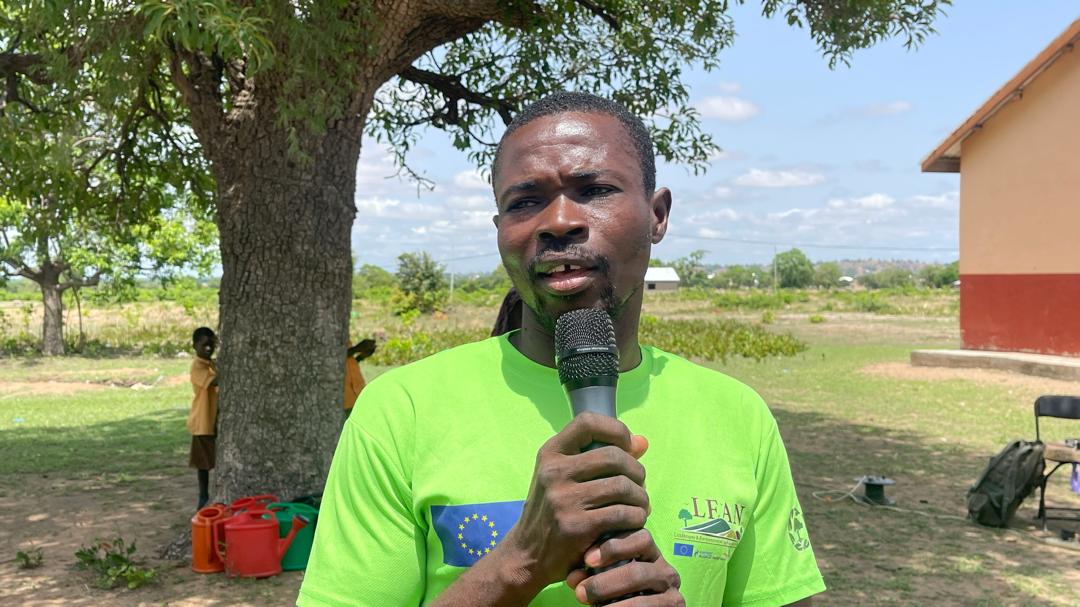
Mr. Bugre called on community members, school authorities, and traditional leaders to take ownership of the planted seedlings and nurture them to maturity.
A speech delivered on behalf of Bugre Rexford, Northern Regional Operations Manager of World Vision Ghana, by Joseph Edwin Yelkabong, Bawku Cluster Area Programme Manager, described the initiative as an investment in a greener and more sustainable future.
He noted that the planting of 100 tree seedlings within and around Ziemboug Primary School would provide shade for pupils, improve air quality, reduce soil erosion, and contribute to ecosystem restoration.
“Today’s event goes beyond the simple act of planting trees. We are planting hope, nurturing resilience, and investing in a greener and more sustainable future for our children and generations yet unborn,” he said.
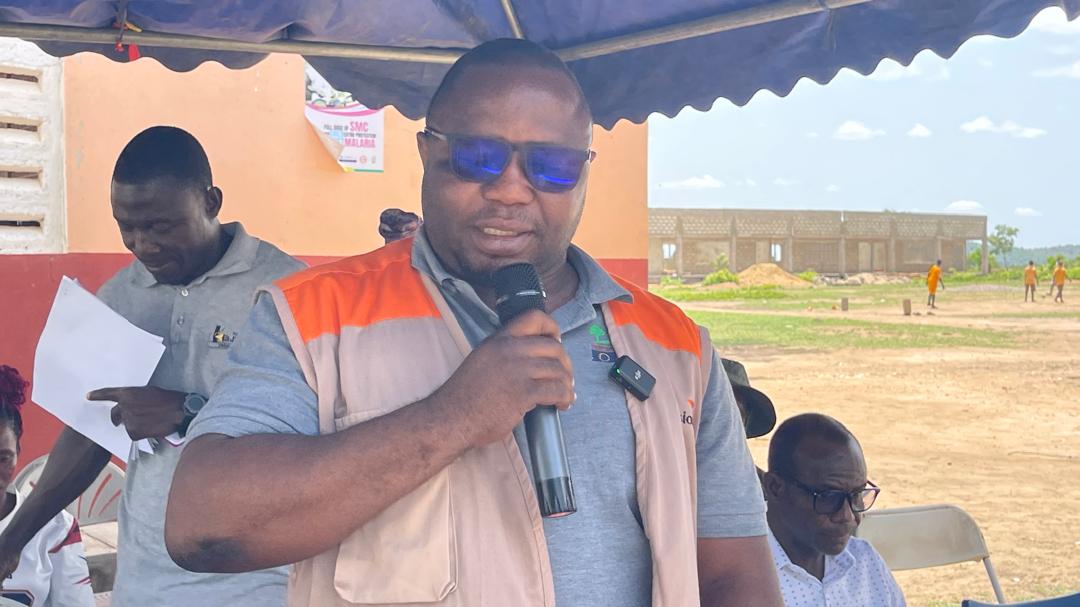
Mr. Yelkabong explained that through the FMNR Heritage Project, World Vision Ghana is working to restore 1,500 hectares of degraded land while empowering more than 10,000 people, particularly women, youth, and vulnerable groups, to champion environmental restoration and climate adaptation.
He said the project aligns with several United Nations Sustainable Development Goals (SDGs), including SDG 13 (Climate Action), SDG 15 (Life on Land), SDG 11 (Sustainable Cities and Communities), and SDG 6 (Clean Water and Sanitation).
The District Chief Executive for Nabdam, Francis Tobig, described forests as critical assets for environmental sustainability and economic development.
“This year’s programme is observed under the theme ‘Forests and Economies.’ This is more than planting seedlings; it is planting hope, health, and the future of our district,” he said.
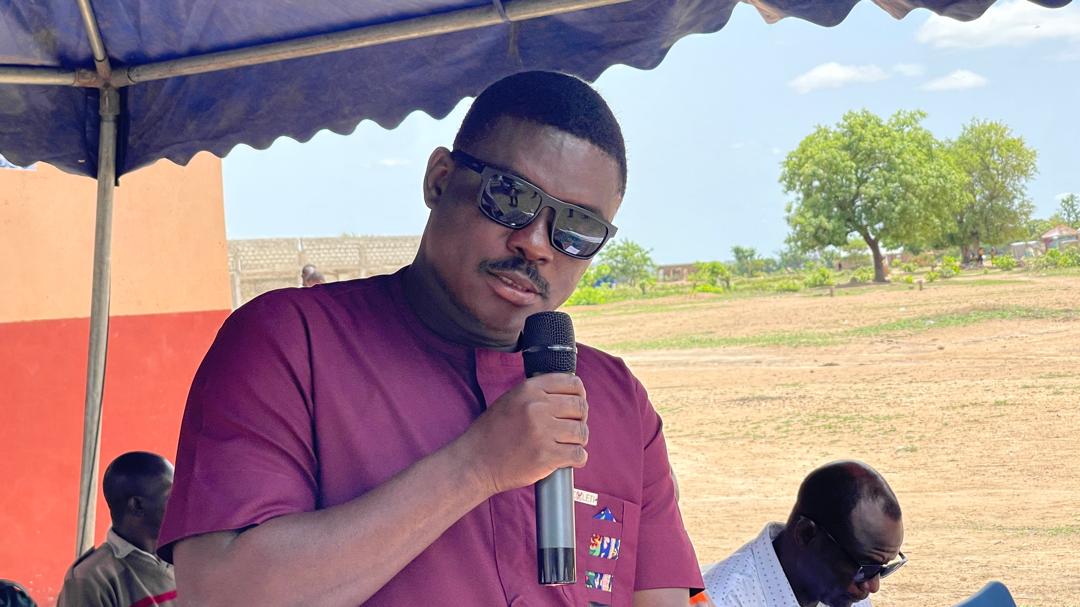
The DCE warned that indiscriminate tree felling contributes to erosion, drought, and rising temperatures, while tree planting helps protect water bodies, improve soil fertility, and support agricultural productivity.
Mr. Tobig announced plans to collaborate with the Forestry Commission and the Department of Agriculture to institute an award scheme for communities and institutions that demonstrate exceptional commitment to nurturing planted trees.
He also directed a task force to intensify efforts against illegal chainsaw operations and pledged continued support for community volunteers trained to protect forests against bushfires.
“To our chiefs and elders, help us not only to plant trees but to nurture and protect them. To our teachers and students, adopt a tree-per-student approach in taking care of the trees on your campuses,” he urged.
The Forest Range Manager for the Forestry Commission in Nabdam District, Nanor Michael, emphasized that while tree planting remains important, protecting existing trees is equally critical.
“Just as we have planted trees today, we must also protect the trees we already have. Let us advocate for environmental protection and restoration wherever we find ourselves,” he said.
On behalf of the Ghana Education Service (GES) Nabdam Directorate, Rev. Fr. Luke Atanga reaffirmed the directorate’s commitment to supporting environmental education initiatives in schools.
He encouraged teachers and pupils to embrace the project wholeheartedly and become ambassadors for environmental conservation.
“The environment is our mother. Without it, we cannot survive. We must help children understand the importance of restoring and protecting the environment for future generations,” he said.
As part of the celebration, school authorities, pupils, parents, and stakeholders planted tree seedlings around the school compound and pledged to nurture them into maturity.
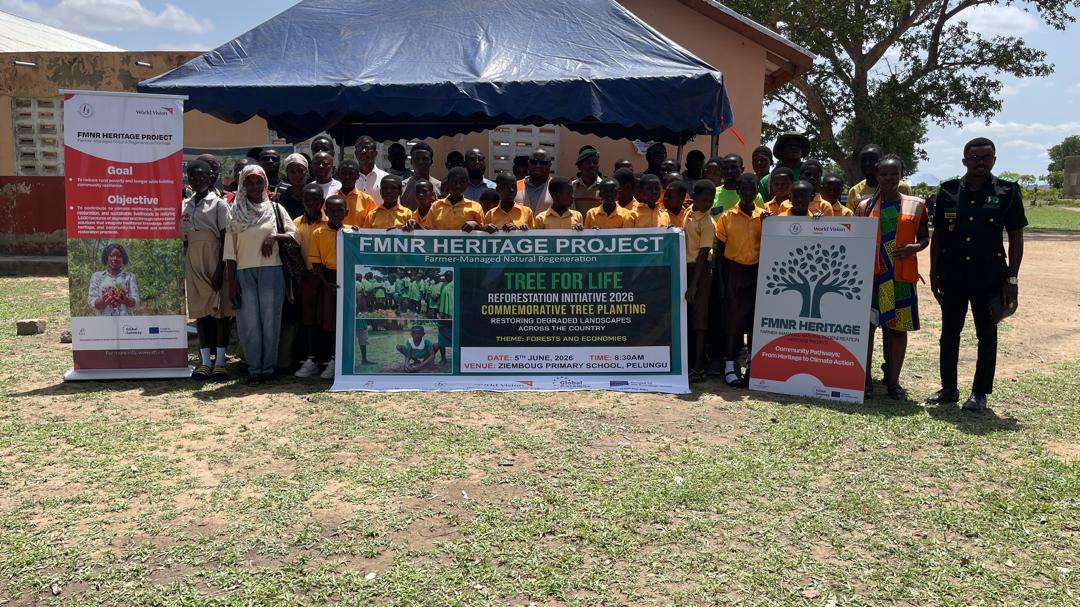
The FMNR Heritage Project is being implemented by World Vision Ghana in partnership with the Centre for Community Development Initiatives (CODI) and funded by the European Union under the Sustainable Forest and Cocoa Programme, implemented through the European Forest Institute (EFI).
The 24-month project seeks to restore 1,500 hectares of degraded land in the Nabdam District while improving livelihoods and strengthening climate resilience for more than 10,000 beneficiaries, particularly women, youth, and vulnerable households. It builds on successful FMNR interventions implemented by World Vision Ghana across northern Ghana since 2009.
A1Radioonline.com|101.1Mhz|Joshua Asaah| Ziemboug