Home Blog Page 14

World Vision Ghana supports health, education services in Bawku West and Tempane

0

World Vision Ghana has donated medical supplies, waste bins and classroom furniture to the Ghana Health Service (GHS) and Ghana Education Service (GES) in the Bawku West and Tempane districts of the Upper East Region.

The intervention forms part of the organisation’s efforts to strengthen health and education service delivery and improve the well-being of community members within its operational areas.

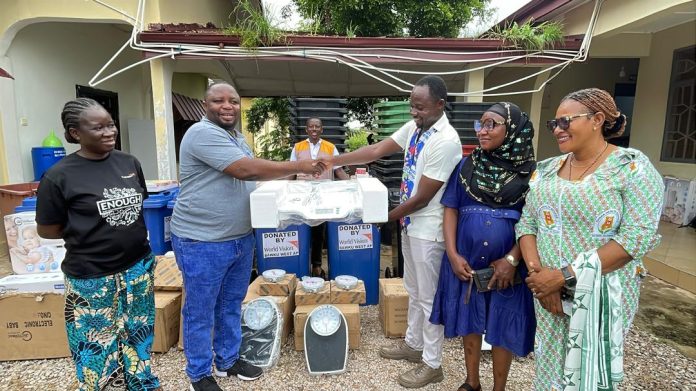
The items were presented by the Bawku West Area Programme Manager of World Vision Ghana, Joseph Edwin Yelkabong, who said the organisation’s programming covers health, education, water and sanitation, agriculture and livelihoods, among other areas.

He explained that the organisation’s interventions are informed by monitoring activities conducted jointly with institutions to identify gaps requiring support. At the Ghana Health Service in Bawku West, World Vision Ghana presented 25 Salter weighing scales, 15 bathroom weighing scales and five infantometers.
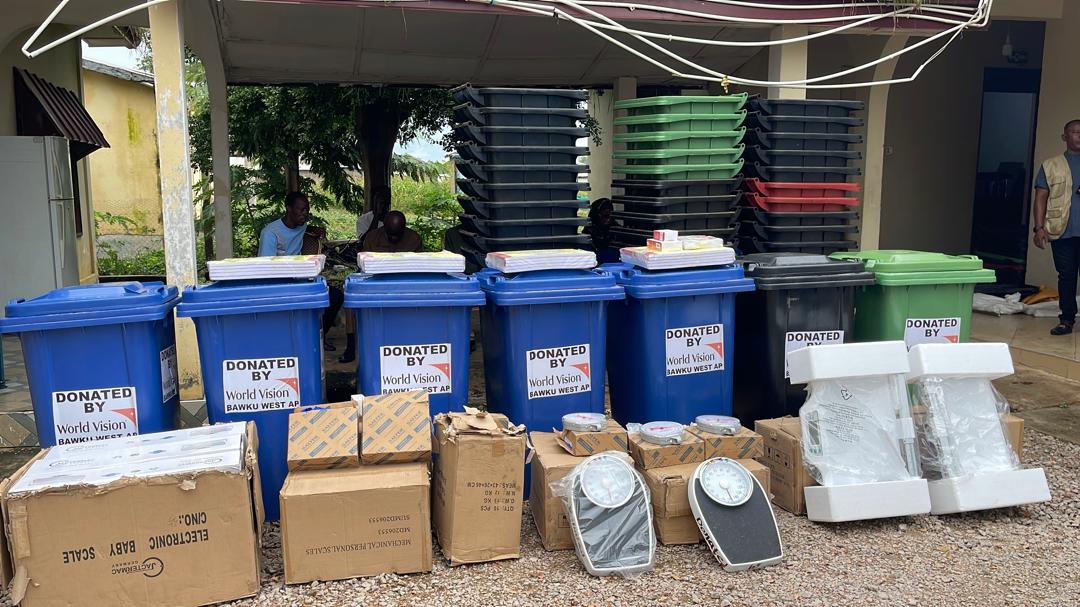
The organisation also donated 10 Child Welfare Clinic registers, 10 antenatal care registers and 10 postnatal care registers, and 10 Urit 12 HB meters to support health workers in the district.

“This donation is our small contribution towards strengthening health service delivery in Bawku West. Through our joint monitoring with the Ghana Health Service, we identified some gaps, and these items are intended to support health workers, particularly in child monitoring and other essential services”, he stated.

Mr Yelkabong said the donation was part of World Vision Ghana’s contribution towards strengthening health service delivery, particularly services targeting children. He noted that the organisation had previously supported health facilities in the district with four delivery beds after monitoring revealed shortages at some facilities.

World Vision Ghana also donated 20 large-sized dustbins to the Ghana Health Service, 20 to the Ghana Education Service and 10 to the Bawku West District Hospital to support waste management.

The Bawku West District Director of Health Services, Stephen Bordotsiah, expressed appreciation to World Vision Ghana for what he described as its continued support to the district’s health sector.

He said the medical equipment and logistics would complement existing resources and help health workers provide quality care to residents.

“These are very important equipment and logistics that we have received from them, and it will go a long way to help us in service delivery in general,” he said.

As part of its education interventions, World Vision Ghana also presented 60 mono-desks and chairs to Kpantarigu Primary School in the Bawku West District. Mr Yelkabong said the decision followed a visit to the school during which officials discovered that some pupils were learning while sitting on the floor.
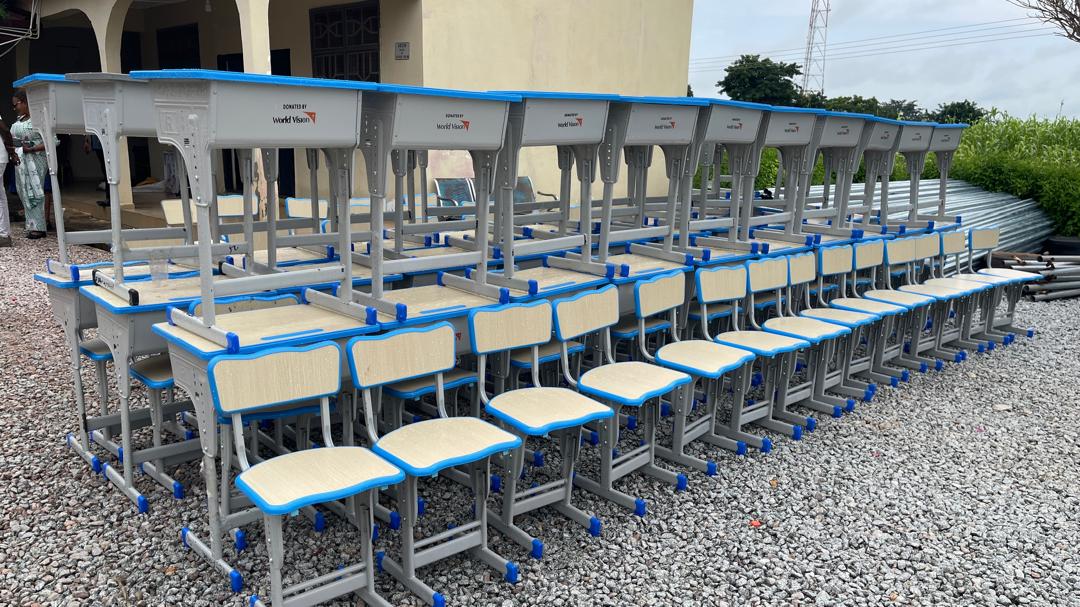
He explained that although education was not previously a major component of World Vision Ghana’s programming in the area, the organisation’s New Strategy (FY26-FY30) has incorporated education.

“We know this support is not enough to address all the furniture needs in the district, but it is a beginning. Under our new education programming strategy, we want to work with schools and communities to identify critical needs and, within our capacity, contribute to creating a better learning environment for children”, he added.
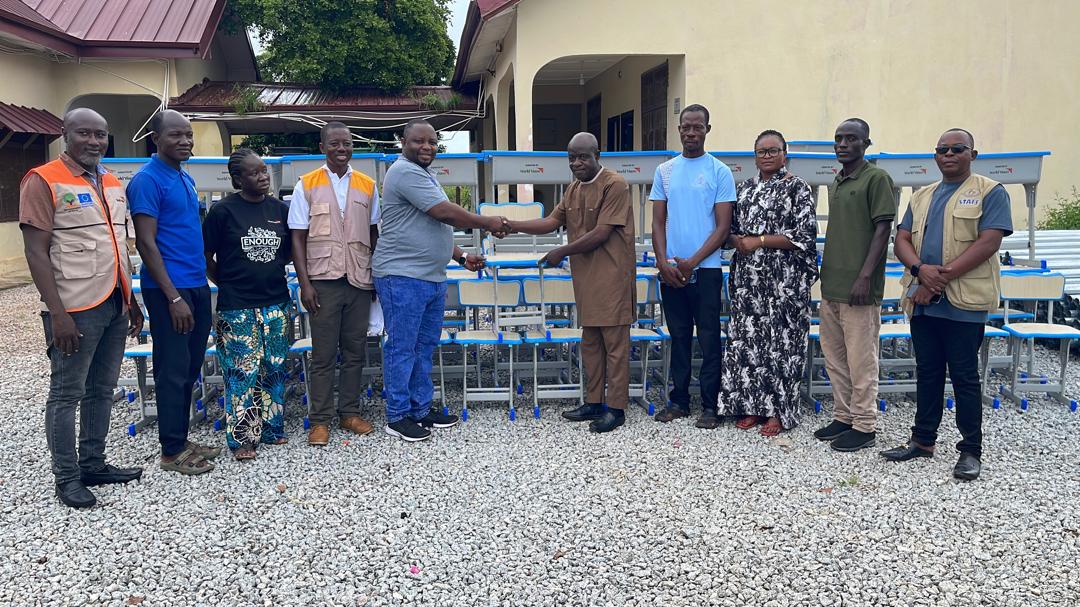
He said the furniture donation was therefore the beginning of a broader effort to support schools facing critical infrastructure and furniture needs. He urged the school authorities and community to maintain and protect the furniture to ensure that it serves pupils for many years.

In the Tempane District, World Vision Ghana presented another 60 mono-desks and chairs to Bugri Primary School to address furniture shortages.
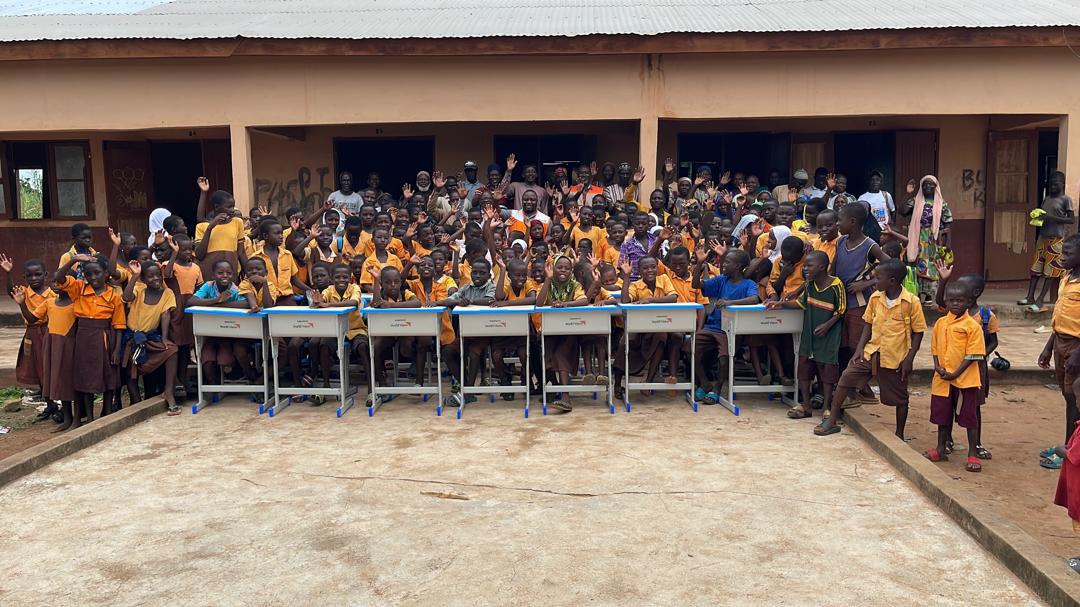
The Human Resource Manager of the Tempane District Education Directorate, Abdul-Karim Osman, who received the items on behalf of the District Director of Education, expressed gratitude to World Vision Ghana for the intervention.

He said furniture shortages remained a major challenge confronting schools in the district and described the donation as an important contribution towards creating a conducive environment for teaching and learning. Mr Osman also appealed to World Vision Ghana and other development partners to extend similar interventions to other deprived schools in the district.

World Vision Ghana says its interventions are aimed at contributing to improved systems and services that enable children to survive, learn and thrive.

A1Radio |101.1Mhz| Joshua Asaah|

Earl International raises alarm over alleged illegal mining, security threats at concession

0

Earl International Group has raised concerns over what it describes as an escalating security and safety situation at its lawful mining concession in Gbane, in the Talensi area of the Upper East Region.

In a statement issued by its Public and External Relations Unit and signed by Public Relations Officer Albert Azongo, the company alleged that Nanlamtaaba Enterprise has for several weeks been carrying out illegal mining activities within its concession despite a directive by the Minerals Commission to cease operations and vacate the Gbane Mining Area.

According to Earl International, the directive was issued with the approval of the Ministry for Lands and Natural Resources.

The company alleged that Nanlamtaaba Enterprise is operating without what it describes as the requisite Mining License, Mining Operating Permit, Environmental Permit, Explosives Permit and other regulatory approvals.

Earl International said the situation had allegedly escalated beyond the disputed area, with persons identifying themselves as workers of Nanlamtaaba Enterprise entering its underground operational areas.

The company alleged that the individuals were carrying weapons including guns, cutlasses, scissors and metal cables and were attempting to occupy active production areas.

Earl International further stated that in an incident on Wednesday, September 30, 2026, two of its private security guards performing underground duties were allegedly seized by persons linked to Nanlamtaaba Enterprise.

The company said it had instructed its security personnel not to take retaliatory action in response to the alleged incidents, citing the potential risk of injuries underground.

“As the sole holder of the Mining Lease for the Gbane mining area, Earl Group remains guided by law,” the statement said.

The company said its restraint was based on its confidence in the Minerals Commission and the Minister for Lands and Natural Resources to resolve the matter.

Earl International acknowledged steps it said had already been taken by the Minerals Commission and the Ministry of Lands and Natural Resources to address the situation.

However, it warned that further delays could increase underground safety risks and threaten what it described as a major mining investment.

The company is therefore calling on the government and relevant regulatory agencies to urgently enforce the Cease and Vacate Order and restore what it describes as full operational control of the concession.

It has also appealed to the security agencies to provide immediate and sustained security at the concession to prevent what it describes as further re-invasion and to protect its workers.

Earl International reaffirmed its commitment to responsible, safe and lawful mining and said it would continue working with the relevant regulatory authorities to resolve the matter.

A1Radio |101.1Mhz |Joshua Asaah

Monica Bakiva calls for more women in political communication

0

Upper East Regional Deputy Women’s Organiser aspirant of the National Democratic Congress (NDC), Monica Bakiva, has called for more women to participate in political communication, saying the space remains largely dominated by men.

Ms Bakiva said increasing the number of women participating in political discussions on radio, television and other platforms could help strengthen women’s involvement in politics and encourage younger women to become politically active.

She said she began political communication with the NDC in the Upper East Region at a time when few women were actively involved in the party’s communication activities.

According to Ms Bakiva, she was the first female political communicator to join the NDC’s regional communication team, a claim A1 Radio has not independently verified.

She recalled subsequently working alongside other female communicators, including the late Monika Kwams and Tabitha, whose participation she said helped increase women’s visibility in political discussions.

Ms Bakiva said she had since encouraged younger women interested in political communication to become involved and had supported some of them in taking up the role.

She argued that the absence of visible female political communicators could make it more difficult for younger women to see political communication as a space in which they could participate.

“It gladdens my heart when I see women getting involved in communication, not just for the NDC, but any other political party,” she said.

Ms Bakiva said her interest extended beyond increasing women’s participation within the NDC, arguing that women across political parties should be encouraged to participate in public political discussions.

She has been publicly identified as a member of the NDC’s Upper East Regional Communications Team and has participated in media discussions on national policies and political issues.

The regional Director of the National Entrepreneurship and Innovation Programme (NEIP), where she has spoken publicly about entrepreneurship, youth employment and opportunities for women-owned businesses.

She is seeking the NDC’s Upper East Regional Deputy Women’s Organiser position, which she previously contested in 2022. She polled 12 votes in that election, finishing behind Mariama Anatia Musah with 15 votes and Grace Nkaw Awini with 13.

Ms Bakiva said encouraging more women into political communication would form part of her broader effort to increase women’s participation in the party and public political discourse.

A1 Radio | 101.1 MHz | Moses Apiah | Bolgatanga

Let’s campaign on ideas, not insults – Monica Bakiva tells NDC aspirants

0

Upper East Regional Deputy Women’s Organiser aspirant of the National Democratic Congress (NDC), Monica Bakiva, has called for an issues based campaign devoid of personal attacks as the party prepares for its next internal elections.

Ms Bakiva, who intends to contest the Deputy Regional Women’s Organiser position, said aspirants should focus on their ideas, leadership qualities and plans for the party rather than attacking the personalities of their opponents.

“Politics of insults is not my thing. When I go on air for communication, no matter how emotional I become, I don’t attack your personality,” she said.

Ms Bakiva said her approach to political communication had been to challenge policies and actions rather than individuals, a principle she said would guide her campaign.

According to her, internal contests should not create divisions that make it difficult for party members to work together after the elections.

She said regardless of who wins or loses, the NDC would still require the contribution of its members, making it important for aspirants to conduct their campaigns in a manner that preserves relationships within the party.

Ms Bakiva also stressed the importance of humility and character in political leadership, drawing on lessons from previous elections she has contested.

She recalled losing an Assembly election by a single vote, an experience she said reinforced her belief that leadership should be centred on service rather than personal benefit.

“Humanity will always stay. So I would say that character when it comes to leadership is very, very key because titles, material possessions, everything are temporal,” she said.

Ms Bakiva said she was prepared to work with whoever eventually leads the party’s women’s wing, including the incumbent, irrespective of the outcome of the internal contest.

She said her commitment was to the NDC and urged other aspirants to remember that they would remain members of the same political organisation after the elections.

Ms Bakiva previously contested the Deputy Regional Women’s Organiser position in the NDC’s 2022 Upper East regional elections.

She polled 12 votes, three fewer than Mariama Anatia Musah, who won the position with 15 votes.

Ms Bakiva intends to contest the position again, although nominations had not opened at the time of the interview. She said she was also unaware of other aspirants who had formally declared an intention to contest the position.

A1 Radio | 101.1 MHz | Moses Apiah | Bolgatanga

Monica Bakiva makes second bid for Upper East NDC Deputy Women’s Organiser

0

Upper East Regional Deputy Women’s Organiser aspirant of the National Democratic Congress (NDC), Monica Bakiva, says she will introduce a “sister-to-sister” mentorship programme to connect younger women interested in politics with experienced female party members if elected.

Ms Bakiva said the initiative would form part of efforts to increase women’s participation in the party, particularly among young women, mothers and market women who may not regularly participate in activities organised at the regional and constituency levels.

“I will make sure that I bring politics to the kitchen and to the market. What it means is that no woman is going to be left out in our activities at the women’s wing,” she said.

She said political engagement should extend beyond meetings in regional and constituency capitals to reach women in their homes, markets and communities.

Ms Bakiva also proposed making party information available in local languages to enable women who do not speak English to better understand and participate in programmes and activities.

Under her proposed “sister-to-sister” initiative, experienced female party members would mentor younger women within their respective constituencies.

She cited Builsa North, Builsa South and Navrongo as examples where experienced women could be paired with younger members interested in becoming more active in politics.

According to her, the mentorship would allow younger women to learn from the experiences of established female party members while strengthening relationships between different generations of women within the NDC.

Entrepreneurship support

Ms Bakiva said her plans would also include helping women interested in entrepreneurship to access information about existing financial and business support opportunities.

She argued that some women had the potential to establish or expand businesses but lacked adequate information about programmes through which they could seek assistance.

Drawing on her own experience in entrepreneurship, Ms Bakiva said she would also provide practical guidance to young women interested in business.

Ms Bakiva has been involved in NDC activities since her student days and previously contested the Upper East Regional Deputy Women’s Organiser position in 2022.

She was one of four candidates in that contest and polled 12 votes. Mariama Anatia Musah won with 15 votes, while Grace Nkaw Awini and Agnes Vwalagui Akwulpwa received 13 and four votes respectively.

Ms Bakiva is seeking the position again, with a campaign focused on increasing women’s participation, mentorship and access to economic opportunities.

A1 Radio | 101.1MHz | Moses Apiah | Bolgatanga

RSS, Ghana Library Authority introduce mobile library at Asorogobise JHS

0

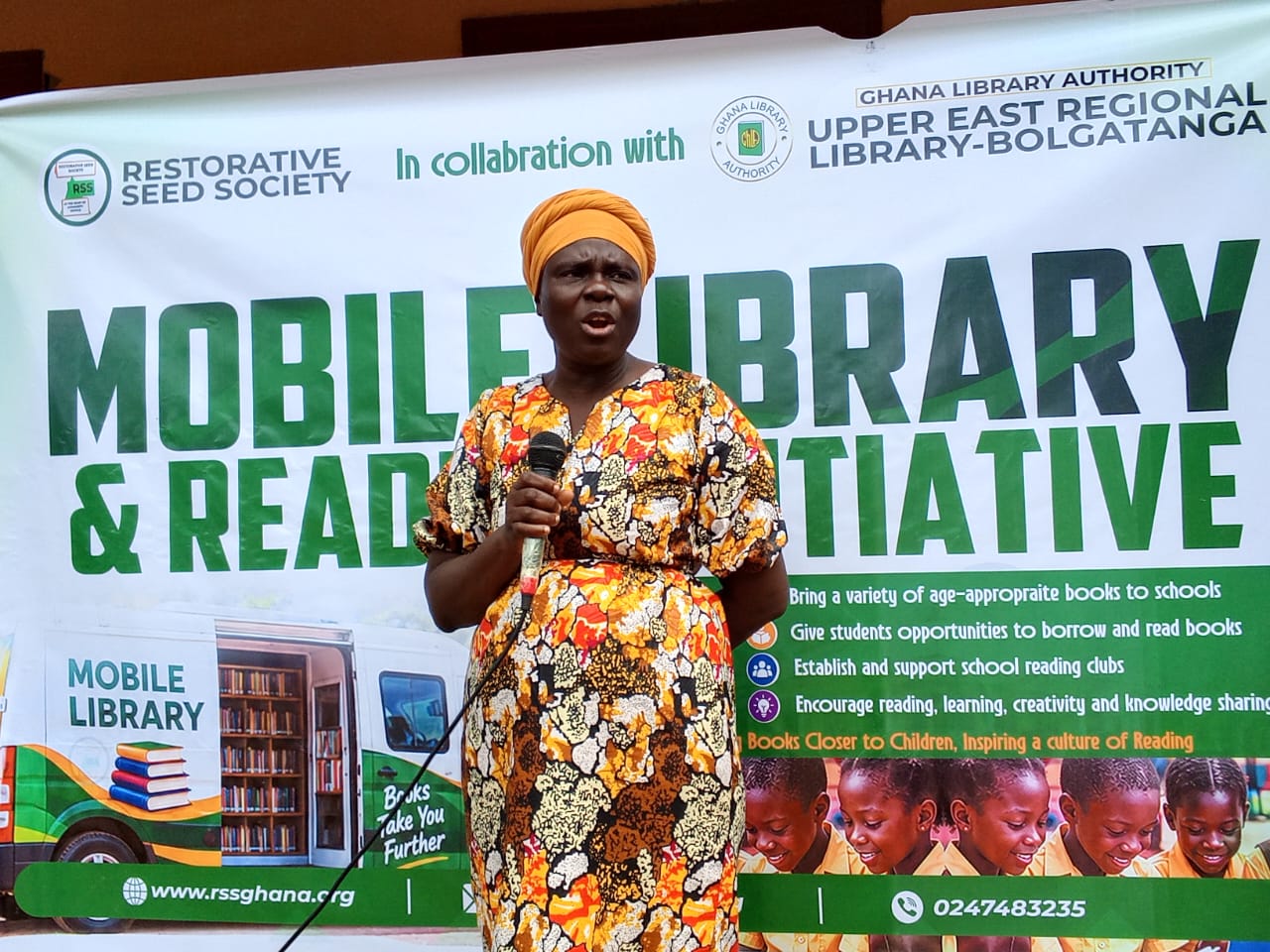
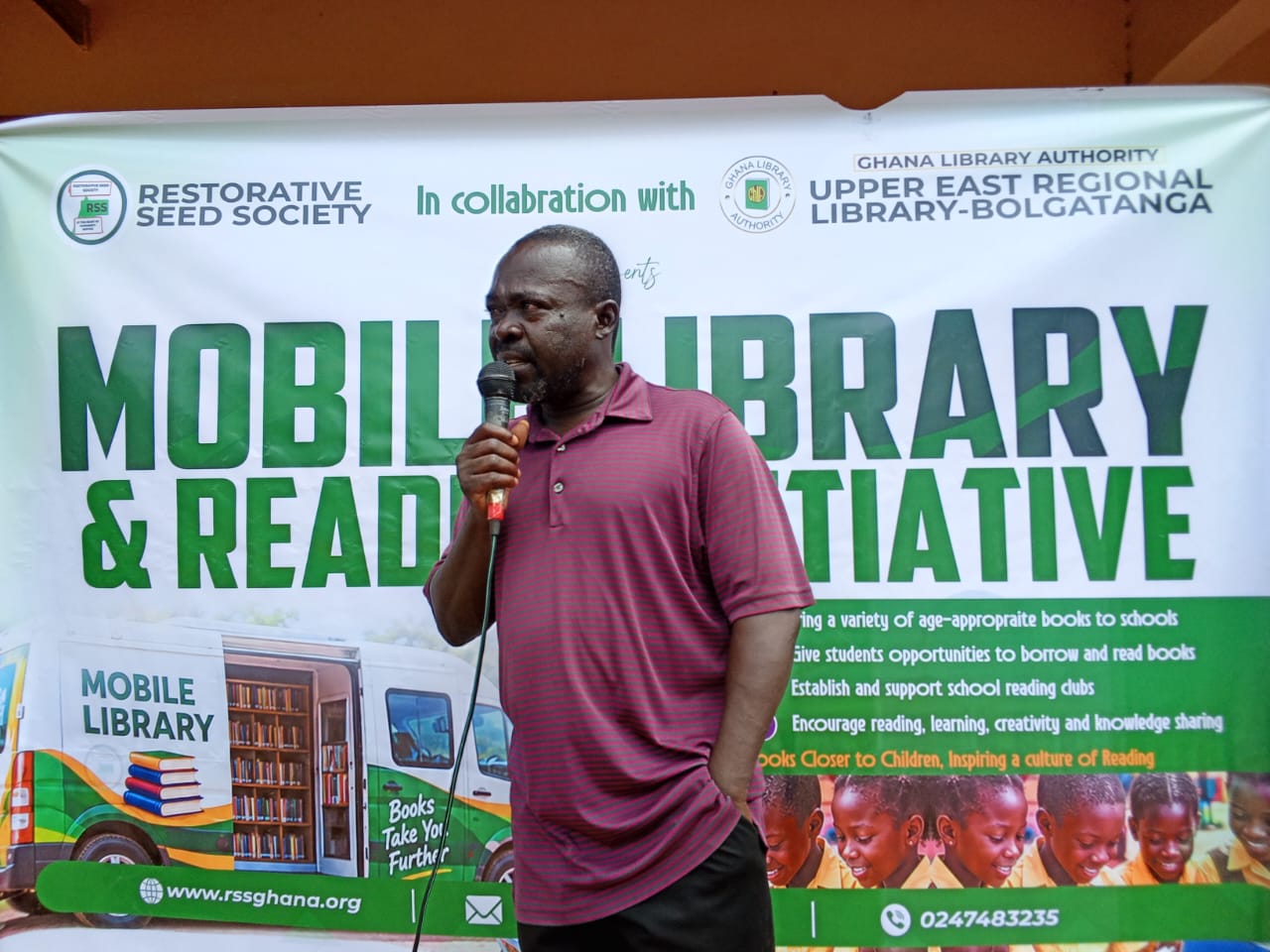
The Restorative Seed Society (RSS), in partnership with the Ghana Library Authority, has introduced a mobile library initiative at Asorogobise Junior High School to improve students’ access to books and encourage reading.

Headmistress of the school, Celestina Akanlise, said limited access to books had been a major challenge for students, with some struggling to develop their reading skills.

According to her, the introduction of the mobile library would give students greater access to reading materials without having to travel elsewhere to use a library.

She said the initiative was particularly significant because some of the students had not previously had the opportunity to see or use a physical library.

Madam Akanlise thanked the Restorative Seed Society and the Ghana Library Authority for extending the initiative to the school.

She also commended teachers who volunteered to participate in the launch despite the ongoing industrial action by teachers.

Assembly Member for the area, Bawa Atule, welcomed the initiative and said improved access to books could contribute to the educational development of children in the community.

He, however, called for stronger communication between organisations implementing projects and local stakeholders.

Mr Atule said communities, schools and their representatives should receive adequate information when organisations enter communities to implement projects to ensure wider participation and coordination.

He pledged to continue advocating for development in the area and encouraged young people, women’s groups and opinion leaders to participate in community development initiatives.

PTA Chairman of Asorogobise JHS, Samuel Amalga, also urged students to make regular use of the books provided through the initiative.

He said the ability to read and understand English was important across different subjects and encouraged students to develop consistent reading habits.

“Reading and understanding are inseparable,” he said.

Mr Amalga said parents and community leaders wanted to see children in the area progress through the different levels of education and appealed for continued support from civil society organisations and other partners.

The mobile library initiative is being implemented by the Restorative Seed Society in partnership with the Ghana Library Authority.

Source: News Contributor, Comfort Nmaah Adongo

Taekwondo facilities to be considered in planned Upper East sports complex – Minister

0

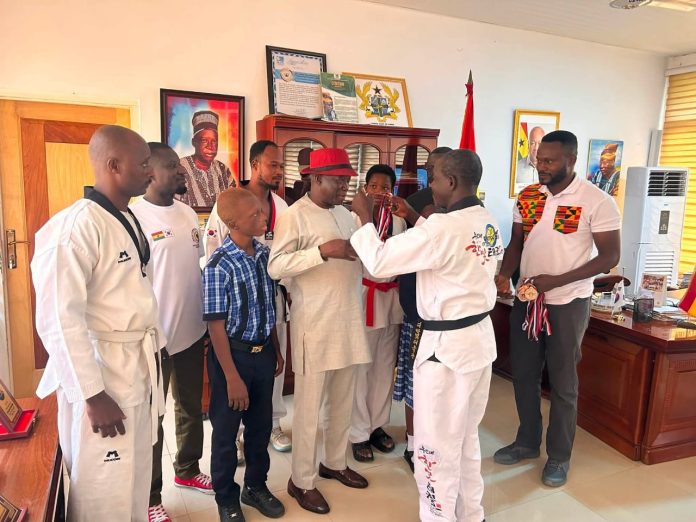
Upper East Regional Minister Donatus Akamugri Atanga has pledged support for the Upper East Regional Taekwondo Association, including efforts to address its equipment needs and consider facilities for the sport in the planned regional sports complex.

The commitment followed the association’s presentation of eight medals won at the 2026 Korea Ambassador’s Cup Championship in August.

The Upper East team returned from the competition with one gold, one silver and six bronze medals.

During the presentation, Mr Akamugri said sports should be considered not only as entertainment but also as an avenue for youth development, employment and livelihoods.

He said the government’s planned sports infrastructure for the region could help address some of the challenges confronting different sporting disciplines.

The Minister directed the Upper East Regional Coordinating Director, Bless Kwame Darkey, to engage the Taekwondo Association over its immediate equipment needs.

The association has requested about GH¢25,000 worth of training equipment, and Mr Akamugri said the Regional Coordinating Council would explore ways of providing support.

He also disclosed that a technical team from Accra was expected in the region in the first week of October to inspect the proposed site for the regional sports complex and consider how different sporting disciplines could be accommodated.

Mr Akamugri therefore urged the association to engage the technical team and identify the specific facilities required for taekwondo for consideration in the plans.

He further assured the association that the RCC would intervene if challenges arose over access to its current training facility while plans for the new sports infrastructure were being developed.

Assistant Coach of the Upper East Regional Taekwondo Association, Jesse Apalazoya, who spoke on behalf of the group, said athletes from the region had continued to perform at competitions despite inadequate resources.

He said the association lacked sufficient training equipment and did not have a permanent training facility.

According to him, the centre currently used by the association does not belong to it, creating uncertainty over its long-term training arrangements.

Coach Apalazoya appealed for support to provide athletes with the equipment and facilities needed to improve their training and performances at competitions.

The association subsequently presented its eight Korea Ambassador’s Cup medals to the Regional Minister.

Source: Upper East Regional Coordinating Council 

PETROSOL Platinum Energy PLC undertakes clean-up at Upper East Regional Hospital

0

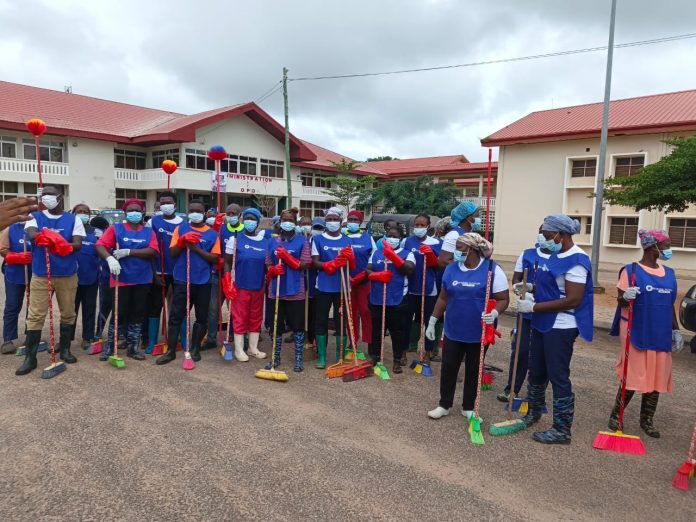
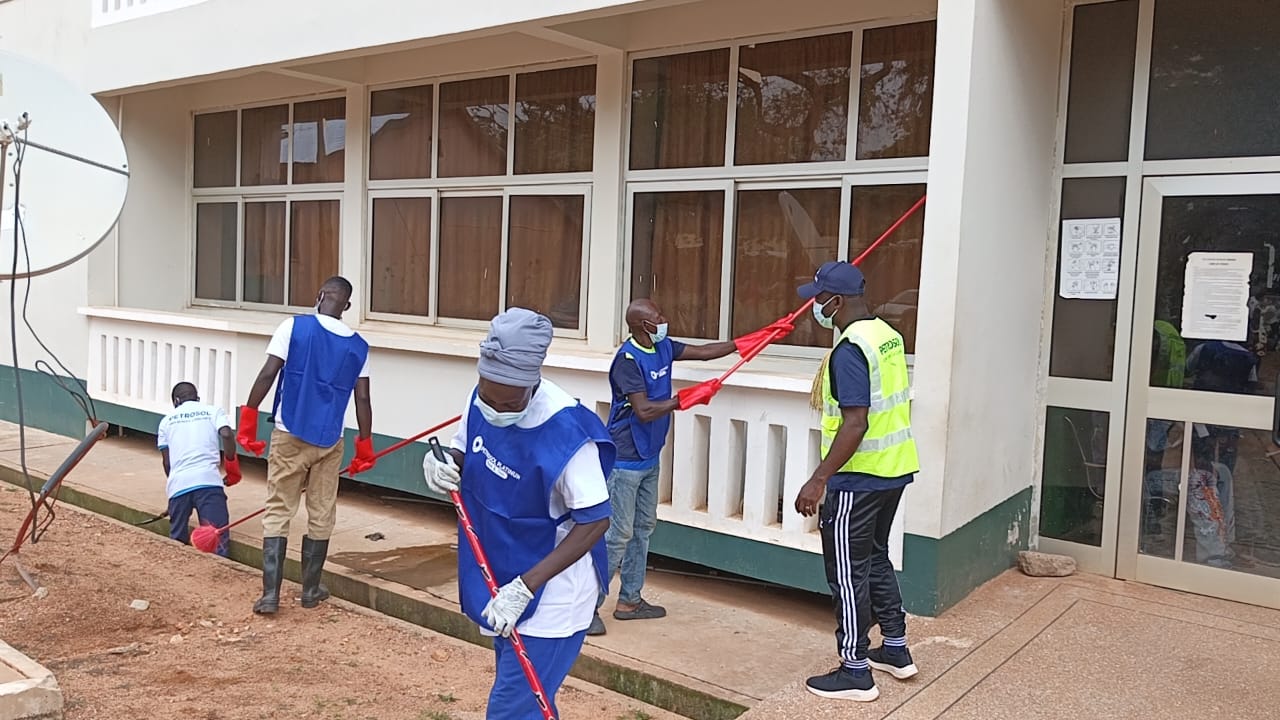
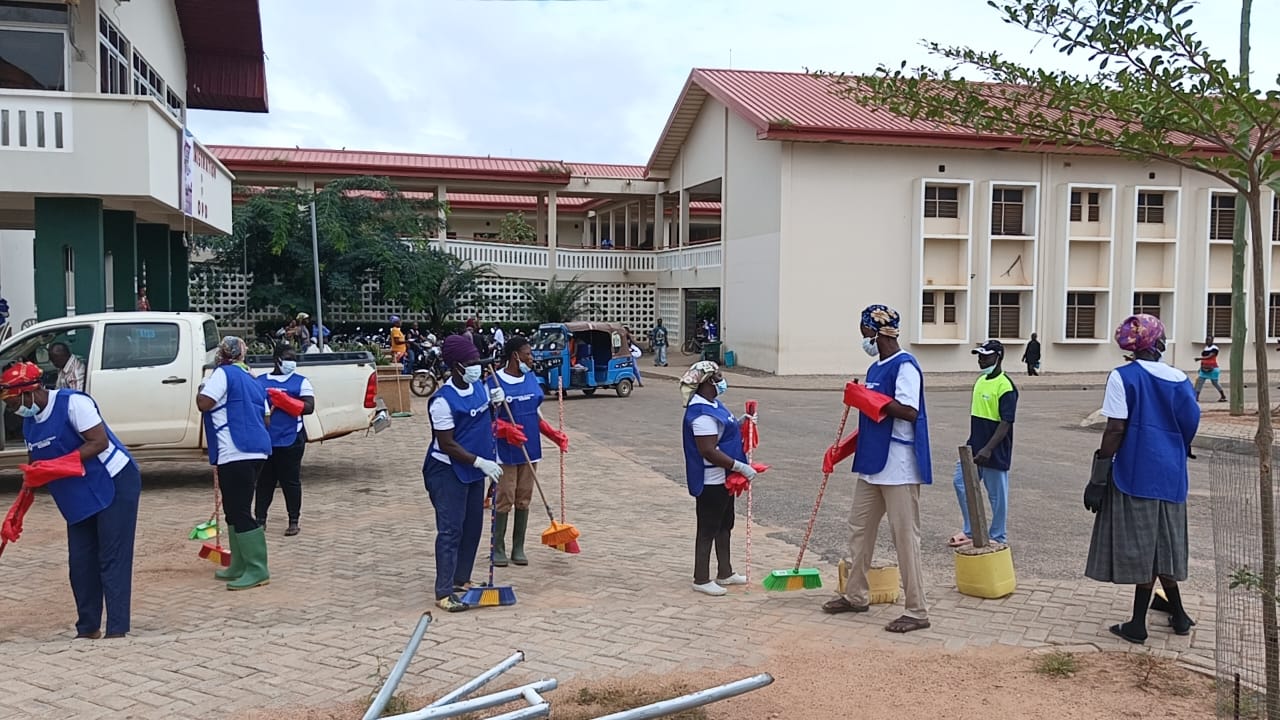
PETROSOL Platinum Energy PLC has undertaken a clean-up exercise at the Upper East Regional Hospital as part of its corporate social responsibility activities.

The exercise, held on Wednesday, September 30, 2026, brought together staff of the company to clean parts of the hospital environment and promote proper sanitation at the facility.

Head of Marketing at PETROSOL Platinum Energy PLC, Phillip Boamah Asampong, said the exercise was part of the company’s efforts to give back to communities in which it operates.

“As a company serving the people of Ghana, and particularly the people in the northern parts of the country, we are always happy to come back here not this time to sell fuel or conduct our usual business, but to give back to the community and support them in the area of health,” he said.

Mr Asampong said the company also considered the exercise an opportunity to show appreciation to residents for their support over the years.

He said businesses had a responsibility to contribute to the wellbeing and development of the communities in which they operate.

According to him, PETROSOL Platinum Energy PLC’s operations in northern Ghana make it important for the company to support initiatives that directly benefit residents.

Mr Asampong said the decision to undertake the exercise at the Upper East Regional Hospital was informed by the facility’s role in providing healthcare services to people in the Upper East Region.

He thanked the management and staff of the hospital for cooperating with the company during the exercise.

Mr Asampong said PETROSOL Platinum Energy PLC would continue to support initiatives in health and other areas as part of its corporate social responsibility activities.

A1 Radio | 101.1 MHz | Mary Atiamah Aperika | Bolgatanga

Help us track challenges with free primary healthcare – GHS tells journalists

0

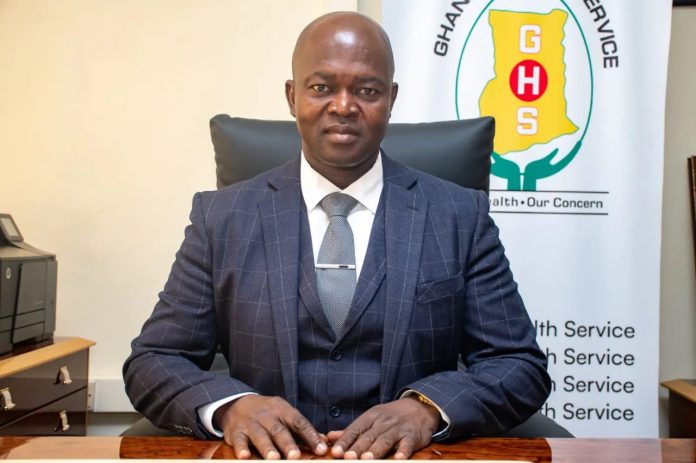
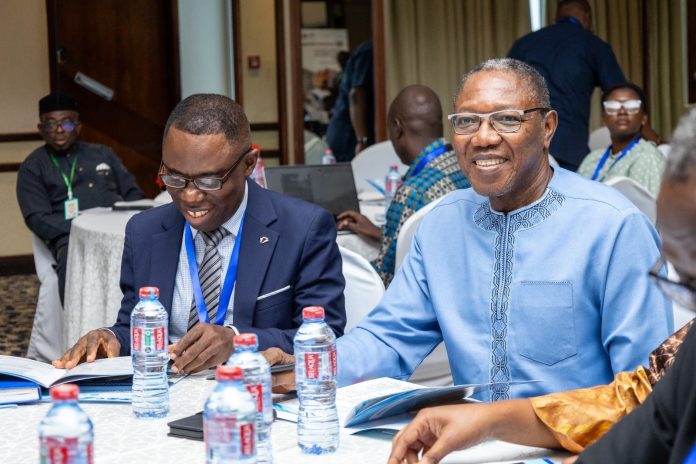
Director-General of the Ghana Health Service (GHS), Dr Samuel Kaba Akoriyea, has called for stronger collaboration with journalists to identify challenges in the implementation of free primary healthcare and improve health services at the community level.

He said journalists should see themselves as partners in the health system rather than outsiders whose role is limited to reporting on health-related developments.

Speaking during an AMMREN webinar on Wednesday, September 30, 2026, Dr Kaba Akoriyea said journalists’ close interaction with communities placed them in a position to provide valuable feedback on how health policies and services were being experienced by the public.

He said the implementation of free primary healthcare presented an opportunity for the media and health authorities to work together to identify challenges and find practical ways of improving the programme.

Dr Kaba Akoriyea disclosed that the Ghana Health Service would hold a dedicated engagement with journalists to examine the implementation of free primary healthcare and discuss how the programme could be made more effective.

“We don’t want the system to be Ghana Health Service versus journalists,” he said, calling for a relationship built around cooperation and improving healthcare delivery.

He encouraged journalists to participate in GHS activities and raise questions, concerns and ideas that could contribute to strengthening health services.

According to the Director-General, journalists are themselves users of the health system, whether seeking healthcare, visiting relatives at health facilities or reporting on issues within the sector.

Health workers, he added, also depend on the same system for healthcare, making its improvement a shared responsibility.

Journalists can provide community feedback

Dr Kaba Akoriyea said journalists have a unique relationship with communities and could help health authorities better understand people’s experiences with healthcare services.

He encouraged journalists who encounter challenges within the health system to draw the attention of the GHS to them through the appropriate channels.

Such engagement, he said, could provide the Service with information about problems at the community level that may require attention.

He said this would be particularly important as the country implements free primary healthcare, with feedback from communities helping authorities assess how effectively the programme is working and where improvements are required.

Concern over misinformation

The GHS Director-General also raised concerns about health misinformation, particularly with the growth of artificial intelligence, digital media and social media platforms.

He said inaccurate information could spread rapidly and sometimes gain credibility simply because people encountered it on television, social media or an established news platform.

Dr Kaba Akoriyea therefore urged journalists to ensure that health information provided to the public is accurate.

He thanked journalists and other stakeholders participating in the engagement and called for continued cooperation between the media and the Ghana Health Service to improve healthcare delivery.

A1 Radio | 101.1MHz | Mary Atiamah Aperika | Bolgatanga

Invest in proven solutions to keep children learning during crises – Apaak

0

Deputy Minister for Education Dr Clement Apaak has called on governments and development partners in West Africa to invest in proven education interventions to prevent children affected by conflicts, climate shocks and other emergencies from losing access to learning.

He said responses to education emergencies should not be driven by urgency alone but by evidence showing which interventions work, who they work for and the conditions under which they can be successfully implemented.

“Urgency matters, but urgency without evidence wastes scarce resources and can fail the very children we mean to serve,” Dr Apaak said.

He made the call in a keynote address delivered on behalf of Education Minister Haruna Iddrisu at the 2nd High-Level Conference on Scaling Education Initiatives in Emergencies, ACCELERATE+, in Accra.

Dr Apaak said conflicts in the Sahel, floods, droughts, health emergencies and economic hardship continued to disrupt education across West Africa, with girls, children with disabilities, rural communities and poor households among those most affected.

He urged governments and development partners to use research to establish what works, for whom, at what cost and under what conditions before committing scarce resources to education interventions during emergencies.

Lessons from COVID-19

Dr Apaak said Ghana’s experience during the COVID-19 pandemic demonstrated the importance of building education systems capable of keeping children learning when normal schooling is disrupted.

During school closures, he said, radio, television and online platforms were used to continue teaching and learning.

However, children without access to devices, electricity, internet connectivity or adult support were at greater risk of being left behind.

Dr Apaak said emergency education interventions must therefore take account of existing inequalities and ensure vulnerable children are not excluded.

“Gender equality and social inclusion are not add-ons. If our programmes do not reach girls, children with disabilities and the displaced, they are failing, whatever the averages say,” he said.

Prioritise foundational learning

The Deputy Minister also called for greater attention to foundational learning, arguing that getting children back into classrooms after an emergency was not sufficient if they were unable to read or perform basic mathematics.

He identified four priority areas for education investment in West Africa: building resilience before emergencies occur, scaling interventions that have demonstrated results, placing equity at the centre of education responses, and strengthening domestic financing and regional cooperation.

Dr Apaak said accelerated education programmes, community-based learning, low-technology remote learning and proven foundational learning interventions should receive sustained and predictable funding rather than remain short-term pilot projects.

He also urged researchers to make their findings accessible to policymakers and called on governments to allow evidence to inform education policies, programmes and budgets.

The two-day conference brings together researchers, policymakers, education practitioners and development partners from Ghana, Burkina Faso, Nigeria and other parts of West Africa to discuss how effective education interventions can be expanded to reach children affected by emergencies.

Dr Apaak said the ultimate measure of the region’s response should be whether children pushed furthest away from education by crises are able to return to learning and make meaningful progress.

A1 Radio | 101.1 MHz | Moses Apiah | Bolgatanga