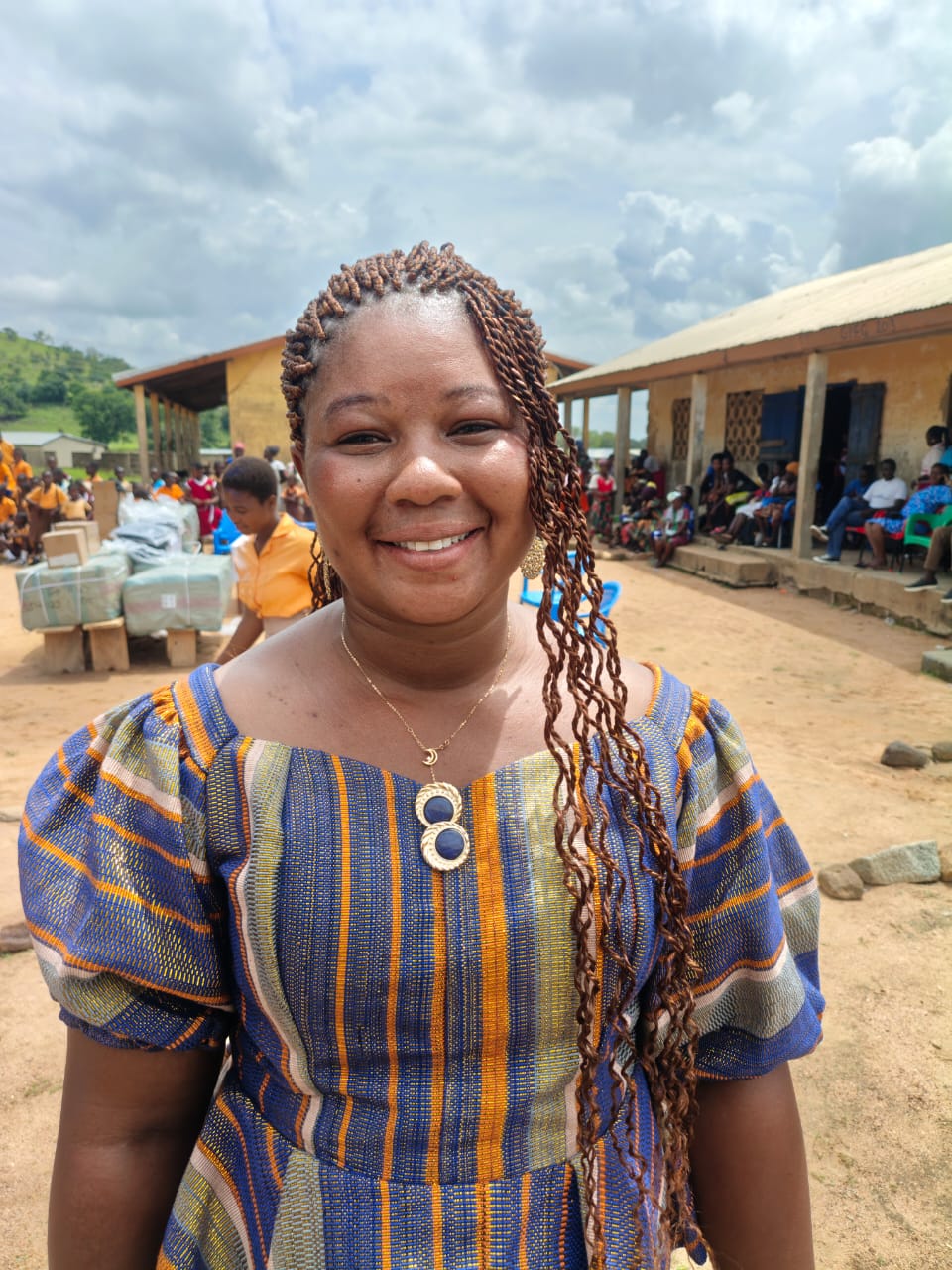
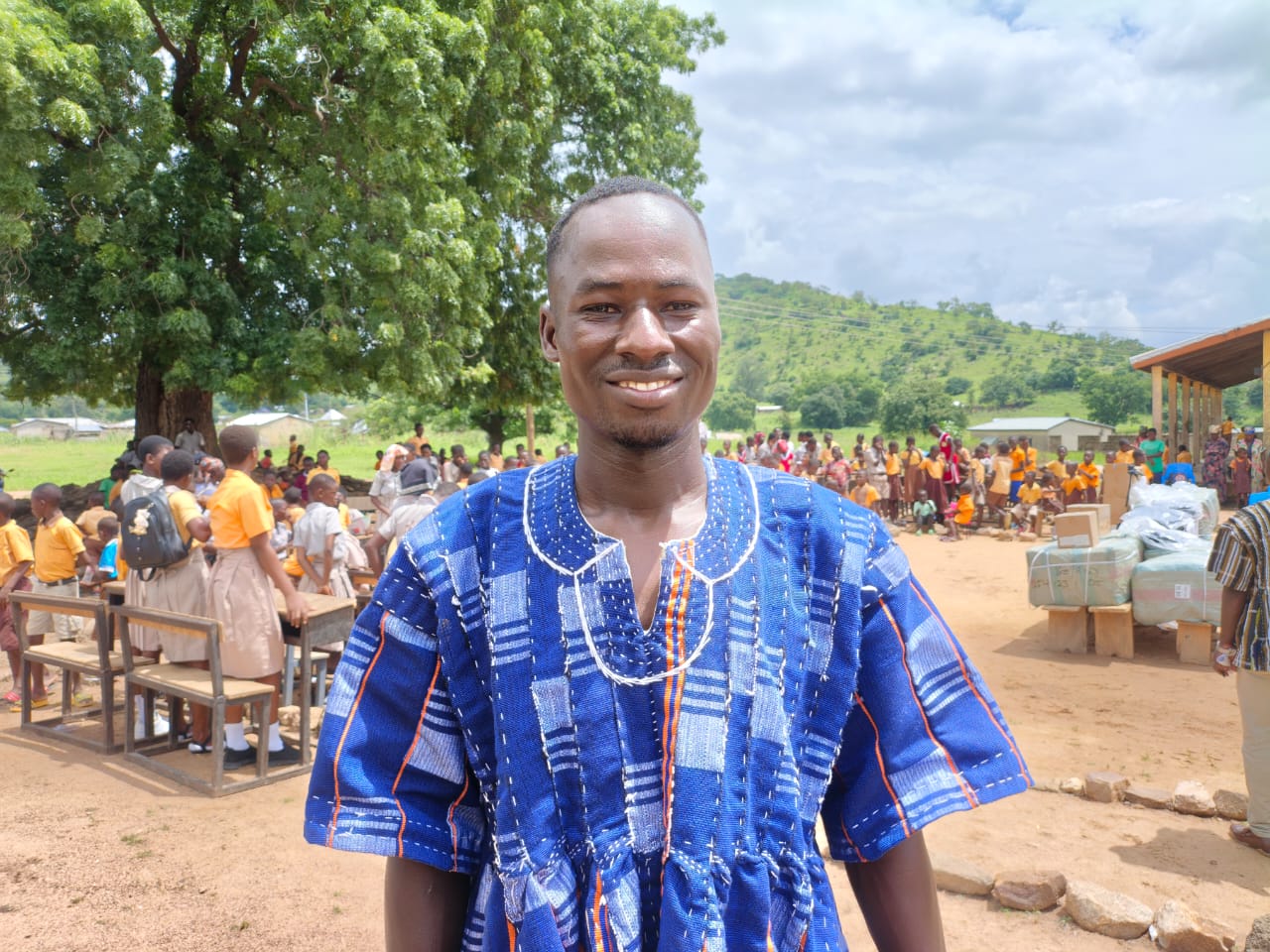
Some pupils of Shia Basic School in the Talensi District of the Upper East Region are sitting on the floor during lessons because the school does not have enough furniture, according to Headmistress Shirley Abobam.
The school is also grappling with an unsecured Kindergarten block and inadequate resources for its library and ICT laboratory.
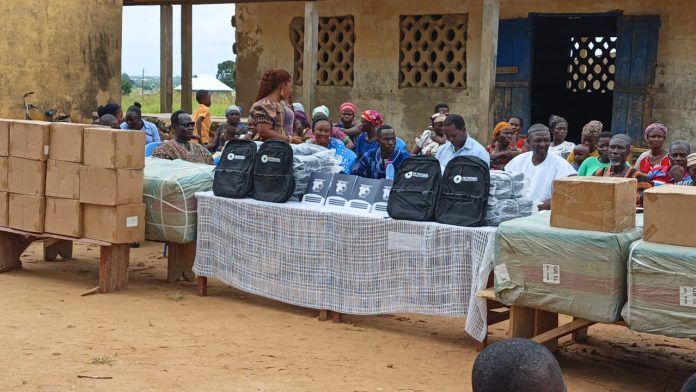
Mrs Abobam disclosed the challenges on October 2, 2026, when PETROSOL Platinum Energy PLC donated 400 school bags and 2,000 exercise books to the school.
She thanked the company for the donation, saying the materials would support teaching and learning, but appealed for further assistance to address the school’s infrastructure and logistical challenges.
According to the headmistress, the Kindergarten block cannot currently be locked, while the furniture shortage has left some pupils sitting directly on the floor during lessons.
She also identified inadequate resources for the school’s library and ICT laboratory as challenges requiring attention.
Mrs Abobam appealed to businesses, organisations and individuals to support the school, saying even small contributions could help improve conditions for pupils.
Assembly Member for Shia, Christopher Yindubil, said the donation was particularly important for children whose parents struggle to provide basic educational materials.
According to him, some pupils had been carrying their books to school in rubber bags because their parents could not afford school bags.
He said the 400 bags and 2,000 exercise books would therefore provide immediate support to those pupils and reduce some of the educational expenses borne by their families.
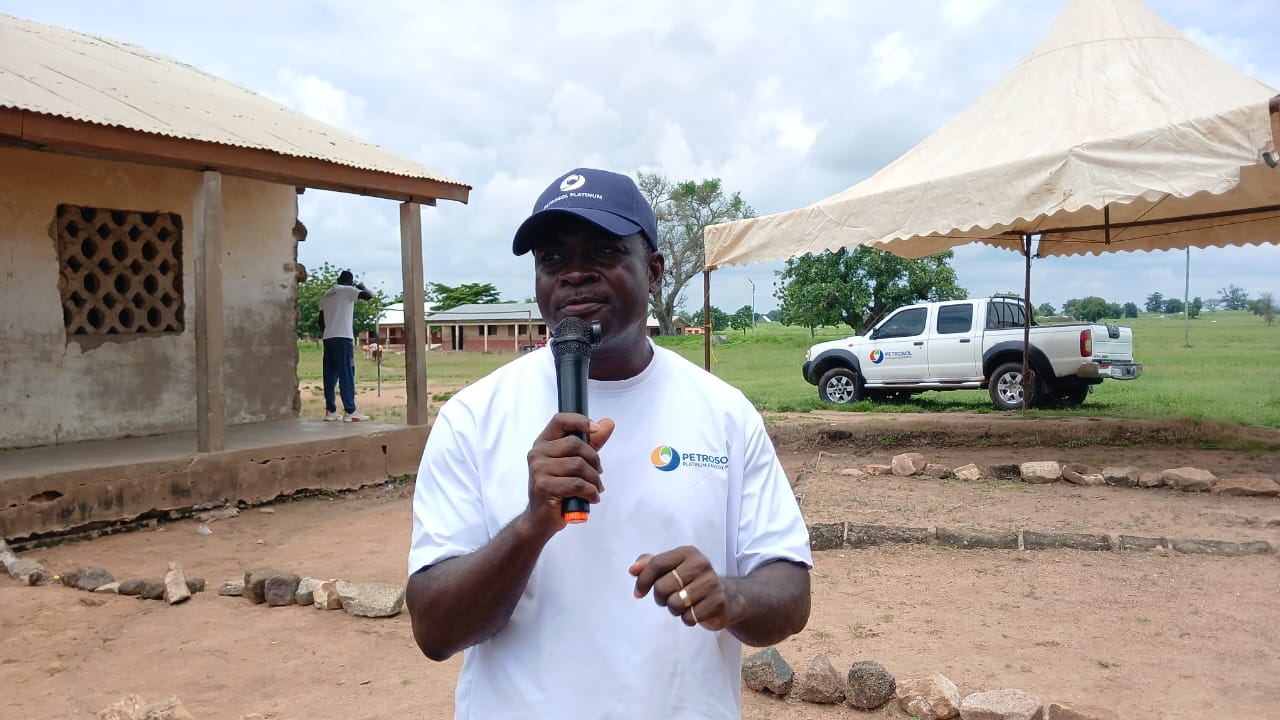
Head of Marketing at PETROSOL Platinum Energy PLC, Philip Boamah Assampong, said the donation formed part of the company’s support for communities in which it operates.
He told the pupils that PETROSOL’s connection to Shia made the intervention particularly significant, noting that the company was established by someone from the community who also attended school there.
Mr Assampong encouraged the pupils to take their education seriously and use the donated materials for their intended purpose.
He said the items were meant to provide practical support to the children and reduce some of the financial pressure on their parents.
Mr Assampong also encouraged the pupils to believe that their backgrounds should not limit their ambitions, telling them that some could grow up to become doctors, teachers, military officers, business leaders and other professionals.
He said PETROSOL had undertaken other education and health interventions in northern Ghana and would continue supporting communities.
A1 Radio | 101.1 MHz | Mary Atiamah Aperika | Bolgatanga
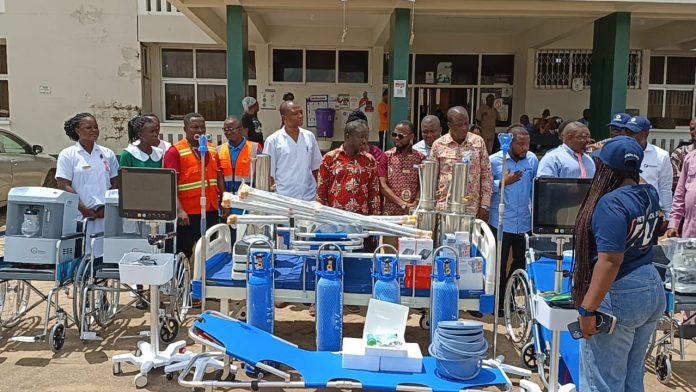
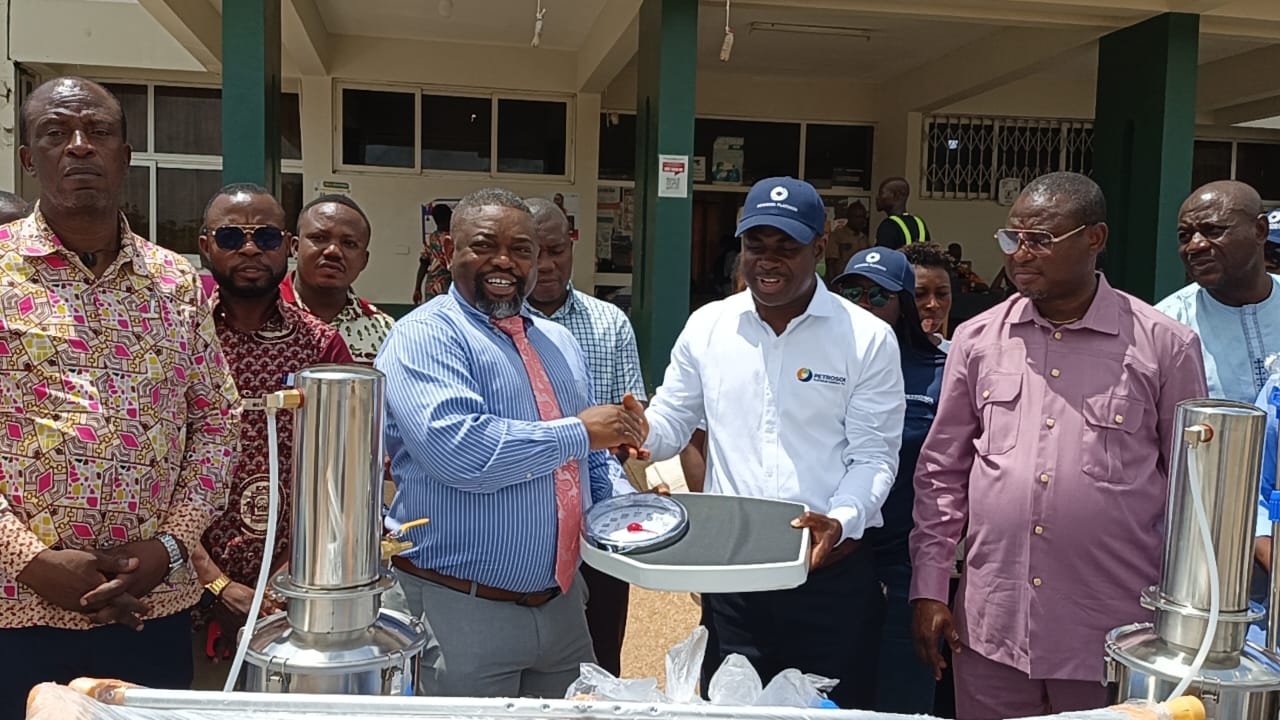
PETROSOL Platinum Energy PLC has donated medical equipment and hospital supplies valued at GH¢120,000 to the Upper East Regional Hospital in Bolgatanga.
The items include patient monitors, blood pressure monitors, pulse oximeters, examination couches and oxygen concentrators, among other equipment used in diagnosing, monitoring and treating patients.
Head of Marketing at PETROSOL Platinum Energy PLC, Philip Boamah Assampong, said the donation formed part of the company’s efforts to support communities in which it operates.
“We are giving it back to the society that has supported us, that has sustained a business that started as a personal affair and has grown into what we have today,” he said.
Mr Assampong said the company’s growth over the years had been supported by the communities in which it operates and that PETROSOL therefore considered it important to contribute to their development.
According to him, the company currently operates about 108 service stations across Ghana, with what he described as its Northern Zone accounting for approximately 41.2 per cent of its operations.
He said the company had focused some of its social interventions on healthcare, education and environmental sanitation.
“What we actually have is a need in society, so that when we employ, it will not go to waste. It will not benefit just those who work, but it will benefit generations to come. It will benefit the community; it will benefit everybody,” he said.
Mr Assampong said the donation to the Upper East Regional Hospital would not be the company’s last intervention in the communities it serves.
“We are not ending our support to society here today or tomorrow. We want to continue to support the communities that have supported us,” he said.
He added that PETROSOL intended to continue supporting institutions and communities as its operations expanded.
Management of the Upper East Regional Hospital thanked the company for the donation, saying support from corporate organisations could complement efforts to address some of the facility’s equipment and resource needs.
A1 Radio | 101.1 MHz | Mary Atiamah Aperika | Bolgatanga
Medical Director of the Upper East Regional Hospital, Dr Joseph Kojo Tambil, says the facility is ready to take the next step towards becoming a teaching hospital, citing the commitment of its staff and improvements in infrastructure and equipment.
Dr Tambil said despite resource and human resource constraints, staff of the hospital had demonstrated a willingness to take on additional responsibilities and work beyond their normal duties to keep services running.
“I think where we are currently, we are ready for the next step, which is becoming a teaching hospital,” he said.
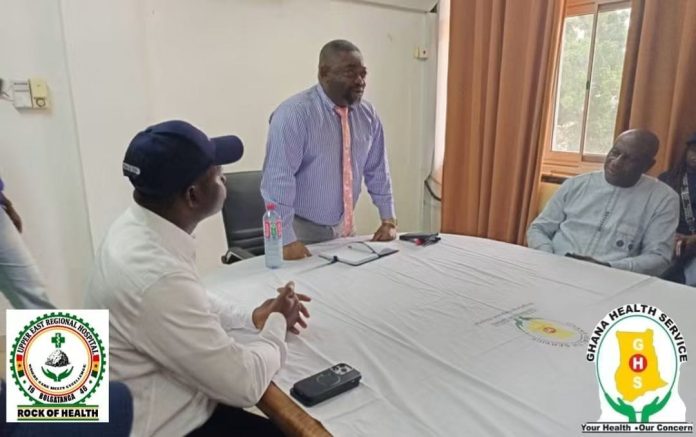
Dr Tambil made the remarks when PETROSOL Platinum Energy PLC visited the hospital to donate medical equipment and other essential items to support healthcare delivery.
He said the level of commitment among staff at the Upper East Regional Hospital stood out from his experiences working at other health facilities in the country.
“What struck me about the staff here at the Upper East Regional Hospital is the level of dedication. I have worked in many places around Ghana, and in other places you have to motivate people before they do anything,” he said.
“But here, people just come out willingly, voluntarily and want to do their best.”
According to the Medical Director, some staff work beyond their official hours and take on additional responsibilities without demanding incentives.
He said that commitment, together with improvements in infrastructure and equipment, had strengthened the hospital’s capacity and given him confidence about its prospects of progressing towards teaching hospital status.
Dr Tambil also pointed to what he described as increased attention from the Ministry of Health, noting that Health Minister Kwabena Mintah Akandoh had visited the facility twice this year.
“The Honourable Minister of Health has been here twice this year, and I have not seen that anywhere,” he said.
Dr Tambil said he was optimistic that continued support from government and other stakeholders would help the hospital address its remaining challenges and pursue its development objectives.
He also thanked PETROSOL Platinum Energy PLC for the donation, saying support from corporate organisations could complement efforts to improve healthcare delivery at the facility.
A1 Radio | 101.1 MHz | Mary Atiamah Aperika | Bolgatanga
Olowo-n’djo Tchala, CEO and Founder of Alaffia/BBI
Alaffia has joined organisations supporting the 5th Upper East Regional Ghana Journalists Association (GJA) Awards, scheduled for October 2, 2026, at the Lapam Zorkor Hotel in Bolgatanga.
The awards are being held under the theme, “Beyond the Headlines: The Media’s Role in Promoting WASH for Safe Motherhood and Quality Healthcare.”
Alaffia said the theme aligns with its commitment to community development and social impact, particularly in the areas of maternal healthcare, clean water, education and environmental sustainability.
Founded by Olowo-n’djo Tchala, Alaffia works with women’s cooperatives in Ghana and Togo to source shea butter and handcrafted products through fair trade, with proceeds supporting community development initiatives.
In the Upper East Region, Alaffia/BBI says it has supported communities with more than 10 potable water wells, including two solar-powered and mechanised boreholes constructed in 2026, which are scheduled to be commissioned in the coming days.
The organisation also says it has distributed and planted more than 10,000 seedlings in the region, while creating direct and indirect livelihood opportunities for approximately 6,500 people through shea nut collection, shea butter processing and basket weaving.
Olowo-n’djo Tchala, CEO and Founder of Alaffia/BBI, said journalists play an important role in helping communities understand issues that directly affect their lives.
“Journalists help communities understand the issues that shape their lives, from clean water to safe childbirth. We are proud to support those who tell these stories with care and honesty.”
Alaffia congratulated all nominees for the 5th Upper East Regional GJA Awards and commended the GJA Upper East Regional branch for recognising excellence in journalism and drawing attention to issues affecting communities.
The organisation said its support for the awards reflects its commitment to initiatives that promote public awareness and community development.
Upper East Regional Minister Donatus Akamugri Atanga has announced an “Accounting to the People” tour during which Metropolitan, Municipal and District Chief Executives (MMDCEs) will be expected to account for development projects and public expenditure in their respective areas.
The tour, scheduled for October 5 to 13, 2026, will take the Regional Minister to districts across the Upper East Region for engagements with residents and other stakeholders.
Mr Atanga announced the initiative during the first meeting of the Upper East Regional Coordinating Council (RCC), saying development must be accompanied by accountability.
“Members of Council, development must go hand in hand with accountability. Building on the President’s recent engagements with the people of the Region, I will undertake an ‘Accounting to the People’ Tour from 5th to 13th October 2026,” he said.
According to the Regional Minister, the engagements will provide an opportunity for MMDCEs to account to residents and stakeholders for government interventions, development projects, achievements, challenges and commitments within their respective districts.
The tour will also provide residents with an opportunity to raise concerns and give feedback on government programmes and development priorities in their communities.
“It will also provide an opportunity to account for public resources, explain government programs and projects, listen to communities and receive direct feedback,” Mr Atanga said.
He consequently directed MMDCEs and heads of departments and agencies to prepare information on projects, expenditure, implementation status and results ahead of the engagements.
“I therefore expect all MDCEs and Heads of Department and Agencies to provide accurate, credible and accessible information on projects, expenditure, implementation status and results. Accountability must not be an event; it must be embedded in the way we govern,” he said.
Mr Atanga said the tour would build on President John Dramani Mahama’s recent engagements with residents of the Upper East Region.
Acting Upper East Regional Director of the National Sports Authority (NSA), Abdul Rahman Danladi, has called for stronger coordination among institutions involved in sports development, saying the lack of collaboration is affecting efforts to identify and develop talent in the region.
Mr Danladi said sporting associations, schools and the National Sports Authority were sometimes operating without adequately coordinating their activities, despite working towards similar objectives.
He cited the preparation of Upper East athletes for recent inter regional competitions as an example, saying his office was not involved early enough even though the Authority had equipment that could have supported the athletes.
“I was only informed that they were in Garu for the inter-districts. And later I was informed that they were training to go to Accra for the inter-regionals,” he said.
According to him, the NSA had tracksuits and other sporting items available but could not provide them because the Authority was not contacted during preparations.
Mr Danladi said stronger coordination between the NSA and school sports authorities could help ensure that available resources are used effectively and young athletes receive the necessary support.
He also identified inadequate sporting infrastructure and equipment as challenges confronting the region.
“When you look at all of that, our infrastructure and equipment, as a region, do we have the necessary equipment and also the right infrastructure for training? No, I would say no. We have the technical men, but the facilities, no,” he said.
Mr Danladi said the region had people with the technical expertise to train athletes, but inadequate facilities and equipment limited what could be achieved.
He said collaboration with schools was particularly important in developing young athletes and creating a pathway through which talent identified at the basic school level could be nurtured through senior high school and beyond.
According to him, previous attempts to work with schools to establish youth volleyball leagues encountered difficulties, although some schools around the Marble Park area eventually allowed pupils to participate.
Mr Danladi said closer collaboration among schools, sporting associations, the NSA and other stakeholders would make it easier to identify talented children early and provide the support required to develop their abilities.
He recalled that the Upper East Region previously had a strong presence in disciplines including volleyball, football, handball and long distance athletics, but said its national sporting profile had declined over the years.
Acting Upper East Regional Director of the National Sports Authority (NSA), Abdul Rahman Danladi, has challenged the perception that young people who participate in sports are academically weak.
Mr Danladi, who is also Head Coach of Ghana’s national women’s volleyball team, said the belief that pursuing sports comes at the expense of education could discourage talented young people from developing their sporting abilities.
“I think that narrative about sportsmen being daft is wrong. It’s completely wrong,” he said.
According to him, young people should regard their sporting abilities as an additional advantage while continuing to take their education seriously.
“The sporting discipline is an advantage you have over another person. So, do not look down on your education because you are a sportsman and they hail your name,” he said.
Mr Danladi recalled his experience as a student under his Physical Education teacher, Mr Anas, who he said encouraged students to participate in sports without compromising their academic work.
He said young athletes should understand that recognition for their sporting abilities should not become a reason to neglect their education.
The Acting Regional Sports Director said he continues to encourage young people with sporting potential to develop their talents but identified negative perceptions about sports as one of the challenges affecting participation.
He said changing attitudes towards sports would be important in encouraging more young people to participate while continuing their education.
Mr Danladi also pointed to people who participated in competitive sports and later pursued careers outside athletics as examples of how sports and education can coexist.
He said the Upper East Region had historically produced competitors in disciplines including volleyball, football, handball and athletics, but was working to regain its previous standing in sports.
Ghana must urgently rethink the relationship between CSSPS, Free SHS and the survival of day schools
Ghana has every reason to be proud of the expansion of access to secondary education. The Computerised School Selection and Placement System (CSSPS) and the Free Senior High School (Free SHS) policy have opened the doors of secondary education to thousands of young Ghanaians who might otherwise have been excluded.
But every good policy must periodically be examined against its consequences.
Today, a serious and uncomfortable question confronts Ghana’s education system:
Are our current school selection, placement and financing arrangements unintentionally destroying the very community day schools that were established to bring secondary education closer to our children?
This question deserves urgent national attention.
The problem is no longer simply placement; it is distribution
The CSSPS was designed to match students with schools according to their academic performance, programme preferences, residential preferences and available vacancies. On paper, this is a rational arrangement.
But education is not merely about placing a child somewhere. It is also about ensuring that students are distributed fairly and sustainably across the schools that the government has established and is financing.
This is where the problem begins.
A child living in a deprived community may have a senior high school virtually at his or her doorstep. That school may have classrooms, teachers and programmes, but because it is a day school, the child and the parents may prefer a boarding school many kilometres away.
The consequence is predictable.
The boarding school becomes overcrowded while the community day school struggles to fill its classrooms.
We are therefore creating a strange situation in which the government invests public money in establishing schools in deprived communities, but the same national education system can subsequently make it difficult for those schools to attract the students for whom they were established.
Recent research on Ghana’s Free SHS policy has documented precisely this pattern: increased demand for boarding, while many day schools, particularly in rural areas, operate below capacity.
Is boarding becoming more attractive because of the financing structure?
We must be courageous enough to ask this question.
Under Free SHS, the government absorbs approved costs for students in public second-cycle institutions. But the financial treatment of residential students and day students is not identical.
Boarding students receive accommodation and meals as part of the residential arrangement, while day students have to live at home and bear the practical consequences of commuting.
Research on Free SHS has found that this has contributed to a significant increase in the demand for boarding. Government expenditure also differs between residential and non-residential students.
The result is an education system in which boarding can appear to parents to offer considerably more value than day schooling.
That creates an incentive for families to pursue boarding places even where a quality day school exists within their community.
We should therefore stop looking at the placement problem only as a technical computer problem.
It is also a policy-design problem.
The dangerous consequence: the death of the community day school
Imagine a district where the government has established several community day senior high schools.
These schools were intended to reduce the distance children travel, minimise pressure on traditional boarding schools and provide affordable secondary education to children in surrounding communities.
But if a large proportion of the children from those communities are continually attracted away to boarding schools elsewhere, what happens?
The local school loses enrollment.
When enrolment falls, the school may struggle to justify its staffing levels, programmes and infrastructure expansion.
A school with empty classrooms becomes difficult to defend when the government is simultaneously spending enormous sums to expand facilities elsewhere.
Eventually, the community begins to lose confidence in its own school.
Parents say, “Our children do not want to attend the local school.”
Teachers become frustrated.
The school becomes under-enrolled.
The government continues to spend money maintaining infrastructure that is not being fully utilised.
And the vicious cycle continues.
This is not merely a school problem.
It is a national resource-allocation problem.
We must also confront the question of academic standards
Another issue requiring national discussion is the relationship between BECE performance and entry into secondary education.
Ghana has traditionally used the BECE both for certification and selection into senior high schools. Candidates are graded on a nine-point scale, with Grade 1 being the highest and Grade 9 the lowest.
Yet Ghana’s current placement arrangement does not operate with one simple nationwide minimum aggregate that determines who qualifies for SHS.
The Ministry has explained that placement depends on factors including candidates’ performance, the competitiveness of schools, programme demand, preferences and available spaces.
This approach has an important social objective: no Ghanaian child should be permanently denied an opportunity for further education merely because of poverty or where he or she comes from.
That principle is commendable.
But access must not be confused with automatic progression without adequate academic preparation.
If a candidate performs poorly in one or more foundational subjects, the question should not simply be, “Where can we place this child?”
The more important question should be:
“What educational pathway will give this child the best chance of succeeding?”
Some children may need remedial education, foundational programmes, technical and vocational pathways, structured bridging programmes or other forms of academic support before being placed into programmes whose demands they are not yet prepared to meet.
A system that guarantees placement without sufficiently addressing preparedness risks converting the secondary school into a remedial institution without giving it the resources or structure to perform that function.
Placement should not become a competition for boarding places
There is another matter that requires urgent examination.
The purpose of CSSPS should be to achieve a fair and educationally sound distribution of students, not simply to satisfy the strongest parental demand.
The current placement arrangements allow candidates to express residential preferences, including boarding and day options. Automatic placement takes account of the student’s programme and residential preference together with available vacancies.
That is understandable.
But should residential preference be allowed to undermine the viability of schools?
Perhaps not.
If a student has been placed in a legitimate community day school close to home, there should be a compelling educational or welfare reason before that student is moved to a boarding institution elsewhere.
Otherwise, we risk creating a system where the schools with the strongest boarding reputation continuously attract students while less-endowed community schools become casualties of their own location.
We need a new principle: strengthen schools where the children live
Ghana should consider making proximity and community access a stronger component of placement policy, particularly for students who have suitable day schools within their catchment areas.
This does not mean abolishing boarding education.
Boarding schools have an important role, especially for students who live far from suitable schools, students in special circumstances and programmes that require residential facilities.
But boarding should not become the default definition of quality.
A child should not have to leave his or her district to receive a good secondary education.
The national objective should be to make the community school good enough that parents will willingly choose it.
The government must examine the financial incentives
If government funding follows students in a manner that makes boarding financially more attractive to schools, then we must examine whether the financing formula is producing unintended consequences.
The question should be simple:
Does our funding formula encourage schools to maximise boarding enrolment rather than develop sustainable day-school education?
This question requires transparent data.
The government should publish, by school:
– approved enrollment;
– actual enrolment;
– boarding enrollment;
– day enrollment;
– available vacancies;
– government expenditure per student;
– recurrent expenditure;
– feeding expenditure;
– infrastructure utilisation; and
– the number of students transferred into or out of the school after initial placement.
With this information, Ghana can determine whether public resources are being distributed in a manner that promotes equity.
We must close loopholes in post-placement movement
The CSSPS system states that automatic placement is final and that self-placement is intended for candidates who are not automatically placed.
That principle should be rigorously enforced.
Where a change of school or residential status is genuinely necessary, it should pass through a transparent centralised process.
There should be:
No private negotiations.
No unofficial admissions.
No inducements.
No manipulation of vacancies.
No school-level recruitment of already placed students.
Every movement should be recorded electronically and auditablely.
If a student moves from a day school to a boarding school, the system should record who authorised it, why it was authorised and where the vacancy came from.
That is how we protect both the integrity of CSSPS and the schools that lose students.
Do not punish the day school for being a day school
This is perhaps the most important point.
A community day school should not be treated as the poor cousin of the boarding school.
If Ghana truly believes in equitable education, then the day school must receive the resources required to compete academically.
The government should invest deliberately in:
– science laboratories;
– ICT laboratories;
– libraries;
– workshops;
– sports facilities;
– transportation where necessary;
– feeding arrangements;
– teacher accommodation in deprived communities;
– guidance and counselling;
– remedial programmes;
– school leadership;
– infrastructure; and
– incentives for teachers serving in deprived areas.
The goal should be to transform the community day school from a school parents accept only when they cannot obtain boarding into a school parents are proud to choose.
A new approach to placement is needed
I propose that Ghana seriously consider the following reforms.
First, introduce a stronger catchment-area principle for day-school placement.
Second, establish a transparent national framework for movement between day and boarding after placement.
Third, publish school-level enrolment and vacancy data so that the public can see where the imbalance exists.
Fourth, review the financing formula to ensure that it does not unintentionally incentivise excessive boarding enrolment.
Fifth, strengthen community day schools with targeted infrastructure and teacher incentives.
Sixth, introduce structured remedial or bridging pathways for students whose BECE performance shows that they need additional academic preparation.
Seventh, maintain the principle of universal access to secondary education, but distinguish between access to education and automatic access to every type of programme or school.
Eighth, establish minimum academic readiness standards for different SHS programmes, while providing alternative pathways for students who do not initially meet those standards.
Ninth, make school selection counselling much more serious. Parents and pupils must be helped to understand that the nearest school is not necessarily inferior and that boarding is not synonymous with quality.
Tenth, undertake an independent national review of the CSSPS and Free SHS financing arrangements, with particular attention to their impact on deprived-area day schools.
Ghana must choose what kind of education system it wants
This is not an argument against Free SHS.
Neither is it an argument against boarding education.
It is an argument for a more balanced, rational and sustainable secondary education system.
Free SHS has achieved something important by reducing financial barriers to secondary education. But successful public policy must be judged not only by how many children enter school, but also by where they are placed, what they learn, whether the schools are viable and whether public resources are being used equitably.
We cannot continue to build community schools and then allow them to become empty because the education system makes boarding more attractive.
We cannot spend public money constructing schools in deprived communities while the children of those communities are transported elsewhere because parents believe that boarding is the only pathway to quality education.
We cannot tell every child that he or she has access to secondary education without asking whether that child has been placed on an educational pathway appropriate to his or her level of preparedness.
And we cannot allow the computer to become the master of education policy.
The computer should serve the educational policy. The policy should serve the child. And the child should be at the centre of the system.
Ghana therefore needs an urgent national conversation involving the Ministry of Education, Ghana Education Service, CSSPS Secretariat, WAEC, school heads, teachers, parents, traditional authorities, civil society organisations and education researchers.
The question is not whether every Ghanaian child should have access to secondary education.
Yes, every Ghanaian child deserves that opportunity.
The question is:
How do we provide that opportunity without destroying the community schools that are supposed to carry the future of our children?
By Bishop Apana Thomas Akolgo Educationist and Headmaster, Tongo Senior High/Technical School Upper East Region, Ghana
The Upper East Regional leadership of three teacher unions has backed the continuation of the nationwide strike, insisting that teachers should not return to classrooms until their outstanding demands are addressed.
The Ghana National Association of Teachers (GNAT), National Association of Graduate Teachers (NAGRAT) and Pre-Tertiary Teachers Association of Ghana (PRETAG) said delays in placing promoted teachers on their appropriate salary scales, the non-implementation of the Deprived Area Allowance and stalled negotiations on a new Collective Agreement remain unresolved.
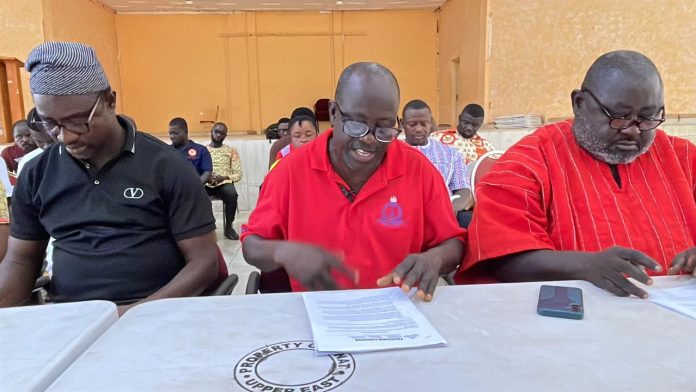
The position was announced at a joint press conference in Bolgatanga addressed by Upper East Regional GNAT Secretary Lare Kitonname, PRETAG Regional Chairman Richard Sunday Yinbil and NAGRAT Regional Chairman John Akunzebe.
“We, the Upper East Regional branches of the GNAT, NAGRAT, and PRETAG, declare our unflinching support for the National Leadership of our mother unions and the industrial action declared on September 25, 2026,” the unions said.
The three unions began the nationwide strike on September 25 over the unresolved issues. Government has since held talks with their national leadership and appealed for the industrial action to be suspended while efforts are made to address their concerns.
The Upper East union leaders said an agreement had been reached among the Ministry of Education, Ghana Education Service, Controller and Accountant-General’s Department and teacher unions concerning teachers who passed promotion aptitude tests in December 2025 and February 2026.
Under the arrangement, according to the unions, successful teachers were to be automatically placed on their respective salary scales, with arrears effective from January 2026.
They said the failure to fully implement the agreement had generated frustration among affected teachers.
The Controller and Accountant-General’s Department has said it received 6,079 out of an expected 58,620 promotion cases from the Ghana Education Service and had processed all valid cases submitted to it. It said the remaining cases would be processed after the necessary documentation had been received and validated.
Education Minister Haruna Iddrisu has also said the GES and Controller would work to update and validate the outstanding data, with adjustments expected to be processed subsequently.
The Upper East union leaders also raised concerns about the implementation of the Deprived Area Allowance.
They cited Section 17(2) of the 2024 Collective Agreement, which they said requires the Ministry of Education and GES to review the Deprived Area Report for implementation, after which the unions would negotiate the applicable figures with the Fair Wages and Salaries Commission.
“As of today, this has not been done, in utter disregard of this stipulation in the Collective Agreement,” they said.
The unions also referred to the proposed payment of 20 per cent of basic salary as an allowance for teachers serving in deprived and hard-to-reach areas.
Government has since said a validation committee would be established to examine data relating to the allowance, with implementation targeted for January 2027, subject to validation and an agreed roadmap.
The regional union leaders also said negotiations on a new Collective Agreement remained outstanding.
According to them, the existing agreement has expired and negotiations on its replacement should have been completed by June 2026.
“We have raised this concern with the FWSC several times, but as of today, the issue is still outstanding. This is a bother to the Teacher Unions,” the statement said.
The Upper East leadership of GNAT, NAGRAT and PRETAG therefore maintained that the nationwide industrial action should continue until the outstanding issues are resolved.
The Ghana Education Service has appealed to the unions to call off the strike, warning that a prolonged disruption could affect the academic calendar.
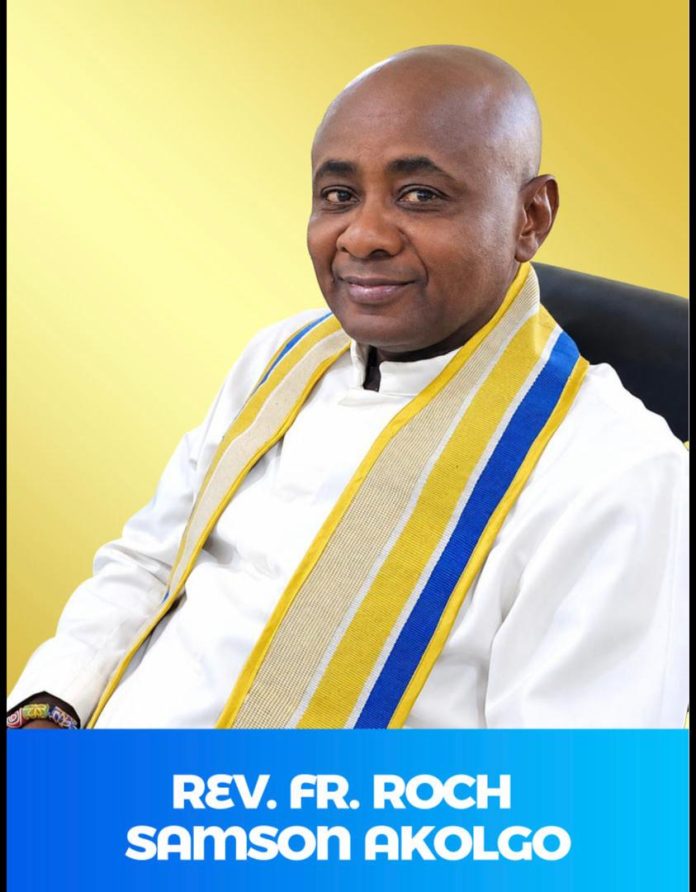
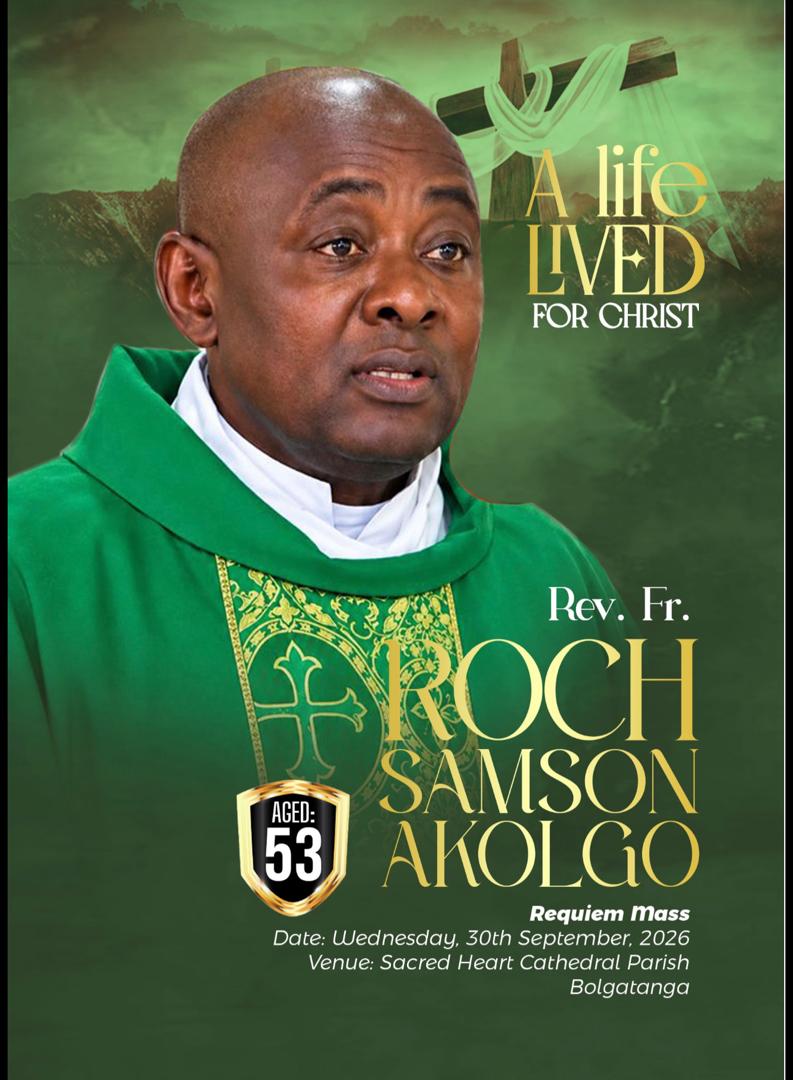
The remains of Rev. Fr. Roch Samson Akolgo, a priest of the Navrongo-Bolgatanga Catholic Diocese, have been laid to rest at the Cathedral Cemetery in Bolgatanga.
Rev. Fr. Roch was buried on Wednesday, September 30, 2026, following funeral rites that brought together clergy, religious leaders, family members, parishioners and sympathisers to bid farewell to the priest, who died on September 12, 2026, at the Nyaho Medical Center in Accra.
Born on November 11, 1973, to the late Paul Ken Akolgo and Madam Christina Asungure Akolgo in the Sumbrungu community, Fr. Roch was the fourth of several siblings and was raised in a Catholic family.
He received his baptism in infancy and later received his First Communion in 1984 before being confirmed the same year. Fr. Roch began his formal education at St. John’s Primary School, where he studied from 1979 to 1985, before continuing at St. John’s Middle School and later Akantome Junior High School.
He proceeded to Bolgatanga Secondary School, completing his secondary education in 1994. His journey to the priesthood took him to St. Victor’s Major Seminary in Tamale, where he underwent seminary formation between 1997 and 2005.
He was ordained a deacon on December 11, 2004, by the then Archbishop of Tamale, Most Rev. Gregory E. Kpiebaya, and was ordained a priest for the Navrongo-Bolgatanga Diocese on August 20, 2005, by Most Rev. Lucas Abadamloora.
Following his ordination, Fr. Roch began his pastoral ministry at Christ the King Parish in Chiana, where he served from 2005 to 2009. He was subsequently transferred to Sacred Heart Cathedral Parish in Bolgatanga, serving there from 2009 to 2013.
On September 1, 2013, he was appointed Rector of St. Teresa of the Child Jesus Rectorate in Paga, a position he held until October 2015, when he returned to Christ the King Parish, Chiana, as Parish Priest.
Due to health challenges, he was transferred to Sacred Heart Cathedral Parish in Bolgatanga in August 2018, where he served as Curate.
Following the departure of the Capuchin Friars, Fr. Roch was appointed Acting Director of the Spiritual Renewal Centre in July 2021.
He later joined the staff of Our Lady Queen of Africa Parish, commonly known as OLA Parish, effective August 19, 2024, and remained there until his death.
Throughout his priestly ministry, Fr. Roch was remembered for his simplicity, pastoral charity, and close relationship with the people he served.
He was described as a priest who made himself available to parishioners in both moments of joy and sorrow, taking time to listen to their concerns and accompany them with compassion.
His strong devotion to popular Catholic practices, particularly Marian devotion, the Rosary, Eucharistic adoration, Stations of the Cross and novenas, was also identified as a defining feature of his spirituality.
His pastoral commitment extended to the sick, aged and vulnerable, whom he regularly visited in hospitals and homes. He offered prayers, the sacraments and words of encouragement to people experiencing difficult moments, earning a reputation for accompanying families through periods of illness and grief.
His ministry was also characterised by brief but thought-provoking homilies, humour and a strong commitment to pastoral service.
Fr. Roch experienced health challenges from around 2015 to 2016 and continued to seek medical attention at various health facilities. His condition deteriorated in his later years, culminating in his death on September 12, 2026, at the Nyaho Medical Center in Accra.
His death has been particularly painful for his family, including his mother, as well as widows and orphans whom he supported.
According to his biography, Fr. Roch had hoped to give his mother a befitting burial before his own death, a wish he was unable to fulfil.
The Navrongo-Bolgatanga Catholic Diocese has described his legacy as one of pastoral love, joyful devotion and compassionate service.
His ministry touched several communities and parishes across the Diocese, with many parishioners remembering him for his closeness to the people and his commitment to deepening their relationship with God.
Rev. Fr. Roch Samson Akolgo was 53 years old at the time of his death. He has been laid to rest at the Cathedral Cemetery in Bolgatanga.