Ghana must urgently rethink the relationship between CSSPS, Free SHS and the survival of day schools
Ghana has every reason to be proud of the expansion of access to secondary education. The Computerised School Selection and Placement System (CSSPS) and the Free Senior High School (Free SHS) policy have opened the doors of secondary education to thousands of young Ghanaians who might otherwise have been excluded.
But every good policy must periodically be examined against its consequences.
Today, a serious and uncomfortable question confronts Ghana’s education system:
Are our current school selection, placement and financing arrangements unintentionally destroying the very community day schools that were established to bring secondary education closer to our children?
This question deserves urgent national attention.
The problem is no longer simply placement; it is distribution
The CSSPS was designed to match students with schools according to their academic performance, programme preferences, residential preferences and available vacancies. On paper, this is a rational arrangement.
But education is not merely about placing a child somewhere. It is also about ensuring that students are distributed fairly and sustainably across the schools that the government has established and is financing.
This is where the problem begins.
A child living in a deprived community may have a senior high school virtually at his or her doorstep. That school may have classrooms, teachers and programmes, but because it is a day school, the child and the parents may prefer a boarding school many kilometres away.
The consequence is predictable.
The boarding school becomes overcrowded while the community day school struggles to fill its classrooms.
We are therefore creating a strange situation in which the government invests public money in establishing schools in deprived communities, but the same national education system can subsequently make it difficult for those schools to attract the students for whom they were established.
Recent research on Ghana’s Free SHS policy has documented precisely this pattern: increased demand for boarding, while many day schools, particularly in rural areas, operate below capacity.
Is boarding becoming more attractive because of the financing structure?
We must be courageous enough to ask this question.
Under Free SHS, the government absorbs approved costs for students in public second-cycle institutions. But the financial treatment of residential students and day students is not identical.
Boarding students receive accommodation and meals as part of the residential arrangement, while day students have to live at home and bear the practical consequences of commuting.
Research on Free SHS has found that this has contributed to a significant increase in the demand for boarding. Government expenditure also differs between residential and non-residential students.
The result is an education system in which boarding can appear to parents to offer considerably more value than day schooling.
That creates an incentive for families to pursue boarding places even where a quality day school exists within their community.
We should therefore stop looking at the placement problem only as a technical computer problem.
It is also a policy-design problem.
The dangerous consequence: the death of the community day school
Imagine a district where the government has established several community day senior high schools.
These schools were intended to reduce the distance children travel, minimise pressure on traditional boarding schools and provide affordable secondary education to children in surrounding communities.
But if a large proportion of the children from those communities are continually attracted away to boarding schools elsewhere, what happens?
The local school loses enrollment.
When enrolment falls, the school may struggle to justify its staffing levels, programmes and infrastructure expansion.
A school with empty classrooms becomes difficult to defend when the government is simultaneously spending enormous sums to expand facilities elsewhere.
Eventually, the community begins to lose confidence in its own school.
Parents say, “Our children do not want to attend the local school.”
Teachers become frustrated.
The school becomes under-enrolled.
The government continues to spend money maintaining infrastructure that is not being fully utilised.
And the vicious cycle continues.
This is not merely a school problem.
It is a national resource-allocation problem.
We must also confront the question of academic standards
Another issue requiring national discussion is the relationship between BECE performance and entry into secondary education.
Ghana has traditionally used the BECE both for certification and selection into senior high schools. Candidates are graded on a nine-point scale, with Grade 1 being the highest and Grade 9 the lowest.
Yet Ghana’s current placement arrangement does not operate with one simple nationwide minimum aggregate that determines who qualifies for SHS.
The Ministry has explained that placement depends on factors including candidates’ performance, the competitiveness of schools, programme demand, preferences and available spaces.
This approach has an important social objective: no Ghanaian child should be permanently denied an opportunity for further education merely because of poverty or where he or she comes from.
That principle is commendable.
But access must not be confused with automatic progression without adequate academic preparation.
If a candidate performs poorly in one or more foundational subjects, the question should not simply be, “Where can we place this child?”
The more important question should be:
“What educational pathway will give this child the best chance of succeeding?”
Some children may need remedial education, foundational programmes, technical and vocational pathways, structured bridging programmes or other forms of academic support before being placed into programmes whose demands they are not yet prepared to meet.
A system that guarantees placement without sufficiently addressing preparedness risks converting the secondary school into a remedial institution without giving it the resources or structure to perform that function.
Placement should not become a competition for boarding places
There is another matter that requires urgent examination.
The purpose of CSSPS should be to achieve a fair and educationally sound distribution of students, not simply to satisfy the strongest parental demand.
The current placement arrangements allow candidates to express residential preferences, including boarding and day options. Automatic placement takes account of the student’s programme and residential preference together with available vacancies.
That is understandable.
But should residential preference be allowed to undermine the viability of schools?
Perhaps not.
If a student has been placed in a legitimate community day school close to home, there should be a compelling educational or welfare reason before that student is moved to a boarding institution elsewhere.
Otherwise, we risk creating a system where the schools with the strongest boarding reputation continuously attract students while less-endowed community schools become casualties of their own location.
We need a new principle: strengthen schools where the children live
Ghana should consider making proximity and community access a stronger component of placement policy, particularly for students who have suitable day schools within their catchment areas.
This does not mean abolishing boarding education.
Boarding schools have an important role, especially for students who live far from suitable schools, students in special circumstances and programmes that require residential facilities.
But boarding should not become the default definition of quality.
A child should not have to leave his or her district to receive a good secondary education.
The national objective should be to make the community school good enough that parents will willingly choose it.
The government must examine the financial incentives
If government funding follows students in a manner that makes boarding financially more attractive to schools, then we must examine whether the financing formula is producing unintended consequences.
The question should be simple:
Does our funding formula encourage schools to maximise boarding enrolment rather than develop sustainable day-school education?
This question requires transparent data.
The government should publish, by school:
– approved enrollment;
– actual enrolment;
– boarding enrollment;
– day enrollment;
– available vacancies;
– government expenditure per student;
– recurrent expenditure;
– feeding expenditure;
– infrastructure utilisation; and
– the number of students transferred into or out of the school after initial placement.
With this information, Ghana can determine whether public resources are being distributed in a manner that promotes equity.
We must close loopholes in post-placement movement
The CSSPS system states that automatic placement is final and that self-placement is intended for candidates who are not automatically placed.
That principle should be rigorously enforced.
Where a change of school or residential status is genuinely necessary, it should pass through a transparent centralised process.
There should be:
No private negotiations.
No unofficial admissions.
No inducements.
No manipulation of vacancies.
No school-level recruitment of already placed students.
Every movement should be recorded electronically and auditablely.
If a student moves from a day school to a boarding school, the system should record who authorised it, why it was authorised and where the vacancy came from.
That is how we protect both the integrity of CSSPS and the schools that lose students.
Do not punish the day school for being a day school
This is perhaps the most important point.
A community day school should not be treated as the poor cousin of the boarding school.
If Ghana truly believes in equitable education, then the day school must receive the resources required to compete academically.
The government should invest deliberately in:
– science laboratories;
– ICT laboratories;
– libraries;
– workshops;
– sports facilities;
– transportation where necessary;
– feeding arrangements;
– teacher accommodation in deprived communities;
– guidance and counselling;
– remedial programmes;
– school leadership;
– infrastructure; and
– incentives for teachers serving in deprived areas.
The goal should be to transform the community day school from a school parents accept only when they cannot obtain boarding into a school parents are proud to choose.
A new approach to placement is needed
I propose that Ghana seriously consider the following reforms.
First, introduce a stronger catchment-area principle for day-school placement.
Second, establish a transparent national framework for movement between day and boarding after placement.
Third, publish school-level enrolment and vacancy data so that the public can see where the imbalance exists.
Fourth, review the financing formula to ensure that it does not unintentionally incentivise excessive boarding enrolment.
Fifth, strengthen community day schools with targeted infrastructure and teacher incentives.
Sixth, introduce structured remedial or bridging pathways for students whose BECE performance shows that they need additional academic preparation.
Seventh, maintain the principle of universal access to secondary education, but distinguish between access to education and automatic access to every type of programme or school.
Eighth, establish minimum academic readiness standards for different SHS programmes, while providing alternative pathways for students who do not initially meet those standards.
Ninth, make school selection counselling much more serious. Parents and pupils must be helped to understand that the nearest school is not necessarily inferior and that boarding is not synonymous with quality.
Tenth, undertake an independent national review of the CSSPS and Free SHS financing arrangements, with particular attention to their impact on deprived-area day schools.
Ghana must choose what kind of education system it wants
This is not an argument against Free SHS.
Neither is it an argument against boarding education.
It is an argument for a more balanced, rational and sustainable secondary education system.
Free SHS has achieved something important by reducing financial barriers to secondary education. But successful public policy must be judged not only by how many children enter school, but also by where they are placed, what they learn, whether the schools are viable and whether public resources are being used equitably.
We cannot continue to build community schools and then allow them to become empty because the education system makes boarding more attractive.
We cannot spend public money constructing schools in deprived communities while the children of those communities are transported elsewhere because parents believe that boarding is the only pathway to quality education.
We cannot tell every child that he or she has access to secondary education without asking whether that child has been placed on an educational pathway appropriate to his or her level of preparedness.
And we cannot allow the computer to become the master of education policy.
The computer should serve the educational policy. The policy should serve the child. And the child should be at the centre of the system.
Ghana therefore needs an urgent national conversation involving the Ministry of Education, Ghana Education Service, CSSPS Secretariat, WAEC, school heads, teachers, parents, traditional authorities, civil society organisations and education researchers.
The question is not whether every Ghanaian child should have access to secondary education.
Yes, every Ghanaian child deserves that opportunity.
The question is:
How do we provide that opportunity without destroying the community schools that are supposed to carry the future of our children?
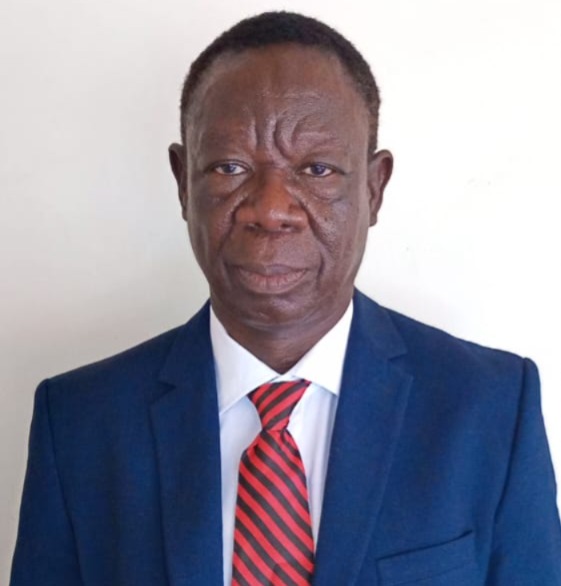
By Bishop Apana Thomas Akolgo
Educationist and Headmaster, Tongo Senior High/Technical School
Upper East Region, Ghana