
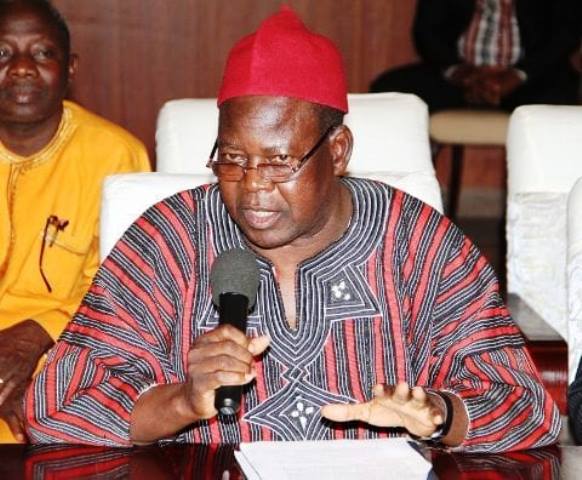
Former Executive Director of the Ghana Integrity Initiative, Vitus Azeem, has highlighted deep structural challenges in the financing of political parties, warning that weak funding systems continue to fuel vote buying and undermine Ghana’s democratic process.
Speaking on A1 Radio following concerns over alleged vote buying during the Ayawaso East Constituency NDC parliamentary by-election, Azeem said identifying a realistic and sustainable method of funding political parties remains difficult. He explained that while parties are ideally expected to rely on voluntary contributions from members, this approach has proven unrealistic in Ghana’s context, where supporters often expect material benefits rather than contribute financially.
“Individual members of political parties should be the ones contributing voluntarily. Unfortunately, in our part of the world, instead of contributing, we are rather looking to receive. That doesn’t look like a realistic option,” he said.
Azeem argued that state funding of political parties, sometimes proposed as a solution, cannot fully address the problem. Government support would be insufficient to meet operational needs, forcing parties to continue seeking support from wealthy individuals. This, he warned, creates opportunities for undue influence and compromises party independence.
“How much can the government fund political parties to the extent that it will stop individuals from also funding them? The government cannot give enough for party activities such that they will not look for rich people to help,” he said.
He further expressed concern over the lack of transparency and accountability in party financing, citing persistent practices where large sums of money are handled informally without proper documentation or disclosure. Such opaque systems make it difficult to track funds and create room for misuse, including the diversion of resources for personal gain.
“Transparency is very important, but it’s lacking in political party financing. Without strong internal accountability, public funding would be ineffective and potentially abused,” Azeem said. He added that financial pressures on candidates also stem from voters and party delegates, who often make demands for money or material benefits.
“This whole issue is not one-sided. Delegates and electors also make demands on politicians. That is why citizens are doing this,” he said.
Azeem noted that this culture, increasingly described as vote selling, reflects public frustration with leaders who, after winning elections, relocate to urban centers, adopt affluent lifestyles, and disconnect from their constituencies. Voters now seek immediate benefits during elections as compensation for perceived neglect.
He concluded that addressing vote buying and political financing challenges requires collective responsibility, stronger transparency measures, and a shift in both political and civic attitudes to protect the integrity of Ghana’s democracy.
A1 Radio | 101.1 Mhz | Gifty Eyra Kudiabor | Bolgatanga