
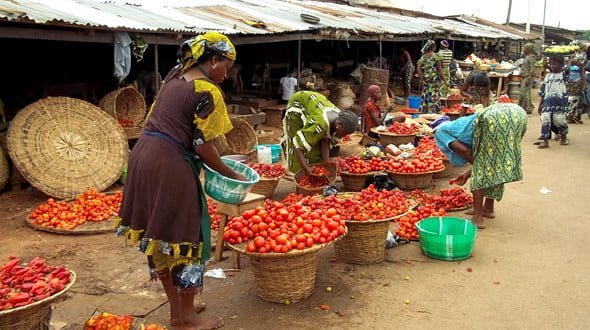
The Peasant Farmers Association of Ghana (PFAG) has described Burkina Faso’s decision to halt tomato exports to Ghana as a “blessing in disguise.” The Association has called on the government to seize the moment to strengthen local production and avert a looming food security crisis.
In a press release issued on March 24, 2026, and signed by its National President, Wepia Awal Addo Adugwala, the Association acknowledged ongoing diplomatic engagements between Ghana and Burkina Faso but stressed the need for immediate domestic interventions.
PFAG warned that failure to act swiftly could result in acute tomato shortages, sharp price increases, and heightened inflationary pressures, potentially escalating into a full-blown food crisis.
According to the Association, Ghana’s tomato production has long been plagued by systemic challenges, including overreliance on rain-fed agriculture, high input costs, weak market linkages, and significant post-harvest losses. These constraints, it noted, continue to discourage farmers from expanding production despite substantial public investment in the sector over the years.
The situation, PFAG added, is further complicated by rising global costs of fuel, energy, and agricultural inputs due to geopolitical tensions. It also pointed to existing market gluts affecting other staple crops such as maize, rice, cassava, soya, and pepper, which have already placed financial strain on farmers.
“The agricultural sector is on the brink of a heightened food security crisis, and the sooner we act pragmatically, the better,” the statement cautioned.
PFAG is therefore urging government to demonstrate “leadership, direction, and a clear strategy” to address the challenges facing tomato production across short, medium, and long-term timelines.
In the short term, the Association is calling for urgent support to farmers at irrigation sites through the provision of improved seeds, fertilizers, and mechanization services to boost output. It also recommended the establishment of an emergency response plan to mitigate potential shortages should negotiations with Burkina Faso fail.
For the medium term, PFAG proposed the creation of more land banks and increased access to irrigated lands to attract and empower more farmers. It further emphasized the need for improved market systems, including cold storage facilities and better coordination with traders and transporters to reduce post-harvest losses.
In the long term, the Association advocated for a major expansion of irrigation infrastructure, including the construction of at least one large-scale irrigation dam in every region. It also called for Ghana to increase its irrigable land capacity from the current 10 percent to over 50 percent by 2028.
Additionally, PFAG urged government to expedite efforts to revive and operationalize tomato processing factories to absorb excess produce and stabilize the market.
The Association stressed the need for targeted interventions in key agricultural value chains, including rice, tomato, onion, cassava, and maize, rather than generalized support. It recommended the establishment of dedicated programs with clear financing, monitoring, and accountability mechanisms to drive productivity.
PFAG reaffirmed its readiness to collaborate with government to improve food production and ensure national food security.
“We are heading toward a crisis, and the time to act is now,” the statement concluded.
A1 Radio | 101.1Mhz | Joshua Asaah | Bolgatanga